About P. P. Bilhorn
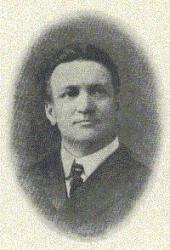
Peter Philip (P. P.) Bilhorn (1865–1936) was a highly inventive and dynamic American gospel singer, composer, and instrument manufacturer who became a towering figure in the late 19th and early 20th-century revival movements. Born in Mendota, Illinois, Bilhorn faced immense hardship from the very beginning of his life; his father was killed in the American Civil War three months before Peter was born. To help support his struggling family, he was forced to drop out of school at the age of eight. By age fifteen, having relocated to Chicago, he discovered he possessed a remarkably powerful singing voice, which he utilized to earn a living performing in the city's German beer gardens. Around this same time, showing an early flair for business, he and his brother established the Eureka Wagon & Carriage Works.
The trajectory of Bilhorn’s life shifted dramatically at the age of eighteen when he experienced a profound religious conversion and dedicated his musical talents exclusively to the Christian faith. He began formal musical studies under the legendary gospel composers George F. Root and George C. Stebbins, quickly mastering the art of gospel song leadership. Driven by an intense evangelistic zeal, Bilhorn traveled to the Dakota territories to share the gospel with working cowboys, a venture that marked the beginning of a prolific itinerant ministry. His exceptional vocal talent and charismatic presence caught the attention of the era's premier evangelists, leading him to travel extensively as a song leader for D. L. Moody and, later, as an early musical director for Billy Sunday's mass crusades.
Bilhorn’s evangelistic work eventually gained international renown, taking him to every state in the Union, Great Britain, and beyond. While in London, he achieved the extraordinary distinction of conducting a massive 4,000-voice choir at the Crystal Palace, and his reputation as a solo vocalist was so esteemed that Queen Victoria invited him to perform at Buckingham Palace. To populate his meetings with fresh music, Bilhorn wrote approximately 2,000 gospel songs throughout his career, frequently using creative pseudonyms such as W. Ferris Britcher, Irene Durfee, C. Ferris Holden, and P. H. Roblin (an anagram of his last name). He compiled and edited ten hymnals and published eleven independent gospel songbooks, ensuring a steady stream of accessible music for the global revival circuit.
Beyond his vocal and literary contributions, Bilhorn revolutionized open-world evangelism through a brilliant mechanical invention. Recognizing the difficulty of conducting street meetings and camp revivals without musical accompaniment, he designed and patented a unique folding, portable, telescoping pump organ. Weighing a mere sixteen pounds, the entire instrument could be folded into a suitcase-sized box and set up in about a minute. To manufacture his invention, he established the Bilhorn Folding Organ Company in Chicago. The instrument became an overnight global success, purchased by missionaries, military chaplains, and traveling evangelists worldwide. Bilhorn spent his later years in California, passing away in Los Angeles in 1936 and leaving behind a unique legacy as a literal "architect" of global street and revival hymnody.