About Philipp Nicolai
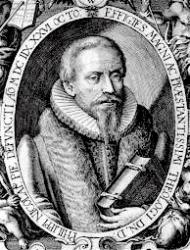
Philipp Nicolai (1556–1608) was a foundational German Lutheran theologian, poet, and musician whose dramatic life amidst geopolitical and epidemiological crises yielded two of the most majestic, revolutionary chorales in Christian history. Born in Mengeringhausen, Waldeck, he was the son of a Lutheran pastor who had Latinized the family name from Rafflenbol. Nicolai entered the University of Erfurt in 1575 and transferred to the University of Wittenberg in 1576, completing his formal theological schooling in 1579 and eventually earning his Doctor of Divinity from Wittenberg in 1594.
Nicolai's early pastoral career was deeply destabilized by the brutal religious wars of the Counter-Reformation. Ordained to assist his father before being appointed Lutheran preacher at Herdecke in 1583, he immediately clashed with the Roman Catholic town council. When militant Spanish troops invaded the region in 1586 to re-establish papal dominance, Nicolai was forced to resign and flee. He found refuge as diaconus and then pastor at Niederwildungen, and by 1588, became chief pastor at Altwildungen, court preacher to the widowed Countess Margaretha of Waldeck, and tutor to her young son, Count Wilhelm Ernst. Here, Nicolai aggressively defended orthodox Lutheranism in the fierce Sacramentarian controversies regarding the real presence of Christ in the Lord’s Supper, eventually guiding the entire regional clergy to subscribe to the Formula of Concord in 1593.
In October 1596, Nicolai accepted a call to Unna in Westphalia. His tenure there was quickly marked by a renewal of bitter theological disputes with local Calvinists, another sudden flight from invading Spanish forces in 1598, and—most significantly—a catastrophic outbreak of the bubonic plague that ravaged Unna from July 1597 to January 1598. The pestilence claimed over 1,300 victims in the small town. Nicolai’s parsonage directly overlooked the churchyard, forcing him to witness up to thirty interments daily as entire households were systematically extinguished.
Surrounded by agonizing death, Nicolai anchored his mind in eschatological hope, systematically researching biblical texts and St. Augustine’s De Civitate Dei regarding the afterlife. He compiled these midnight reflections into a monumental devotional volume titled Frewden-Spiegel dess ewigen Lebens ("Mirror of Joy of Eternal Life"), published in 1599. In the appendix of this book, born directly out of the ashes of the plague, Nicolai published the only two hymns for which he is globally remembered—masterpieces that earned him the historical title of "The Last of the Watchmen" and permanently altered the course of sacred music.
Nicolai’s two signature hymns are celebrated as "The King and Queen of Chorales" because of their unmatched structural grandeur, complex metrical rhythms, and soaring, majestic melodies, which Nicolai composed himself:
-
"Wachet auf, ruft uns die Stimme" ("Wake, Awake, for Night is Flying" / "Sleepers Wake") — The King of Chorales: Grounded in the Parable of the Ten Virgins (Matthew 25) and the imagery of the watchmen from the book of Isaiah, this text transformed the popular medieval "Watchman's Song" genre from a warning to flee into a triumphant, ecstatic summons for the children of light to awaken for their heavenly Bridegroom. Nicolai structurally encoded a reversed acrostic into the stanzas (W.Z.G.) honoring his deceased fifteen-year-old pupil, Count Wilhelm Ernst of Waldeck. The tune’s cosmic dignity was later immortalized globally by Felix Mendelssohn in his oratorio St. Paul and heavily utilized by Johann Sebastian Bach in his famous Cantata 140.
-
"Wie schön leuchtet der Morgenstern" ("O Morning Star! How Fair and Bright") — The Queen of Chorales: Conceived during a morning of intense tribulation in his study, this spiritual bridal song links the soul to Jesus Christ using the rich, allegorical language of Psalm 45 and the Song of Solomon. Structurally, the initial letters of its seven stanzas form the acrostic W.E.G.U.H.Z.W. (Wilhelm Ernst Graf Und Herr Zu Waldeck). In the evolution of hymnology, this text serves as the vital transitional bridge from the stark, objective, corporate confessionalism of the early Reformation to the deeply intimate, emotional, and personal mysticism later championed by poets like Johann Franck and Angelus Silesius.
In April 1601, Nicolai’s brilliant preaching and fierce theological resolve led to his election as the chief pastor of the influential St. Katherine’s Church in Hamburg. In this final metropolis, he was universally loved as an estimable, deeply affectionate pastor and revered as a structural pillar of the North German Lutheran church. On October 22, 1608, after participating in the ordination of a colleague at St. Katherine's, he was stricken with a violent, sudden fever. He passed away four days later at the age of fifty-two. While his voluminous polemical prose was often characterized by the sharp, acrid vitriol of his era, his legacy remains untarnished as the resilient pastor who looked out at a graveyard of plague victims and gave the universal church its most triumphant, timeless melodies of eternal joy and celestial marriage.