About Phillips Brooks
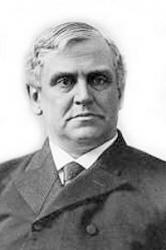
The Right Reverend Dr. Phillips Brooks (1835–1893) was one of the most towering, influential, and beloved American spiritual leaders of the 19th century. Renowned for his extraordinary eloquence, majestic physical presence (standing well over six feet tall), and a deeply generous, inclusive theology, Brooks came to embody the very best of the American Broad Church movement within the Episcopal Church. Born in Boston, Massachusetts, into a distinguished New England family with deep Puritan roots, he was educated at the Boston Latin School and graduated from Harvard College in 1855. After a brief, discouraging attempt at teaching school, Brooks found his true calling in the ministry, graduating from the Theological Seminary of Virginia in Alexandria and receiving holy orders in 1859.
Brooks began his ordained ministry in Philadelphia, quickly gaining national renown for his powerful preaching and his fierce, unshakeable support for Union and the abolition of slavery during the American Civil War. He served first as Rector of the Church of the Advent (1859–1862) and then at the Church of the Holy Trinity (1862–1869). It was during this Philadelphia pastorate that his most permanent contribution to global hymnody was conceived. In December 1865, Brooks traveled to the Holy Land. On Christmas Eve, he rode on horseback from Jerusalem to Bethlehem, where he assisted in the midnight service at the ancient Church of the Nativity. The profound emotional and spiritual impact of looking out over the quiet, starlit Judean hills stayed with him for years.
In 1868, wanting to provide a fresh, accessible piece of music for the children of his Holy Trinity Sunday School to sing at their annual Christmas program, Brooks penned a simple five-stanza poem. He handed the verses to his organist and Sunday school superintendent, Lewis Redner (1831–1908), asking him to compose a simple, bright melody for them. Redner struggled to find inspiration until the night before the program, when he awoke in the middle of the night with a melody ringing in his ears—a tune he quickly jotted down and later called ST. LOUIS. The resulting carol, "O Little Town of Bethlehem," was an instant favorite among the children and quickly spread across the globe.
In 1869, Brooks returned to his native Boston to become the Rector of Trinity Church. Under his dynamic leadership, the parish became the intellectual and spiritual epicenter of the city. When the original church building burned down in the Great Boston Fire of 1872, Brooks spearheaded the construction of the current, monumental Trinity Church in Copley Square. Working closely with the legendary architect H. H. Richardson, Brooks helped design an architectural masterpiece in the Romanesque Revival style that perfectly mirrored the warmth, structural integrity, and spaciousness of his own theology. Beyond his pastoral duties, Brooks was a highly sought-after lecturer, famously delivering the Yale Lectures on Preaching in 1877, and he published another popular, joyful Carol that same year titled "God hath sent His angels to the earth again."
In 1891, Brooks was elected the Bishop of the Episcopal Diocese of Massachusetts. Though his tenure as bishop was cut tragically short when he passed away suddenly from a violent throat infection in January 1893 at the age of fifty-seven, his death sparked a wave of public mourning rarely seen for a religious figure. Boston businesses closed, and thousands of grieving citizens packed Copley Square for his funeral.
While Brooks left behind volumes of highly praised, enduring sermons and theological essays, his permanent monument in the hearts of millions remains his tender portrait of Bethlehem. By contrasting the "deep and dreamless sleep" of the silent town with the "everlasting Light" entering the world, Brooks perfectly translated the vast, cosmic mystery of the Incarnation into an intimate, comforting lullaby of peace, goodwill, and quiet spiritual transformation.
Recently updated hymnals
-
Book of Common Praise (BoCP1915) Updated 5 days, 10 hours ago
-
Our Great Redeemer's Praise Updated 1 month, 3 weeks ago
-
The Parish Hymnal (1873) Updated 1 month, 3 weeks ago
-
Book of Common Praise (BCP1998) Updated 2 months, 1 week ago
-
A New Hymnal for Colleges and Schools Updated 2 months, 2 weeks ago