About R. B. Y. Scott
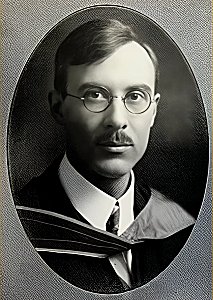
R. B. Y. Scott (1899–1987), born Robert Balgarnie Young Scott, was one of the most distinguished Canadian Old Testament scholars, theologians, and educators of the 20th century. A minister of the United Church of Canada, he achieved international acclaim for his pioneering academic work on Hebrew prophecy, ancient weights and measures, and the Dead Sea Scrolls. Within hymnology, Scott is celebrated as a key figure in mid-20th-century Canadian hymnody, bringing the rigorous ethical weight of the biblical prophets directly into corporate Christian worship.
Academic Brilliance and Ecclesiastical Leadership
Born in Toronto, Ontario, Scott was educated at the University of Toronto, earning his B.A., M.A., and Ph.D. by 1928. After a brief pastorate in Long Branch, Ontario, his immense intellectual gifts pulled him into higher education. He served as a professor of Old Testament language and literature across Canada's most prestigious institutions:
-
Union College (Vancouver, British Columbia) from 1928 to 1931.
-
United Theological College (Montreal, Quebec) from 1931 to 1955.
-
McGill University (Montreal, Quebec), where he served as the foundational Dean of the Faculty of Divinity from 1945 to 1955.
In 1955, his international reputation led Princeton University to recruit him as a professor of religion. He remained at Princeton until his retirement in 1968, serving as department chairman and cementing his status as a global authority on wisdom literature and the prophetic tradition.
The Montreal Years: The Crucible of His Hymns
Though Scott was a world-class academic, he firmly believed that theology belonged in the mouths and hearts of the congregation. Most of his hymn writing occurred during his transformative years in Montreal (1931–1955). This was an era marked by the Great Depression, World War II, and rapid post-war industrialization.
Immersed in the "Social Gospel" movement—which sought to apply Christian ethics to social justice, poverty, and systemic inequality—Scott found that many traditional, highly individualized 19th-century hymns failed to address the raw, collective anxieties of the modern world. He began writing hymns that married majestic poetic form with an urgent, prophetic call for peace, justice, and human dignity.
Signature Hymn: "O Day of God, Draw Nigh" (1937)
Scott’s undisputed masterwork is the deeply introspective, powerful hymn "O Day of God, Draw Nigh." Written in 1937 against the grim backdrop of rising global totalitarianism and the looming shadow of World War II, the hymn is a masterpiece of restraint and intense spiritual focus.
Instead of asking God to triumphantly destroy external political enemies, Scott’s text turns inward, pleading for God's light to purge human pride, greed, and the systemic injustices that cause wars in the first place. He expertly channels the classic Hebrew prophetic concept of the "Day of the Lord"—not as a day of military victory, but as a day of supreme moral accountability.
Set traditionally to the austere, serene English melody BELLWOODS (composed by fellow Canadian James Hopkirk), the hymn moves with an unhurried, urgent gravity:
"O day of God, draw nigh In beauty and in power, Bring to our troubled earth deliverance In this dark, conspicuous hour."
"Bring to our world of strife Your sovereign word of peace, That war may haunt the earth no more, And desolation cease."
The hymn's third stanza uniquely bridges the gap between historical biblical prophecy and modern structural justice, asking for the clearing away of "the mists of error" so that humanity can see "the equal laws of Christ."
Legacy
R. B. Y. Scott passed away on November 1, 1987, leaving behind an invaluable dual legacy. To biblical scholarship, he gave monumental commentaries on Proverbs and Ecclesiastes and crucial early translations of the Dead Sea Scrolls. To the global church, he provided a robust, intellectually honest, and deeply ethical hymnic voice. "O Day of God, Draw Nigh" remains a permanent standard across major international, ecumenical hymnals, standing as a beautiful monument to a scholar who successfully brought the fiery social righteousness of Amos and Isaiah into the quiet reverence of the church pew.