About Samuel Wesley
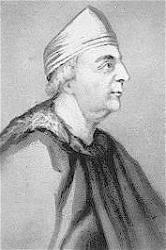
Samuel Wesley, known historically as Samuel Wesley the younger, was an English poet, cleric, and schoolmaster. Born in London in 1691, he was the eldest son of the prominent religious thinkers Samuel and Susanna Wesley, making him the older brother of John and Charles Wesley, the founders of Methodism. He received his early education at home from his mother before attending Westminster School as a King's Scholar. He later earned his Master of Arts degree from Christ Church, Oxford, in 1715, after which he returned to Westminster School to serve as an usher.
His professional advancement within the Church of England was significantly hindered by his close, public friendship with Francis Atterbury, the Bishop of Rochester and Dean of Westminster. Atterbury was a prominent Jacobite Tory who was eventually banished for treason. Wesley remained strictly loyal to his controversial friend during this adversity, which ultimately cost him a promotion to undermaster at Westminster School. In 1732, he accepted an unsolicited invitation to become the headmaster of the Free School in Tiverton, Devon, where he spent the remaining years of his life.
Theologically and politically, Wesley was a steadfast, uncompromising High Churchman. This ideological position caused him to strongly disapprove of the open-air preaching and evangelical innovations later championed by his younger brothers, John and Charles. Despite their profound theological disagreements, which they debated with characteristic frankness, the brothers maintained cordial and friendly personal relations. Throughout his life, Samuel served as a critical financial and emotional mainstay for the extended Wesley family at Epworth, frequently acting as a paternal figure to his younger siblings. He was also a dedicated philanthropist, serving as one of the original promoters and founders of the Westminster Infirmary.
Wesley was a recognized literary figure, publishing "A Collection of Poems on several occasions" in 1736. The collection was noted for combining a sharp, sometimes coarse humor with a clear moral and religious purpose. As a hymnist, his work left a lasting legacy. Multiple hymns composed by him were adopted into early Methodist worship collections, with pieces like "The Lord of Sabbath, let us praise" and "The morning flowers display their sweets" finding a permanent place in traditional English hymnody. He died in Tiverton on November 6, 1739, in his forty-ninth year, and was buried in the Tiverton churchyard.