About St. Andrew of Crete
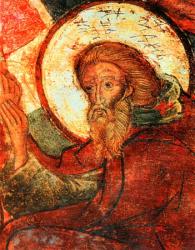
Saint Andrew of Crete (c. 660–740) was a monumental figure in the history of Eastern Christian hymnography and a pivotal bishop in the Byzantine Church. Born in Damascus and raised in a period of intense theological development, he initially served as a monk at the Church of the Holy Sepulchre in Jerusalem before being sent to Constantinople. There, he worked in administration and served as a deacon at Hagia Sophia before eventually being consecrated as the Metropolitan of Gortyna in Crete. His life spanned a transitionary era for the Church, and his theological depth allowed him to articulate complex dogmas through the medium of sacred poetry.
He is most revered as the "inventor" or early master of the Kanon (Canon), a sophisticated form of liturgical hymnody that replaced the shorter kontakion. His most famous work, the Great Canon of Repentance, is a masterpiece of over 250 stanzas that is still chanted in its entirety during Great Lent in the Eastern Orthodox tradition. The Great Canon is a sweeping narrative that weaves together nearly every major biblical figure from Adam to the New Testament, using their stories as a mirror for the soul’s own struggle with sin and its need for divine mercy.
In Western hymnody, Saint Andrew is primarily known through the translations of John Mason Neale, who introduced his work to the English-speaking world in the 19th century. The most enduring of these is the hymn "Christian! Dost Thou See Them," which captures the ascetic and combative spirit of the original Greek text. The hymn serves as a spiritual call to arms, urging the believer to stay vigilant against temptation and to find strength in the power of the Cross. This text has been widely adopted across denominations, including versions in Chinese ("信徒!是否看見"), demonstrating the universal appeal of his call to spiritual watchfulness.
Saint Andrew of Crete's legacy is that of a "theologian of the heart." By transforming the rigid structures of church dogma into the fluid, emotional language of the Canon, he provided the faithful with a liturgical framework for personal repentance. His work bridged the gap between the intellectual defense of the faith and the lived experience of the worshipper, ensuring that the poetry of the 8th-century Byzantine world continues to resonate in modern congregational life across the globe.
TLDR
| Detail | Information |
| Birth / Death | c. 660 – 740 |
| Origin | Damascus; Jerusalem; Constantinople |
| Ecclesiastical Office | Metropolitan of Gortyna, Crete |
| Major Contribution | The "Great Canon of Repentance" |
| English Adaptation | "Christian! Dost Thou See Them" (tr. J.M. Neale) |
| Thematic Focus | Repentance, Biblical Typology, Spiritual Vigilance |