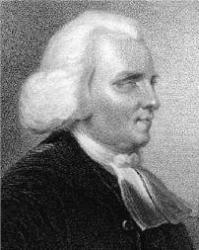
About Thomas Blacklock
Thomas Blacklock (1721–1791) was an 18th-century Scottish divine, poet, and philosopher whose life story became one of the most celebrated examples of intellectual triumph over physical disability in the Scottish Enlightenment. Blinded in infancy, Blacklock overcame immense societal barriers to become a licensed Presbyterian minister, an acclaimed classical scholar, and an influential literary critic. Known historically as "The Blind Poet of Edinburgh," his legacy is defined not only by his sacred verse and contributions to the 1781 Scottish Translations and Paraphrases but also by his pivotal role in saving the career of Scotland’s national bard, Robert Burns.
Triumph Over Blindness and Academic Acclaim
Thomas Blacklock was born at Annan in Dumfriesshire, Scotland, on November 10, 1721. Before he reached his first birthday, a devastating case of smallpox took his eyesight completely. Despite this catastrophic loss in an era with virtually no institutional support for the blind, his father, a poor bricklayer, and dedicated friends spent hours reading to him, filling his young mind with the works of Spenser, Milton, and Pope.
Recognizing the young man’s astonishing memory and intellectual gift, patrons funded his education at the University of Edinburgh. His academic achievements were so extraordinary that he mastered Latin, Greek, and French solely through dictation. In 1756, his collected verse was published in London, featuring an extensive, admiring prefatory Memoir by the Reverend Joseph Spence, the Professor of Poetry at Oxford University. This volume instantly elevated Blacklock into the elite literary circles of Great Britain.
                      ┌───────────────────────────────────────┐
                      │    THOMAS BLACKLOCK'S INTELLECT TRIAD │
                      └───────────────────┬───────────────────┘
                                          │
         ┌────────────────────────────────┼────────────────────────────────┐
         ▼                                ▼                                ▼
  PULPIT STRUGGLE                  LITERARY SALON                   SACRED METRIC VERSE
Ordained at Kirkcudbright;       Turned his Edinburgh home        Contributed foundational pieces
resigned due to parishioner      into an intellectual hub for     to the Church of Scotland's
prejudice against his blindness. university students and poets.   1781 Paraphrases collection.
In 1759, Blacklock was licensed to preach by the Presbytery of Dumfries, and in 1762, he was presented by the Crown as the parish minister of Kirkcudbright. Tragically, he faced fierce, legalistic opposition from the local parishioners, who refused to accept a blind pastor, arguing he could not look upon his flock or visually oversee the sacraments. After an exhausting two-year legal battle, Blacklock chose peace over conflict: he resigned his living in exchange for a modest annuity and moved to Edinburgh.
In Edinburgh, he opened his home to board and tutor university students. His residence quickly transformed into an elite literary salon frequented by the greatest minds of the Scottish Enlightenment. In 1767, Marischal College at the University of Aberdeen rightfully honored his staggering erudition by conferring upon him the honorary degree of Doctor of Divinity (D.D.).
Intervening for Robert Burns
Blacklock’s most famous historical intervention occurred in the autumn of 1786. A young, impoverished, and deeply discouraged poet named Robert Burns had printed a small run of poems in Kilmarnock. Facing systemic poverty and personal scandal, Burns was on the absolute brink of migrating to Jamaica to work as an overseer on a slave plantation, having already booked his ship passage.
A copy of Burns's Kilmarnock edition fell into the hands of the blind Dr. Blacklock. Amazed by the raw, natural genius of the verses, Blacklock immediately wrote an enthusiastic, glowing letter to the blind poet's friend, urging that Burns abandon his voyage to Jamaica and come to Edinburgh to secure a national publisher.
Burns received the letter just in time. He later wrote that Blacklock's encouragement "overthrew all my schemes" and ignited his career. Blacklock welcomed the young plowman-poet into his home, introducing him to the Scottish aristocracy and publishers, effectively securing Burns's place as the immortal voice of Scotland.
Contributions to Hymnology and the Scottish Paraphrases
While Blacklock wrote extensively across genres, his sacred music was concise, elegant, and marked by a deep sense of divine providence and benevolence. His poetic corpus includes two formal psalm versions and four hymns. Following his death on July 7, 1791, his definitive Poems were reissued in Edinburgh (1793) with a moving biographical memoir by the celebrated novelist Henry Mackenzie.
His Major Liturgical Pieces
-
"Father of all, omniscient mind" – This majestic hymn was adapted directly from Blacklock's metrical version of Psalm 139. It stands as a brilliant poetic treatment of divine omnipresence and omniscience, leaning on smooth, measured Augustan cadences to praise a God from whom no secrets are hid.
-
"In life's gay morn, when sprightly youth" – Universally recognized as Paraphrase 16 in the Church of Scotland’s landmark Translations and Paraphrases of 1781. Based heavily on Ecclesiastes 12:1 ("Remember now thy Creator in the days of thy youth"), this hymn was designed to guide young people toward spiritual substance before the trials of age draw nigh.
-
"Hail, source of pleasures ever new" – A beautiful, bright hymn adapted by hymnal editors from Blacklock's longer secular text, Hymn to Benevolence. It reflects the core philosophical tenet of the Scottish Enlightenment: that true human happiness is found in active Christian charity and goodwill toward others.
Summary of Hymnological Contributions
| Hymn First Line | Scriptural Source | Core Theme |
| Father of all, omniscient mind | Psalm 139 | Divine omnipresence; God's intimate knowledge of man |
| In life's gay morn | Ecclesiastes 12 | Youthful devotion and timely spiritual focus |
| Hail, source of pleasures | Hymn to Benevolence | Christian charity and the joy of mutual goodwill |
Paraphrase 16 — Hymn Excerpt
In life's gay morn, when sprightly youth
With vital ardor glows,
And shines in all the fairest charms
That beauty can disclose;
Deep in thy soul, before the days
Of affliction come,
Remember thy Creator, God,
And think upon thy tomb.
Dr. Thomas Blacklock passed away peacefully in Edinburgh on July 7, 1791, at seventy years of age. Having lived his entire life in physical darkness, his enduring legacy proved to be one of profound illumination—giving his church timeless metric songs of praise and giving his nation its greatest poet.
From the Dictionary of Hymnology
Related terms and topics automatically matched to this author.
Scottish Translations and Paraphrases Hymnology
A detailed publication, authorship, and committee breakdown of the 1781 Scottish Translations and Paraphrases, including its development from the 1745 draft collection and full list of constituent te…
Read more