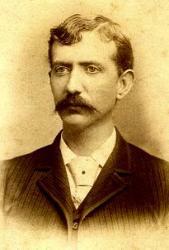
About Thomas O. Chisholm
Thomas Obediah Chisholm (1866–1960) was an American educator, newspaper editor, Methodist minister, and phenomenal writer of gospel hymns. Born in a humble log cabin in rural Kentucky, Chisholm overcame a lack of formal higher education and a lifetime of fragile, debilitating physical health to become one of the most prolific sacred poets of the 20th century. Writing with a strict, self-imposed mandate to avoid the flippant, overly sentimental themes of popular ragtime gospel, he sought to saturate every stanza with historic Christian Scripture—resulting in an enduring masterpiece that became a global anthem of divine faithfulness.
The Journalist, the Pastor, and the Crisis of Health
Thomas O. Chisholm was born on July 29, 1866, on a farm near Franklin, Kentucky. His early education was entirely confined to a small, single-room district schoolhouse. Despite this limitation, Chisholm’s raw intellectual ability was so pronounced that he was appointed the school's headmaster at just sixteen years of age. In 1888, his literary and analytical skills caught the attention of local business leaders, and he was appointed the editor of the regional newspaper, The Franklin Favorite, a prominent role he executed for five years.
In 1893, at twenty-six years of age, Chisholm experienced a profound spiritual conversion during an evangelical revival led by Dr. Henry Clay Morrison. Recognizing Chisholm’s powerful pen, Morrison immediately recruited him to Louisville, Kentucky, to serve as the business manager and office editor of the Pentecostal Herald, a widely circulated holiness movement periodical.
                    ┌──────────────────────────────────────┐
                    │    CHISHOLM'S BIOGRAPHICAL TIMELINE  │
                    └──────────────────┬──────────────────┘
                                       │
         ┌─────────────────────────────┼─────────────────────────────┐
         ▼                             ▼                             ▼
 1888: THE JOURNALIST          1903: THE PULPIT              1904: THE POETIC PIVOT
Edited 'The Franklin Favorite' Ordained in the Methodist     Forced by chronic illness to
at age 22; established a       Episcopal Church South;       leave the pulpit; turned to
reputation for sharp prose.    served a brief, single year.  insurance sales and poetry.
Discerning a direct call to pastoral ministry, Chisholm was formally ordained as a minister in the Methodist Episcopal Church South in 1903. However, his pastoral career was abruptly cut short. Throughout his life, Chisholm suffered from a weak constitution and chronic, exhausting illness. Within a year of taking his parish assignment, his health completely collapsed, forcing him to permanently resign the active pulpit. To support his family, he relocated to Indiana and later New Jersey, working as a life insurance agent while spending his quiet evening hours pouring his remaining physical strength into sacred poetry.
The Poetic Philosophy: Scripture Over Sentiment
As detailed in Charles H. Gabriel’s 1916 biographical anthology, The Singers and Their Songs, Chisholm operated with a fierce, uncompromising literary philosophy. During the early 1900s, the American gospel song landscape was heavily dominated by light, catchy, and sometimes shallow tunes designed to whip revival crowds into emotional frenzies. Chisholm actively revolted against this trend.
He firmly believed that a hymn text must serve as a vehicle for deep, unshakeable biblical dogmatics. His explicit aim was to build as much literal, unadulterated Scripture into his metrical lines as possible, completely avoiding what he deemed "flippant or sentimental themes." Over his long career, this disciplined approach yielded over 1,200 original poems, hundreds of which were set to music by the finest composers of the era.
Landmark Masterpiece: "Great Is Thy Faithfulness"
In 1923, while living in Vineland, New Jersey, Chisholm sat down to write a poem that was not born out of a sudden, dramatic tragedy, but out of a quiet, everyday realization of God’s routine care. He sent a batch of his poems to his close friend, William M. Runyan, a composer affiliated with the Moody Bible Institute. Runyan was so deeply moved by the raw majesty of one specific text that he spent weeks carefully crafting a sweeping, dramatic musical setting to match its meters. That hymn was:
"Great Is Thy Faithfulness, O God my Father!"
Lyrical and Scriptural Framework
The hymn is an absolute masterpiece of systematic biblical theology, drawing its primary inspiration directly from the Old Testament Book of Lamentations 3:22–23 ("His compassions fail not. They are new every morning: great is thy faithfulness"):
-
Stanza 1 (The Immutable God): Focuses on the absolute unchangeableness of God’s character, leaning heavily on James 1:17 ("with whom is no variableness, neither shadow of turning").
-
Stanza 2 (The Witness of Nature): Points to the synchronized, shifting seasons, the sun, moon, and stars as a colossal, cosmic declaration of divine order and care.
-
Stanza 3 (The Internal Redemption): Sweeps into the interior life of the believer, praising God for the immediate pardon of sin, the peace of His presence, and a bright hope for an immortal future.
Hymn Excerpt: The Universal Chorus
Great is Thy faithfulness! Great is Thy faithfulness!
Morning by morning new mercies I see;
All I have needed Thy hand hath provided—
Great is Thy faithfulness, Lord, unto me!
While the hymn grew steadily through its use at Moody Bible Institute, its global explosion occurred in the 1940s and 1950s when George Beverly Shea began singing it nightly at the massive international crusades of evangelist Billy Graham. The hymn quickly became a transcendent, multi-denominational anthem sung in cathedral galleries and country chapels alike.
Other Major Hymnological Successes
While "Great Is Thy Faithfulness" remains his monument, Chisholm penned several other classic texts that achieved immense global publication numbers:
1. Living for Jesus a life that is true
Set to a beautiful, driving melody by C. Harold Lowden in 1917, this text stands as one of the most popular hymns of Christian consecration and discipleship ever written, mapping out a practical lifestyle of personal self-denial.
2. O to be like Thee! blessed Redeemer
A deeply passionate, interior prayer focusing on the theological concept of sanctification—the systematic reshaping of the believer's character into the exact image of Christ.
Summary of Major Gospel Texts
| Hymn First Line | Musical Composer | Core Theological Theme |
| Great Is Thy Faithfulness | William M. Runyan | Divine immutability, providence, and cosmic order |
| Living for Jesus | C. Harold Lowden | Practical discipleship, stewardship, and daily obedience |
| O to be like Thee! | William J. Kirkpatrick | Sanctification, humility, and Christlikeness |
In a signed archival letter dated August 9, 1953, preserved in the Hymn Society archives, Chisholm looked back over his long life with characteristic, profound humility. He noted that he had never possessed wealth or robust physical vitality, but that his poems were simply his small way of cataloging a lifetime of unexpected divine goodness.
Thomas O. Chisholm passed away peacefully at the Methodist Home in Ocean Grove, New Jersey, on February 29, 1960, at the advanced age of ninety-four. Having spent his life writing words that were built to last on the bedrock of Scripture, his verses continue to offer millions of people a steady, singing anchor against the changing shadows of the world.