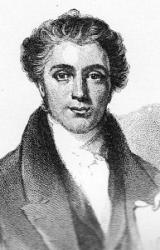
About Thomas Rawson Taylor
Thomas Rawson Taylor (1807–1835) was an English Congregational minister, classical tutor, and sacred poet whose remarkably brief life left an indelible mark on 19th-century hymnology. The son of a prominent Independent minister in Yorkshire, Taylor possessed a brilliant intellect and intense spiritual devotion, both of which were cut short by the rapid onset of pulmonary consumption. Though his active pastoral ministry lasted only six months and he died at the young age of twenty-seven, his poignant, deeply personal reflections on mortality yielded one of the most famous comfort-hymns of the Victorian era.
Early Talents and Sacrificial Ministry
Thomas Rawson Taylor was born on May 9, 1807, at Ossett, near Wakefield in Yorkshire, England. As the son of the Reverend Thomas Taylor—a respected Congregational minister who later took a long-term charge in Bradford—the young man grew up in an environment rich in nonconformist theology and classical literature. He received an excellent early education at the Free School in Bradford and the Leaf Square Academy in Manchester.
Before committing fully to the church, Taylor spent his teenage years exploring secular commerce. From the age of fifteen to eighteen, he worked first in a merchant’s office and subsequently in a printing house. These years gave him a keen eye for typography and publishing, but a burgeoning, intense religious desire ultimately pulled him away from the business world. At eighteen, he formally enrolled at Airedale Independent College to train systematically for the Congregational ministry.
                      ┌───────────────────────────────────────┐
                      │    TAYLOR'S BREVITY OF MINISTRY       │
                      └───────────────────┬───────────────────┘
                                          │
         ┌────────────────────────────────┼────────────────────────────────┐
         ▼                                ▼                                ▼
JULY 1830: SHEFFIELD              JANUARY 1831: BREAKDOWN          1832-1834: TUITION
Ordained at Howard Street         Forced to resign active charge   Returned to Airedale College
Chapel; quickly gained popular    after exactly six months due     as classical tutor; health
repute for eloquent sermons.      to severe lung hemorrhaging.     collapsed completely.
In July 1830, having graduated with high honors, Taylor accepted his first and only pastoral charge at Howard Street Chapel in Sheffield. He was an immediate success, lauded by his congregation for his eloquent, deeply felt preaching. Tragically, his physical constitution was frail. By January 1831—after a mere six months in the pulpit—Taylor suffered a catastrophic breakdown in health, marked by severe pulmonary symptoms.
He was forced to abruptly resign his pastorate and return home to Bradford. Seeking to utilize his sharp academic mind in a less physically taxing environment, he was appointed a classical tutor at his alma mater, Airedale College. However, his progressive illness soon caught up with him, forcing him to surrender his teaching desk as well. He spent his final two years in quiet, prayerful confinement, facing his impending death with profound Christian resignation until he passed away on March 7, 1835.
Posthumous Legacy and "Select Remains"
Following his untimely death, Taylor’s close friend and literary executor, W. S. Matthews, collected the young minister's surviving journals, sermons, letters, and poems. In 1836, he published them under the title:
Memoirs and Select Remains of Thomas Rawson Taylor
This single, memorial volume served as the exclusive wellspring for all of Taylor’s hymns. Hymnologists and editors immediately recognized that Taylor’s verses possessed a rare, evocative sweetness. Though he never wrote with the intention of publishing a formal church hymnal, his personal bedside poetry was quickly adopted by major compilers across Great Britain and North America.
Landmark Masterpiece: "I'm But a Stranger Here"
The crown jewel of Taylor's Select Remains—and his permanent monument in global hymnody—is his intensely moving, deeply comforting text detailing the Christian’s relationship with mortality:
"I'm but a stranger here, heaven is my home; earth is a desert drear, heaven is my home!"
Lyrical and Spiritual Architecture
Written during his painful confinement as he watched his own lungs fail, the hymn completely re-centers the perspective of the suffering believer. Rather than treating death as a terrifying enemy, Taylor frames it as a welcome, long-awaited homecoming.
-
Stanza 1 (The Pilgrim Outlook): Establishes the core theological premise found in Hebrews 11:13—that the believer is merely a passing pilgrim or foreigner on earth, and that true, permanent citizenship belongs entirely in the heavenly realm.
-
Stanza 2 (The Transience of Time): Notes that earthly trials, physical pains, and short-lived storms are temporary, quickly swallowed up by the vastness of eternity.
-
Stanza 3 (The Heavenly Reunion): Focuses on the joy of meeting Christ face-to-face, alongside a glorious reunion with the "little ones" and departed saints who have crossed the Jordan before him.
Hymn Excerpt: The Vision of Home
Therefore I murmur not, heaven is my home;
Whate'er my earthly lot, heaven is my home;
And I shall surely stand
There at my Lord's right hand;
Heaven is my fatherland, heaven is my home.
Set almost universally to the beautifully plaintive, rolling tune OAK (composed by Lowell Mason), the hymn became an absolute staple for Victorian funeral services, bedside visitations, and moments of national mourning across the English-speaking world.
Other Notable Contributions from the Memoirs
Beyond his masterpiece on mortality, Taylor was a highly versatile writer who contributed exceptional pieces to nature theology and child pedagogy:
1. Earth, with her ten thousand flowers
A bright, joyful, and deeply descriptive hymn celebrating natural theology and creation. Moving through valleys, fields, and streams, every verse ends with the rhythmic, declarations that "God is love."
2. Yes, there are little ones in heaven
Written specifically for Sunday School Anniversary festivals, this hymn stood out in the 19th century for its comforting, bright theological focus on the salvation and celestial joy of children who died in infancy.
Summary of Major Hymnological Works
| Hymn First Line | Original Volume Source | Core Liturgical Theme |
| I'm but a stranger here | Select Remains (1836) | Christian hope in death; the temporal nature of earth. |
| Earth, with her ten thousand flowers | Select Remains (1836) | Divine benevolence revealed through natural creation. |
| Saviour and Lord of all | Select Remains (1836) | Christological devotion (Altered as “Jesu, Immanuel”). |
| Yes, it is good to worship Thee | Select Remains (1836) | The deep, interior sweetness of corporate Sunday worship. |