About Vernon J. Charlesworth
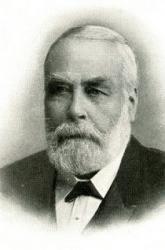
Vernon J. Charlesworth was an influential English clergyman, educator, and hymnwriter who spent much of his career at the heart of London’s vibrant 19th-century evangelical movement. Born in Barking, Essex, in 1839, he was educated at Homerton College and entered the ministry during a period of significant social and religious reform. Charlesworth’s career was defined by his close associations with two of the most prominent preachers of the Victorian era: Newman Hall, with whom he served as co-pastor at the historic Surrey Chapel, and Charles Haddon Spurgeon.
In 1869, Charlesworth was appointed the Headmaster of Spurgeon's Stockwell Orphanage. This role allowed him to combine his pastoral heart with a practical commitment to the welfare of vulnerable children. His work at the orphanage deeply influenced his writing; he frequently used his literary talents to advocate for the fatherless, as seen in his hymn "As You Gather Round the Family Board," which served as a poignant plea for orphan support. His hymns were noted by contemporary scholars like John Julian for being "very spirited and of a popular character," designed to be easily sung and understood by common people and children alike.
Charlesworth is perhaps most widely recognized in modern hymnody for the text "The Lord’s Our Rock, in Him We Hide," which serves as the basis for the popular gospel hymn "A Shelter in the Time of Storm." While Charlesworth wrote the original lyrics (inspired by Psalm 61 and the experiences of fishermen on the north coast of England), the hymn achieved global fame after it was adapted and set to a rhythmic tune by the American musician Ira D. Sankey. The imagery of a "shelter" and a "rock" provided a powerful metaphor for divine protection that resonated with congregations facing both physical and spiritual trials.
Beyond his individual hymns, Charlesworth was a significant editor and biographer. He authored a life of the eccentric preacher Rowland Hill and collaborated with J. Manton Smith on the influential collection Flowers and Fruits of Sacred Song. His hymns covered a broad theological spectrum, from the "Foolish Virgins" parable in "Our Lamps are Gone Out" to the missionary call of "Ye Servants of Jesus, Go Forth." By the time of his death in 1915, he had left behind a legacy of "practical Christianity," where the music of the church was inextricably linked to the care of the "least of these."