About W. Chatterton Dix
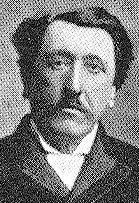
William Chatterton Dix (1837–1898) was a prominent 19th-century English layman, author, and lyricist whose exceptional contributions left an indelible mark on global hymnody. In a century where the overwhelming majority of British hymn writers were university-educated Anglican clergymen, Dix stood out as a notable exception. He was a thoroughbred businessman who spent his career working in the high-stakes world of maritime commerce.
Despite his demanding secular vocation, Dix possessed a brilliant literary mind and a profound devotion to sacramental theology. He penned dozens of classic church anthems and carols that bridged the gap between ancient liturgy and contemporary congregational singing, including the globally renowned Christmas standard, "What Child Is This?"
The Marine Underwriter with a Literary Heritage
William Chatterton Dix was born in Bristol, England, on June 14, 1837. He was named in honor of the celebrated 18th-century Bristolian poet Thomas Chatterton—a literary figure his father, John Dix (a prominent local surgeon), had extensively documented in a published biography. Young William received a classical education at the Bristol Grammar School, where his innate facility with language and metric structure was highly refined.
Rather than taking holy orders in the Church of England, Dix entered the business world. He eventually relocated to Glasgow, Scotland, where he was appointed the high-level manager of a prominent marine insurance company. Navigating the daily, pragmatic risks of global shipping, weather disasters, and mercantile legalities, Dix spent his quiet evenings immersing himself in the highly evocative language of sacred poetry.
                    ┌──────────────────────────────────────┐
                    │      DIX'S DUAL VOCATIONAL PATH      │
                    └──────────────────┬──────────────────┘
                                       │
         ┌─────────────────────────────┴─────────────────────────────┐
         ▼                                                           ▼
THE SECULAR VOCATION: MARITIME RISK                        THE SACRED VOCATION: LITURGICAL HARP
Managed a major marine insurance company                    Authored over 40 standard hymns, translated
in Glasgow; assessed shipping and cargo risks.              ancient Eastern liturgies into modern English verse.
The Bedridden Genesis of Modern Masterpieces
In 1865, when he was twenty-eight years of age, Dix was struck down by a sudden, severe illness that culminated in a profound psychological and physical collapse. Confined to his bed for months with near-total paralysis and fighting a deep, existential depression, he found himself stripped of his business routine. In that intense furnace of physical suffering, his creative dam broke, yielding some of the most enduring devotional texts in the English language.
1. What Child Is This?
During his prolonged convalescence in 1865, Dix read the Gospel of Luke's account of the Epiphany. He penned a deeply evocative, atmospheric poem titled "The Manger Throne." When the text was later lifted from his manuscript and brilliantly coupled with the haunting, melancholic 16th-century English traditional folk melody GREENSLEEVES, it transformed into one of the most beloved Christmas carols on earth.
Unlike many festive carols that focus exclusively on pastoral tranquility, Dix’s text introduces a startling, prophetic juxtaposition—viewing the soft swaddling clothes of the infant through the heavy, theological lens of the future cross and shroud:
Hymn Excerpt: The Prophetic Manger
Why lies He in such mean estate
Where ox and ass are feeding?
Good Christian, fear; for sinners here
The silent Word is pleading.
Nails, spear shall pierce Him through,
The cross be borne for me, for you;
Hail, hail the Word made flesh,
The Babe, the Son of Mary!
2. As With Gladness Men of Old
Written slightly earlier in 1860 while recovering from another brief spell of illness on the Feast of the Epiphany, this fine text was designed to systematically dismantle the romanticized sentimentality surrounding the journey of the Magi. Dix aligns the historical journey of the wise men directly with the immediate, ethical response of the modern believer:
Hymn Excerpt: The Star-Led Journey
As with gladness men of old
Did the guiding star behold,
As with joy they hailed its light,
Leading onward, beaming bright;
So, most gracious Lord, may we
Evermore be led to Thee.
Set perfectly to the crisp, bright chorale tune DIX (adapted from Conrad Kocher), this hymn achieved instant, universal acclaim. It was published in the foundational 1861 edition of Hymns Ancient and Modern, securing Dix’s place among elite British hymnographers.
Global Translator of Hidden Traditions
Beyond his original English verse, Dix performed a highly critical, historical service for global hymnody by acting as a poetic bridge-builder to ancient, neglected branches of the Christian church. Working alongside scholars like Dr. R.F. Littledale and the Reverend J.M. Rodwell, Dix took raw, literal prose translations of ancient liturgical texts and reshaped them into beautifully metrical, singable English verse.
Through this meticulous work, he introduced Western congregations to completely unknown spiritual treasures:
-
The Greek Divine Liturgies: Rendered ancient Eastern Orthodox prayers into standard English meters.
-
The Abyssinian Church: Successfully adapted historic, isolated African hymns from the Ethiopian Orthodox tradition into European hymnbooks.
Comprehensive Catalog of Key Works
Dix was highly prolific, publishing multiple independent volumes of verse, including Hymns of Love and Joy (1861), Altar Songs: Verses on the Holy Eucharist (1867), and The Pattern Life (1885), a specialized book of instructions and original hymns tailored explicitly for children.
Summary of Major Corporate Anthems
| Hymn Title | Primary Tune Setting | Liturgical Theme | Historical Context / Source |
| What Child Is This? | GREENSLEEVES | Christmas / Epiphany | Written during his severe 1865 bedridden illness. |
| As With Gladness Men of Old | DIX | Epiphany / Discipleship | Written in 1860; highly praised by Hymns Ancient & Modern. |
| Come Unto Me, Ye Weary | MEINKE | Invitation / Comfort | A plaintive, deeply personal setting of Christ's call to rest. |
| Alleluia! Sing to Jesus | HYFRYDOL | Holy Communion / Ascension | A triumphant, highly sacramental Eucharistic masterpiece. |
| Joy Fills Our Inmost Heart Today | FLY SHEET (c. 1865) | Christmas Carol | Published originally in the Church Times to stir congregational joy. |
| On the Waters Dark and Drear | ST. RAPHAEL | Intercession for those at Sea | Directly reflective of his daily professional focus on maritime safety. |
William Chatterton Dix passed away on September 9, 1898, at Cheddar in Somerset, England, at sixty-one years of age. Living his life in the bustling center of corporate insurance, his lasting historical legacy is that he refused to let secular realities blunt his spiritual vision. By looking past the modern ledgers of his office to uncover the rich, ancient tapestries of the global church, his elegant, scriptural verses continue to give millions of voices a robust, poetic language to sing of the incarnation and the cross every season.