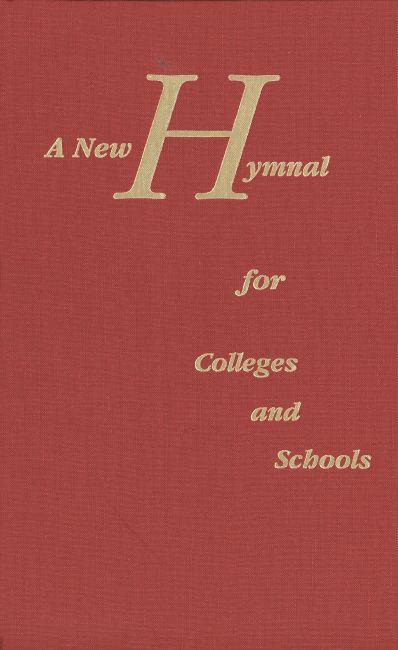
About W. G. Tarrant
The Reverend William George Tarrant (1853–1928) was a prominent English Unitarian minister, editor, and hymnologist whose work helped shape late-19th and early-20th-century liberal Christian hymnody. Gifted with a sharp editorial eye and a deep commitment to an inclusive, forward-looking theology, Tarrant sought to express a faith that celebrated historical progress, spiritual sincerity, and the natural world, while deliberately avoiding rigid dogmatic boundaries.
Through his decades-long pastorate in London and his leadership in compiling the widely influential Essex Hall Hymnal, Tarrant provided free-thinking congregations across Britain with an enduring, poetic voice.
From the Editorial Desk to the Wandsworth Pulpit
William George Tarrant was born in 1853. A dedicated scholar, he pursued advanced studies and earned his Bachelor of Arts (B.A.) degree. His intellectual journey led him into the ministry of the Unitarian Church—a tradition that emphasizes individual conscience, reason, and a non-trinitarian understanding of God's love.
In 1883, at thirty years of age, Tarrant was appointed the pastor of the Wandsworth Unitarian Christian Church in south-west London. This pastorate became his life’s anchor; he remained their faithful minister for decades, shepherding the congregation through the sweeping cultural and social shifts of the late-Victorian and Edwardian eras.
                    ┌──────────────────────────────────────┐
                    │      TARRANT'S LITERARY & PASTORAL   │
                    └──────────────────┬──────────────────┘
                                       │
         ┌─────────────────────────────┼─────────────────────────────┐
         ▼                             ▼                             ▼
  1883: PASTORAL ANCHOR         1888–1897: THE CHIEF EDITOR    1890–1902: THE ESSEX HYMNALS
 Appointed Minister at          Directed "The Inquirer,"       Co-edited the landmark hymnals
 Wandsworth Unitarian, London.  Britain's premier liberal gazette. that revitalized liberal singing.
Tarrant’s influence quickly expanded from the local pulpit to national media. From 1888 to 1897, he served as the chief editor of The Inquirer. Founded in 1842, The Inquirer is famously recognized as the oldest surviving nonconformist religious newspaper in Britain. Under Tarrant's direction, the publication tackled complex contemporary issues, advocating for social reform, religious liberty, and a thoughtful reconciliation of faith with modern science.
Architect of the Essex Hall Hymnals
Tarrant’s most lasting historical contribution was his direct work as a hymnologist. In the late 19th century, liberal Christian denominations were seeking new worship music. They wanted songs that leaned less on traditional themes of human depravity and substitutionary atonement, and more on themes of social justice, personal ethics, and God's ongoing revelation throughout history.
To meet this need, Tarrant became a principal editor of the landmark Essex Hall Hymnal (1890), published by the British and Foreign Unitarian Association. He subsequently drove the production of its highly successful Revised Edition in 1902.
Rather than merely curating the works of others, Tarrant contributed several of his own original texts to these collections. His compositions are notable for their clean, accessible vocabulary and their ability to frame spiritual concepts through everyday human experiences and nature.
Landmark Hymns and Core Theological Focus
By 1907, the eminent hymnographer John Julian noted that a core set of Tarrant’s original anthems had entered standard congregational usage across Great Britain:
1. The Light Along the Ages
Originally composed for Easter, this text brilliantly reframes the holiday away from purely physical resurrection narratives to focus on a sweeping historical perspective. Tarrant views the divine light not as a single flash in antiquity, but as a continuous, unstoppable torch passed down through generations of prophets, martyrs, and ordinary saints:
Hymn Excerpt: The Unbroken Torch
The Light along the ages
Shines brighter as it runs;
From prophets and from sages,
From martyrs and their sons.
2. Come, Let Us Join with Faithful Souls
A highly ecumenical anthem that celebrates the "Invisible Church." It invites modern singers to find kinship with true seekers across all centuries and geographical borders, prioritizing a shared commitment to goodness over specific theological creeds.
3. Long Ago the Lilies Faded
A deeply poetic hymn centering on Christ’s constant, spiritual presence. It acknowledges that while the specific lilies of the ancient Galilean hillsides have long since died, the essential truths, ethical challenges, and comforting presence of Jesus remain fully alive in the immediate present.
Summary of Core Hymnological Contributions
| Hymn Title | Primary Liturgical Category | Core Theological/Textual Identity |
| The Light Along the Ages | Easter / Historical Hope | Continuous divine revelation; truth growing brighter over time. |
| Come, Let Us Join with Faithful Souls | The Communion of Saints | Functional unity of all good people; active spiritual fellowship. |
| Long Ago the Lilies Faded | The Present Christ | Moving past historical sentiment to experience faith in the here-and-now. |
| Draw Nigh to God | Devotional / Introspection | God as the immediate, responsive divine helper to human struggle. |
| With Happy Voices Ringing | Children's Praise | Accessible, joyful expressions of faith tailored for the young. |
William George Tarrant passed away in 1928 at seventy-five years of age, leaving behind an honorable legacy of editorial brilliance and pastoral longevity. Operating in an era when intellectual advancement often caused people to abandon church structures entirely, Tarrant’s specific triumph was providing a singing vocabulary for the thoughtful believer. By matching a rigorous, open-minded intellect with an innate lyricism, he proved that a faith stripped of rigid dogmatic armor could still sing with deep reverence, warmth, and enduring conviction.