About W. P. Mackay
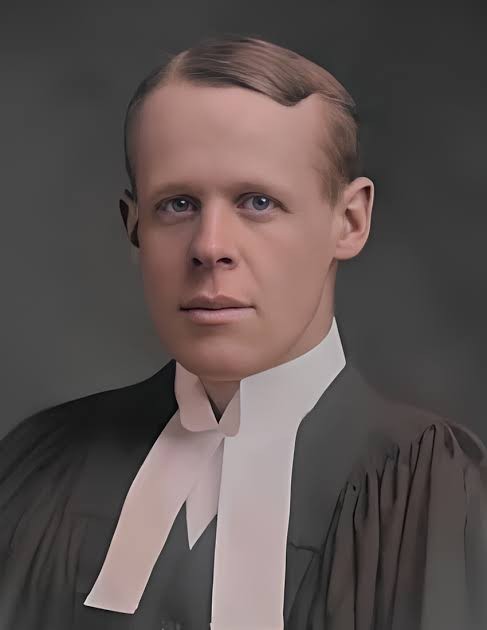
The Reverend Dr. William Paton Mackay (1839–1885) was a highly gifted 19th-century Scottish physician, Presbyterian minister, author, and hymnologist. He is celebrated for his remarkable career transition from the medical wards of Edinburgh to the influential pulpits of Yorkshire. Known for his intense intellectual vigor and a deep passion for spiritual revival, Mackay became a foundational figure in late-Victorian nonconformist hymnody. By blending his clinical understanding of human suffering with a vibrant evangelical faith, he provided global Christianity with its definitive anthem of spiritual reawakening: "We Praise Thee, O God, for the Son of Thy Love" (widely known across the world as "Revive Us Again").
From Clinical Medicine to the Gospel Pulpit
William Paton Mackay was born in Montrose, Scotland, on May 13, 1839. A young man of exceptional academic capacity, he enrolled at the University of Edinburgh to pursue a career in medicine. After years of rigorous scientific training, he successfully graduated with his medical doctorate (M.D.) and began practicing as a physician. During his early medical career, however, Mackay experienced a profound spiritual transformation that completely shifted his sense of purpose. He felt a persistent, overriding call to address the spiritual ailments of humanity alongside their physical ones.
Obeying this new direction, Mackay walked away from his lucrative medical practice, underwent formal theological training, and was ordained into the Presbyterian ministry. In 1868, at twenty-nine years of age, he accepted a call to become the senior pastor of the Prospect Street Presbyterian Church in Hull, England. That same year, he married Mary Loughton Livingstone, initiating a supportive domestic partnership that anchored his intensive pastoral career. Mackay spent nearly two decades transforming the Hull congregation into a powerhouse of regional evangelism and social outreach, earning a widespread reputation as a brilliant, fiercely logical, and deeply compassionate orator.
The 1872 Breakthrough and Global Revivals
Mackay firmly believed that corporate singing was the most effective vehicle for anchoring scriptural truths in the hearts of working-class people. In 1872, he partnered with the prominent publisher W. Reid to contribute seventeen original hymns to the highly influential collection The Praise Book. Mackay's texts stood out immediately for their structural clarity, metric accessibility, and lack of dense, academic language. They focused intensely on themes of substitutionary atonement, absolute assurance, and corporate spiritual renewal.
His hymnological work quickly crossed the Atlantic, catching the attention of the famous American evangelist Dwight L. Moody and his musical director Ira D. Sankey. During their historic, sweeping revival campaigns across Great Britain and North America, Moody and Sankey utilized Mackay’s texts as primary altar invitations and corporate anthems, catapulting his words into international fame.
Landmark Masterpiece: "Revive Us Again"
While Mackay published over thirty highly regarded hymns, his permanent place in global church history was secured by a text he originally drafted in 1863 and meticulously recast in 1867. Universally recognized by its opening line, "We praise Thee, O God, for the Son of Thy love," the hymn is historically designated across millions of hymnals as "Revive Us Again."
The Anatomy of Spiritual Reawakening
The global success of the hymn relies entirely on its rhythmic simplicity and its direct, celebratory trajectory. Mackay masterfully engineered the stanzas to systematically recount the core mechanics of Christian redemption: praising the Father for Christ's sacrifice, thanking the Holy Spirit for spiritual illumination, and celebrating the ultimate victory of the resurrection. When paired with a driving, joyful camp-meeting tune, the explosive refrain became the ultimate theme song for 19th and 20th-century global evangelistic movements.
Hymn Excerpt: The Cry for Spiritual Fire
We praise Thee, O God! for the Son of Thy love,
For Jesus who died, and is now gone above.
Refrain:
Hallelujah! Thine the glory, Hallelujah! amen;
Hallelujah! Thine the glory, revive us again.
An International, Multilingual Footprint
Because Mackay's verses relied on universally accessible biblical imagery, foreign missionaries found his texts incredibly easy to translate into local dialects without losing their emotional or theological weight. Historical archives demonstrate that his primary texts achieved massive cross-cultural implementation, showing up in standard collections across completely distinct linguistic families worldwide:
| Language | Regional Hymn Title / Incipit | Core Liturgical Focus |
| Spanish | Te loamos, ¡oh Dios! Con unánime voz | Corporate Thanksgiving and Praise |
| German | O Gott, sei gelobt, für die Liebe im Sohn | The Centrality of Christ's Love |
| Portuguese | Louvamos-te, ó Deus | Congregational Worship and Unity |
| Swahili | Twamsifu Mungu kwa Mwana wa pendo | Evangelical Joy and Deliverance |
| Russian | Да будет Отцу Всеблагому хвала! | Solemn Adoration and Revival |
| Chinese | 神,我讚美你 | Individual and Corporate Consecration |
A Sudden End and Enduring Legacy
In the summer of 1885, while traveling in the inner Hebrides of Scotland, Mackay was involved in a catastrophic, sudden accident at Portree. Despite his own medical background, the injuries proved fatal, and he passed away on August 22, 1885, at forty-six years of age, cutting short a pastoral career that was at the absolute peak of its national influence.
William Paton Mackay's historical legacy represents a beautiful synthesis of his dual callings. As a doctor, he understood that a body could not thrive without a beating heart, and as a minister, he recognized that a church could not survive without a vital, active spiritual life. While his historical sermons and medical papers have faded into the specialized annals of the nineteenth century, his musical legacy remains incredibly robust. Every time a modern congregation gathers to pray for fresh energy, renewal, and unity, they continue to use the simple, magnificent vocabulary penned by the young Scottish physician who left the clinic to heal souls.