About W. S. Pitts
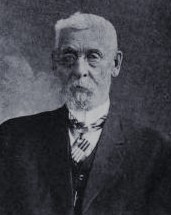
Dr. William Savage Pitts (1830–1918) was an American physician, music educator, and composer whose unique intersection of romantic imagination and historical coincidence produced one of the most celebrated and nostalgic pieces of American folk hymnody. A multi-talented figure who balanced a dedicated medical practice with local civic leadership, Pitts spent over four decades serving communities in northeast Iowa.
His permanent legacy, however, rests entirely on a single prophetic poem that materialized into a real wooden sanctuary, giving the world the timeless pastoral anthem "The Church in the Wildwood" (also universally known as "The Little Brown Church in the Vale").
The Vision in the Valley
Born in Yates, New York, on August 18, 1830, William Savage Pitts displayed a strong innate musical aptitude from early childhood. He received formal musical training from a graduate of the prestigious Boston Handel and Haydn Society, developing a solid foundation in choral arrangement and harmony. In 1849, at nineteen years of age, he moved westward with his family to Rock County, Wisconsin, where he began working as a rural music schoolteacher and brass band conductor.
The defining turning point of his creative life occurred in June 1857. While traveling via horse-drawn wagon to Fredericksburg, Iowa, to visit his fiancée, Ann Eliza Warren, Pitts stopped to rest his team at the tiny settlement of Bradford, Iowa. Wandering across a nearby field, he came upon a remarkably picturesque, heavily wooded valley carved out by the Cedar River. Standing in the quiet glen, Pitts experienced a vivid, intense mental image of a small church building nestled perfectly among the trees.
The vision completely captivated his imagination. Upon returning home to Wisconsin, he immediately channeled the imagery into a nostalgic, rhythmic poem titled "The Church in the Wildwood." Satisfied with capturing the sentiment on paper, he filed the manuscript away in his personal files, and his mind was finally at rest.
A Prophecy Rendered in Brown Paint
In 1862, Pitts and his bride married and relocated permanently to Fredericksburg, Iowa, to reside near her aging parents. Along the travel route, Pitts intentionally stopped at the exact coordinates in Bradford where he had stood five years prior, eager to revisit the beautiful wooded landscape.
To his utter astonishment, he discovered a local congregation actively erecting a brand-new timber church building on the exact spot he had envisioned. Due to severe wartime financial constraints and an incredibly tight congregational budget, the builders were coating the exterior with the cheapest structural paint available on the market at the time: a raw, utility mineral brown.
                       ┌────────────────────────────────────────┐
                       │     THE BRADFORD COINCIDENCE (1862)    │
                       └───────────────────┬────────────────────┘
                                           │
         ┌─────────────────────────────────┴─────────────────────────────────┐
         ▼                                                                   ▼
 THE 1857 LYRIC POEM                                                THE 1862 REALITY
 Pitts envisioned a church in a                                     A congregation builds a wooden
 pristine valley; wrote the text to satisfy                         sanctuary on the exact spot, painted
 his own creative imagination.                                      brown purely because it was cheap.
When the local building committee learned that the new young doctor in the county had written a beautiful poem matching their exact setting years before it existed, they immediately requested that Pitts bring his local church choir to the upcoming dedication. On a historic afternoon in 1863, Pitts stood inside the fresh timber walls and directed his choir in the very first public performance of the song.
The $25 Copyright and the Weatherford Revival
In 1865, looking to complete his formal medical training, Pitts moved temporarily to Chicago to enroll at Rush Medical College. To help pay his grueling tuition and daily living expenses, he walked into the Chicago music publishing house of Root & Cady and offered several of his musical compositions for sale. The publishers gravitated toward "The Little Brown Church in the Vale," purchasing the absolute legal rights to the song from Pitts for a flat fee of twenty-five dollars. Pitts completed his schooling, graduated with his medical doctorate in 1868, and returned to Iowa to practice medicine.
For the next several decades, the song remained a modest, localized piece of sheet music. However, its true global explosion occurred after the turn of the century when the famous evangelistic singing group The Weatherwax Quartet adopted it as their definitive signature theme song during their massive, sweeping Chautauqua and tent revival circuits across North America. The song became a massive international phenomenon, sparking a nostalgic romanticism for simpler, rural American pioneer life.
Global Adaptations and Cultural Legacy
The immense structural clarity of Pitts’ melody and the universal warmth of the text allowed it to transition effortlessly across global linguistic boundaries. Foreign missionaries and international compilers integrated the piece directly into global songbooks, adapting the imagery of the peaceful American vale to fit diverse international landscapes:
| Language | Translated Song Title / Incipit | Core Cultural Focus |
| German | Ich weiß eine liebe Kapelle / Im Walde dort stehet ein Kirchlein | Traditional European forest imagery emphasizing sanctuary peace. |
| Spanish | Una iglesia prefiere mi alma | Evangelistic focus on the spiritual beauty of the church community. |
| Portuguese | Tenho gôzo e alegria / Tenho paz e alegria celeste | Transforming the nostalgic melody into a vibrant hymn of personal spiritual joy. |
| Russian | Известна мне Церковь живая | A metaphorical take framing the "church in the vale" as the living body of Christ. |
Civic Leadership and Final Resting Place
Dr. Pitts was far more than a one-hit composer; he was an exceptionally dedicated pillar of his Iowa community. He practiced medicine faithfully in Fredericksburg until 1906, concurrently serving as the town's mayor for seven years and the school district treasurer for over a quarter of a century. A Master Freemason and local historian, he authored an early comprehensive biographical history of the region. After the passing of his first wife in 1886, he remarried Martha Amelia Pierce Grannis in 1887. In his twilight years, he relocated to Brooklyn, New York, to reside with his son, occasionally delighting local congregations by singing his famous song from the pews.
Dr. William Savage Pitts passed away in Brooklyn on May 8, 1918, at eighty-seven years of age. In accordance with his strict final wishes, his body was transported back across the country to the fertile soil of northeast Iowa. He was laid to rest in the permanent peace of the Fredericksburg cemetery.
While his long career as a frontier physician eased the physical suffering of thousands of early pioneers, his enduring monument remains carved in music. Every time a traveler pulls off the highway to visit the preserved brown chapel in Nashua, Iowa, or a choir breaks into that deep, rhythmic bass line "Oh, come, come, come, come..." the simple, romantic vision of the young traveler on the horse-drawn wagon continues to echo beautifully through the valleys of the world.