About W. W. Walford
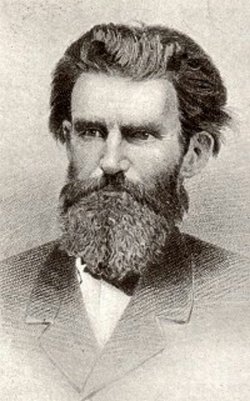
William W. Walford (1772–1850) was an obscure 19th-century English blind lay preacher, small-shop keeper, and oral poet whose deep personal piety gave the Christian world one of its most comforting and universally sung devotional anthems. Living a quiet life of economic hardship in the hamlet of Coleshill, Warwickshire, Walford lacked formal education and societal connections.
Despite these physical and socioeconomic limitations, his remarkable memory and rich inner life allowed him to compose an enduring masterpiece of Christian devotion: "Sweet Hour of Prayer."
The Prodigious Memory of the Blind Preacher
Born in England in 1772, William W. Walford faced a world of significant challenge, losing his eyesight early in life. Blocked from traditional career paths and standard educational institutions, he leaned heavily on a naturally formidable intellect and an exceptionally retentive memory. To support his family, he maintained a small shop in Coleshill while serving local Independent and Congregational assemblies as an unordained lay preacher.
Walford's pulpit ministry became legendary throughout Warwickshire because of his complete mastery of the biblical text. Deprived of the ability to read printed pages or sermon notes, he memorized massive structural portions of Scripture. Eyewitness accounts from the era note that he could quote the entire New Testament, the book of Psalms, the major Old Testament prophecies, and sweeping sections of biblical history entirely from memory, effortlessly providing exact chapters and verses to his congregation without ever misplacing a word.
The Pencil and the New York Observer
Because Walford could not write down his own poetic thoughts, his hymns survived entirely through oral dictation. The providential preservation of his most famous work occurred around 1842 through his close friendship with the Reverend Thomas Salmon. Salmon was serving as the settled pastor of the Congregational Church at Coleshill between 1838 and 1842 before immigrating to the United States.
                    ┌──────────────────────────────────────┐
                    │    TRANSATLANTIC JOURNEY OF A HYMN   │
                    └──────────────────┬──────────────────┘
                                       │
         ┌─────────────────────────────┴─────────────────────────────┐
         ▼                                                           ▼
 1842: ORAL COMPOSITION                                     1845: NEW YORK PRINTING
 Walford recites the stanzas in                             Salmon sends his pencil transcript to
 Coleshill; Pastor Salmon rapidly                           the New York Observer, preserving the
 copies the lines with a pencil.                            unprinted poem for global distribution.
During a pastoral visit, Walford recited a new four-stanza poem he had composed regarding the profound internal peace he experienced during his private devotion. Deeply moved by the vivid imagery, Salmon rapidly copied the lines using a pencil as Walford spoke them aloud. Salmon carried this loose transcript across the Atlantic and subsequently mailed it to the editors of the New York Observer, where it was formally published on September 13, 1845, introducing Walford's quiet reflections to the broader world.
Landmark Masterpiece: "Sweet Hour of Prayer"
Walford’s single monumental contribution to global hymnody functions as an intimate, personified address to the act of prayer itself, framing spiritual devotion as a physical sanctuary from the exhausting trials of daily life.
The Liturgical Sanctuary of the Mind
The brilliant emotional resonance of "Sweet Hour of Prayer" stems directly from Walford's own physical reality. As a blind shopkeeper navigating an unforgiving, dark world of economic anxiety and physical vulnerability, he found his primary liberation at the "Father's throne."
The opening stanzas beautifully outline the classic Christian doctrine of prayer as an active escape from temptation, a reliable relief in seasons of grief, and a structural bridge that carries the believer's petitions straight to a sovereign God. When set to a sweeping, perfectly balanced melody composed in 1861 by the legendary American musician William B. Bradbury, the hymn became an absolute global sensation.
Hymn Excerpt: The Refuge from Care
Sweet hour of prayer! sweet hour of prayer!
That calls me from a world of care,
And bids me at my Father’s throne
Make all my wants and wishes known;
In seasons of distress and grief,
My soul has often found relief,
And oft escaped the tempter’s snare,
By thy return, sweet hour of prayer!
Global Adaptations Across Cultural Horizons
Because Walford's text relies on universal themes of human vulnerability, inner peace, and divine reassurance, it became a primary target for international missionary translation throughout the 19th and 20th centuries. Hymnological registries document its integration into over twelve hundred distinct hymnals, crossing geographic and linguistic barriers with astonishing ease:
| Language | Regional Title / First Line | Core Devotional Focus |
| Spanish | Dulce oración, dulce oración / ¡Oh dulce, grata oración! | Prayer as a sweet, necessary refuge. |
| Portuguese | Bendita a hora de oração, Que nos dá paz ao coração | The profound emotional peace provided by the altar. |
| German | O süße Stunde des Gebets / O Andachtszeit, o Andachtszeit! | Solemn, quiet sanctuary and focused meditation. |
| Chinese | 禱吿良辰!禱吿良辰 / 禱告之時,甘甜之時! | The beautiful, precious timing of spiritual intimacy. |
| Swahili | Wakati wangu kuomba | Reliance on the Father during earthly journeys. |
| Malayalam | പ്രാർത്ഥനയിൻ നൽ നേരമേ, ലോക ചിന്തകളകറ്റി | Casting away worldly anxieties for celestial focus. |
Historical Identity Debate
Modern hymnological researchers, including compilers of the Canterbury Dictionary of Hymnology, note that Walford's historical biography presents an intriguing academic riddle. Because he was an unordained, impoverished lay preacher operating outside official church hierarchies, confirming his precise vital statistics through municipal church books has proven difficult.
A minority of historical critics have attempted to reassign the hymn to the Reverend William Walford of Homerton, an exceptionally well-educated, sighted Congregational minister who published formal theological treatises during the same general era.
However, the definitive weight of historical tradition remains firmly anchored to the original, vivid description provided by Thomas Salmon in 1845. The sheer intimacy of a text that celebrates escaping a blind, challenging world of physical limitation to look upon the face of God matches perfectly with the lived reality of the uneducated, brilliant shopkeeper of Coleshill.
William W. Walford passed away in 1850 at seventy-eight years of age, leaving behind few physical possessions and no grand monuments. Yet, his legacy remains utterly unshakeable. Every time a global congregation lowers its voice to sing his sweet, comforting lines before a pastoral prayer, the blind preacher's brilliant internal vision continues to guide millions of sighted travelers safely to the foot of the throne.