About Washington Gladden
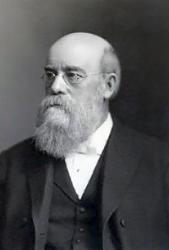
The Reverend Dr. Washington Gladden (1836–1918) was a pioneering American Congregational clergyman, editor, social reformer, and author who emerged as one of the chief architects of the Social Gospel movement. Born in Pottsgrove, Pennsylvania, on February 11, 1836, Gladden was educated at Williams College before entering the Congregational ministry.
Throughout his long and highly influential career—including a historic thirty-two-year pastorate at the First Congregational Church in Columbus, Ohio—he passionately argued that true Christian discipleship required the active application of biblical ethics to the systemic economic, industrial, and political crises of Gilded Age America. Though his hymnological output was small, he penned one of the most beloved devotional anthems of the modern era: "O Master, Let Me Walk with Thee."
A Champion of the Social Gospel
Washington Gladden's early professional years were divided between pastoral leadership and influential journalism. He served as an editor for the New York Independent and the magazine Sunday Afternoon, platforms he used to speak out against public corruption. During his time in New York, he gained significant national recognition for his aggressive editorial role in helping dismantle the notoriously corrupt political machine known as the Tweed Ring.
In 1882, Gladden accepted a call to the First Congregational Church in Columbus, Ohio, where he remained for over three decades, establishing the parish as a bustling national center for social reform. He consistently put his theology into practice, stepping directly into industrial disputes to serve as an impartial arbitrator during the highly contentious Telegraphers' Strike and the Hocking Valley Coal Strike of 1883–1884.
A man of fierce integrity, Gladden sparked an intense national debate within his denomination when he publicly attacked the industrial titan John D. Rockefeller, Sr. For years, Gladden loudly opposed the church's acceptance of a one hundred thousand dollar donation from Rockefeller, branding it "tainted money" extracted through predatory monopolies.
                    ┌───────────────────────────────────────┐
                    │    WASHINGTON GLADDEN'S TWO FRONTS    │
                    └───────────────────┬───────────────────┘
                                        │
         ┌──────────────────────────────┴──────────────────────────────┐
         ▼                                                             ▼
 CELEBRATED SOCIAL CRITIC                                      PASTORAL HYMN WRITER
 Fought political corruption and corporate                     Penned deeply intimate verses designed to
 monopolies; arbitrated historic labor strikes.                 sustain the believer's personal daily walk.
Landmark Masterpiece: "O Master, Let Me Walk with Thee"
While Gladden published numerous books detailing his social theology, his permanent place in global hymnody was secured by a poem written in 1879 that was never originally intended to be a congregational song.
From Private Devotion to Corporate Praise
The hymn "O Master, let me walk with Thee" originally appeared in March 1879 within the pages of Sunday Afternoon as a three-stanza poem of eight lines each under the general heading "Walking with God." Unlike many of the grand, institutional anthems of the Victorian era, Gladden's text reads as an incredibly intimate, quiet prayer for personal guidance, emotional endurance, and relational patience.
In 1884, the prominent hymnologist Dr. Charles H. Richards discovered the poem and extracted its first and third stanzas, reconfiguring them into four highly effective stanzas of four lines each for church collections like Laudes Domini. When paired with the beautiful, reverent melody MARYTON—composed in 1874 by the English churchman Henry Percy Smith—the hymn became a massive international standard, prized across denominational lines for its focus on daily service, companionship with Christ, and quiet hope.
Hymn Excerpt: The Prayer for Daily Endurance
O Master, let me walk with Thee
In lowly paths of service free;
Tell me Thy secret; help me bear
The strain of toil, the fret of care.
Help me the slow of heart to move
By some clear, winning word of love;
Teach me the wayward feet to stay,
And guide them in the homeward way.
Other Hymnological Contributions
While his masterpiece dominates modern usage, Gladden contributed a few other highly regarded texts to early twentieth-century American hymnody, notably appearing in The Pilgrim Hymnal (1904):
-
"Behold a Sower from afar" (1897) – A robust, visionary hymn focusing directly on the growth and social manifestation of the Kingdom of God on earth, mirroring his passion for corporate renewal.
-
"Forgive, O Lord, the doubts that break" (1879) – A deeply personal, vulnerable text focused on contrition, exploring the human tendency to harbor doubt despite divine promises.
Summary of Core Hymnological Repertoire
| Hymn Title / Common Incipit | Original Source / Date | Core Liturgical Focus | Modern Utilization |
| O Master, let me walk with Thee | Sunday Afternoon, 1879 | Daily discipleship, patience, and companionship with Christ. | Included in hundreds of international hymnals. |
| Behold a Sower from afar | Pilgrim Hymnal, 1897 | The expansion of justice and the Kingdom of God. | Primarily found in American ecumenical books. |
| Forgive, O Lord, the doubts that break | Written 1879 / Published 1904 | Repentance, spiritual vulnerability, and faith. | Utilized in mid-century devotional collections. |
Death and Enduring Vision
Washington Gladden passed away in Columbus, Ohio, on July 2, 1918, at eighty-two years of age. He left behind a legacy that permanently reshaped the focus of American Protestantism, challenging the church to look outside its walls to address the systemic suffering of the working class.
While his specific political articles, labor reports, and municipal arbitration papers are now studied primarily by specialized historians of the Progressive Era, Washington Gladden’s voice remains remarkably vital in the daily worship of the global church. Every time a congregation lifts its voice to sing his gentle, challenging lines, the great reformer from Columbus continues to remind travelers that the truest path of faith is found in the lowly paths of daily, loving service.