About William Augustus Muhlenberg
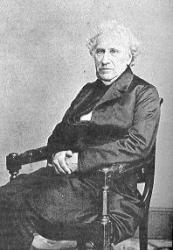
The Reverend Dr. William Augustus Muhlenberg (1796–1877) was a towering figure in nineteenth-century American religious history, widely recognized as one of the most visionary and multi-faceted leaders of the Protestant Episcopal Church. Born in Philadelphia on September 16, 1796, he belonged to an illustrious ecclesiastical dynasty; he was the son of the Reverend Dr. Muhlenberg and the grandson of Henry Melchior Muhlenberg, the celebrated patriarch of American Lutheranism.
Graduating from the University of Pennsylvania in 1814 and entering Holy Orders in 1817, Muhlenberg spent his long career championing a unique blend of high-church liturgical beauty and low-church evangelical passion. As a brilliant educator, urban pastor, and social pioneer, he established historic institutions that fundamentally changed the landscape of Christian charity and education in New York. Though his poetic output was intentionally limited, his sharp literary gifts produced some of the most enduring, vibrant, and celebrated hymns in the American church catalog.
A Pioneer of Christian Institutions
William Augustus Muhlenberg possessed an extraordinary capacity for translating Christian theology into concrete, brick-and-mortar reality. His ministry was marked by the creation of innovative, highly successful institutions that addressed the physical and spiritual needs of a rapidly expanding American society.
In 1828, he founded St. Paul’s College in Flushing, Long Island, an influential school that pioneered a holistic, sacramental approach to classical youth education. Later, in 1843, he moved into urban ministry as the Rector of the Church of the Holy Communion in New York City. There, he established the first free-church system in the Episcopal denomination, ensuring that corporate worship was completely accessible to all people regardless of wealth or social class.
Driven by an unshakeable commitment to urban social reform, Muhlenberg founded St. Luke’s Hospital in 1855, creating a magnificent sanctuary for medical healing that served the city's poorest residents. Ten years later, in 1865, he established the church community of St. Johnland on Long Island, a visionary Christian cooperative community designed to provide affordable housing, industrial training, and professional care for the elderly, crippled, and orphaned.
                    ┌───────────────────────────────────────┐
                    │     DR. MUHLENBERG'S THREE FRONTS     │
                    └───────────────────┬───────────────────┘
                                        │
         ┌──────────────────────────────┼──────────────────────────────┐
         ▼                              ▼                              ▼
 LITURGICAL REFORMER            EDUCATIONAL PIONEER            SOCIAL ARCHITECT
 Restored vibrant carols and     Founded St. Paul's College     Built St. Luke's Hospital
 sacramental beauty to worship.  to provide holistic youth care. and the St. Johnland mission.
Liturgical Architecture and the 1826 Prayer Book Committee
During the early nineteenth century, congregational singing in the Episcopal Church was largely restricted to stiff, metrical translations of the Psalms. Muhlenberg passionately advocated for a wider, more expressive vocabulary of praise. In 1826, while serving as the Assistant Rector of St. James's Church in Lancaster, Pennsylvania, he was appointed to a highly important national committee tasked with compiling a new Prayer Book Collection of hymns.
Muhlenberg contributed four of his own original lyrics to this collection, giving the young American denomination its first native masterpieces. His administrative work on this committee broke open the floodgates for modern hymnody, successfully embedding warm, subjective, and festive evangelical poetry directly into the formal liturgical fabric of the historic prayer book.
Landmark Masterpieces and Seasonal Carols
Muhlenberg's lyrics are characterized by their brilliant structural balance, clear scriptural narratives, and an innate understanding of vocal rhythm.
The Christmas Triumph: "Shout the Glad Tidings"
His most celebrated festive hymn, "Shout the glad tidings, exultingly sing," was written at the personal request of Bishop John Henry Hobart. The Bishop wanted an energetic Christmas text that could be sung to the highly popular, driving melody by Charles Avison, which was originally paired with Thomas Moore's words, Sound the loud timbrel. Muhlenberg's vibrant verses and rhythmic chorus ("Jerusalem triumphs, Messiah is King") were an instant sensation; Bishop Hobart had the words struck off on printing presses early so they could be sung at Trinity Church in New York City on Christmas Day, 1826.
The Sacramental Gentle Shepherd: "Savior, Who Thy Flock Art Feeding"
For the ritual of Holy Baptism, Muhlenberg penned what remains his most internationally utilized hymn, "Savior, Who Thy flock art feeding." Contributed as No. 86 in the 1826 collection, this tender text frames the sacrament not as a cold legal ceremony, but as an act of protective, loving oversight, pleading for the Good Shepherd to fold the fragile lambs of the congregation safely within His arms.
The Intricate History of "I Would Not Live Alway"
Perhaps his most famous individual poem, "I would not live alway," carried a highly complicated history that occasionally amused and frustrated its author. Written around 1824 in a lady's autograph album in Lancaster as an impromptu poem of private grief, the text was leaked to the Episcopal Recorder in 1826. When the full committee reviewed it for the new hymnal, the members deemed it "sweet and pretty, but rather sentimental" and threw it out.
Muhlenberg, who was sitting in the room, actually voted against his own anonymous work. The next morning, Dr. Henry Onderdonk discovered the rejection, went around to the committee members' homes to lobby them, and successfully had the text restored. Though it became a massive public favorite, Muhlenberg was never completely satisfied with the version in the hymnbooks and spent his later years revising and rewriting the text in 1859 and 1871.
Summary of Core Hymnological Repertoire
| Hymn Title / Common Incipit | First Publication Context | Core Liturgical Theme | Historical Significance |
| Shout the glad tidings | Prayer Book Collection, 1826 | Christmas triumph, prophetic fulfillment, and joy. | Written for Avison's tune; sung at Trinity Church in 1826. |
| Savior, Who Thy flock art feeding | Prayer Book Collection, 1826 | Holy Baptism, divine protection, and guidance. | Appeared in over two hundred and sixty hymnals. |
|
O cease, my wandering soul (Like Noah's weary dove) |
Prayer Book Collection, 1826 | Salvation, the Church as an Ark of refuge, and peace. | Extracted from his five-stanza text Like Noah's weary dove. |
| I would not live alway | Episcopal Recorder, 1826 | Eternal rest, heavenly hope, and release from sin. | Retained a massive following across nineteenth-century America. |
| Carol, brothers, carol | Written for St. Paul's, 1840 | Corporate fellowship and Christmas caroling. | Features a chorus adapted from Bishop A.C. Coxe. |
Death and Unfading Influence
Dr. William Augustus Muhlenberg passed away peacefully on April 6, 1877, at eighty years of age, within the quiet rooms of St. Luke’s Hospital—the very institution his active faith had raised from the ground. He was buried on the sweeping lawns of his beloved cooperative colony at St. Johnland.
While his specific hospital charters, college administrative registers, and complex committee meeting minutes are now housed in historic New York diocesan archives, Muhlenberg’s true monument remains beautifully alive. Every time an Episcopal congregation gathers around a baptismal font to welcome a small child, or a festive choir stands on Christmas morning to announce that Jerusalem triumphs and Messiah is King, the versatile pioneer from Philadelphia continues to direct the song.