About William Croswell Doane
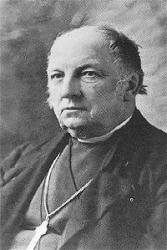
William Croswell Doane (1832–1913) was a towering intellectual, author, and prelate in the Protestant Episcopal Church of America who served as the historic first Bishop of Albany, New York. Born in Boston, Massachusetts, on March 2, 1832, he was the son of George Washington Doane, the celebrated Bishop of New Jersey and an influential early American hymn writer. Immersed in high-church liturgy and academic excellence from his youth, the younger Doane graduated from Burlington College before seeking holy orders.
He was ordained a deacon in 1853 and a priest in 1856. He went on to serve as rector of major parishes in Burlington, New Jersey, and Hartford, Connecticut, before moving to St. Peter's Church in Albany. When the massive Episcopal Diocese of Albany was carved out in 1869, Doane was the natural choice to become its first bishop, a position he held with immense administrative and spiritual authority for over forty years.
Cathedral Building and International Acclaim
As a church administrator, Doane left a permanent physical mark on the landscape of New York's capital city. He was the driving force behind the design and construction of the magnificent Cathedral of All Saints in Albany, which was one of the earliest examples of a true European-style missionary cathedral built on American soil.
His deep, sophisticated theological scholarship and eloquent preaching style earned him tremendous international respect, bridging the gap between American Episcopalians and the global Anglican Communion. His administrative and theological expertise was recognized by the world's most prestigious academic institutions, culminating in his receipt of a Doctor of Divinity from Oxford University and a Doctor of Laws from Cambridge University.
Landmark Masterpiece: "Ancient of Days"
While Bishop Doane was a regular writer of verse—eventually collecting his various works into a volume titled Rhymes from Time to Time (1902)—his permanent place in global hymnological history was secured by a single majestic, trinitarian processional anthem written in 1886.
The Albany Bicentennial Civic Hymn
His crowning creative achievement, "Ancient of Days, Who sittest throned in glory," was composed under very unique circumstances. Rather than being written for a standard Sunday parish service, it was commissioned as a civic and religious anthem to celebrate the Bicentennial of the City of Albany in 1886.
The hymn is a masterpiece of liturgical architecture, blending profound civic gratitude with uncompromising praise for the Holy Trinity. The phrase "Ancient of Days" is pulled directly from the apocalyptic visions in the biblical Book of Daniel, casting God as the timeless Ruler who stands far above the rise and fall of earthly cities and human empires.
                     ┌────────────────────────────────────────┐
                     │       TRINITARIAN HYMN ARCHITECTURE    │
                     └───────────────────┬────────────────────┘
                                         │
         ┌───────────────────────────────┼───────────────────────────────┐
         ▼                               ▼                               ▼
   THE HOLY FATHER                 THE SAVIOR SON                  THE COMFORTING SPIRIT
   Praise to the Creator who       Intercession for redemption     Supplication for guiding light
   guides human history.           and enduring truth.             and spiritual renewal.
When paired with the triumphant, brass-heavy tune ALBANY—composed specifically for these words by J. Albert Jeffery—the piece quickly outgrew its local civic origins. It was officially adopted into the prestigious 1892 Hymnal of the Protestant Episcopal Church and spread across multiple denominations, appearing in two hundred major collections. In some evangelical books, compilers choose to omit the opening civic-oriented stanza, starting the hymn instead with the universally relatable second stanza, "O Holy Father, Who hast led Thy children."
Hymn Excerpt: The Processional Praise
Ancient of Days, Who sittest, throned in glory,
To Thee all knees are bent, all voices pray;
Thy love has blessed the wide world’s wondrous story,
With light and life since Eden's dawning day.
O Holy Father, Who hast led Thy children
In all the ages, with the guiding hand,
Which weaves into the radiant web of progress
The choicest arrows of Thy love's command.
Summary of Core Hymnological Contributions
| Hymn Title / Common Incipit | First Publication Context | Core Liturgical Theme | Historical Significance |
| Ancient of Days, Who sittest | Albany Bicentennial, 1886 | Holy Trinity, civic blessing, and divine sovereignty. | Adopted into 200 major hymnals; translated into Chinese and Esperanto. |
| O Holy Father, Who hast led | Episcopal Hymnal, 1892 | Divine guidance, providence, and history. | Popular alternative opening stanza for modern books. |
| To Thee, O Father throned on high | Historical Diocesan Collection | Fatherhood of God, petition, and corporate prayer. | Maintained across several late-nineteenth-century collections. |
| Tell the story of the Risen | Easter Broadleaf Sheet | Resurrection joy, Easter, and redemption. | Written as an occasional seasonal carol for children. |
An Enduring Monument of Faith and Song
Bishop William Croswell Doane passed away in 1913, leaving behind a legacy that beautifully balanced grand, institutional architecture with intimate creative art.
While his early organizational records, local diocesan reports, and personal correspondence are carefully preserved in church archives, his actual living voice continues to echo through the global church. Every time a congregation stands to perform his soaring processional, singing out to the Ancient of Days while the organ swells to its full volume, the scholarly builder from Albany continues to guide the song.