About William D. Longstaff
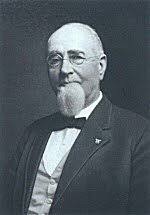
William Dunn Longstaff (1822–1894) was an influential English philanthropist, evangelical leader, and hymn writer whose independent wealth helped fuel some of the most significant revival movements of the nineteenth century. Born in Sunderland, Durham, England, he was the son of a wealthy shipowner. Inheriting substantial financial resources, Longstaff lived a life of luxury but struggled with a profound sense of spiritual emptiness.
His life completely changed during a church service in Keswick, England, where he heard a sermon by Griffith John, a missionary on furlough from China. Preaching from 1 Peter 1:16, "Be ye holy, for I am holy," John’s message pierced Longstaff, leading him to fully dedicate his heart and his fortune to Christ. He became a key pillar of the evangelical community in Sunderland, serving as church treasurer for his close friend, the Reverend Arthur A. Rees, at the Bethesda Free Chapel. Longstaff married Joice Burlinson in 1853, and together they raised a large family of eight children.
Financing the Global Revival Movement
Longstaff's true impact on church history extended far beyond his local parish. He viewed his vast wealth as a trust from God, using it to fund major evangelistic endeavors across the English-speaking world.
He was a close friend and generous financial supporter of William Booth, the founder of the Salvation Army, and frequently contributed hymn lyrics to the organization's magazine, The War Cry, during the 1880s. When the legendary American evangelist Dwight L. Moody and his musical partner Ira D. Sankey arrived in Great Britain for their crusades, their initial financial backer suddenly died, threatening to halt their mission. Longstaff stepped into the gap, completely financing their historic crusades across England and Scotland, which ultimately allowed them to preach to audiences reaching twenty thousand people.
Landmark Masterpiece: "Take Time to Be Holy"
While Longstaff wrote several hymns throughout his life, his permanent place in global hymnological history was secured by a single masterpiece written in the early 1880s, directly inspired by the missionary sermon that had caused his own conversion decades earlier.
The Anthem of Christian Discipline
His crowning achievement, "Take time to be holy, speak oft with thy Lord," is universally recognized as one of the most practical and enduring hymns on Christian spiritual discipline ever composed. Longstaff wrote the text to address the frantic, fast-paced nature of modern life, reminding believers that holiness is not an instantaneous emotion but a lifelong habit that requires deliberate time and focus.
                    ┌───────────────────────────────────────┐
                    │      "TAKE TIME TO BE HOLY" PILLARS   │
                    └───────────────────┬───────────────────┘
                                        │
         ┌──────────────────────────────┼──────────────────────────────┐
         ▼                              ▼                              ▼
   PRIVATE PRAYER                 SCRIPTURAL STUDY               SILENT SURRENDER
   "Speak oft with thy Lord,      "Feed on His Word,"            "In joy or in sorrow,"
   abide in Him always."          making Christ the guide.       copying the Master's mien.
Longstaff originally showed the poem to Ira Sankey during one of their UK crusades. Sankey preserved the text and later passed it to the prominent gospel composer George C. Stebbins. In 1882, while Stebbins was leading a revival movement in India, he remembered Longstaff's words and composed a beautifully gentle, deeply reverent melody in 6/8 time specifically for them.
The hymn became an immediate international success. It was adopted into over three hundred and fifty major English-language hymnals and has been widely translated, remaining a standard piece across German, Spanish, Portuguese, Swahili, Tagalog, Malayalam, and Chinese collections today.
Hymn Excerpt: The Call to Holiness
Take time to be holy, speak oft with thy Lord;
Abide in Him always, and feed on His Word.
Make friends of God’s children, help those who are weak,
Forgetting in nothing His blessing to seek.
Take time to be holy, the world rushes on;
Spend much time in secret, with Jesus alone.
By looking to Jesus, like Him thou shalt be;
Thy friends in thy conduct His likeness shall see.
Summary of Core Hymnological Contributions
| Hymn Title / Common Incipit | First Major Publication Context | Core Liturgical Theme | Long-Term Global Status |
| Take time to be holy | Revival Sheet, 1882 | Spiritual discipline, prayer, and holiness. | Appears in over 350 hymnals; translated globally. |
| Sed puros y santos | Latin American Selection | Sanctification and Christlikeness. | Extensively utilized across Spanish songbooks. |
| Tempo de ser santo | Historical Portuguese Hymnal | Devotional life and quiet reflection. | Standardized in early Portuguese collections. |
| 成聖須用工夫 | Early Missionary Anthology | The work and patience of sanctification. | Actively preserved in Chinese Protestant hymnals. |
An Enduring Legacy of Wealth Consecrated
William Dunn Longstaff passed away in Sunderland in 1894, outliving his beloved wife, Joice, by thirteen years. He left behind a legacy that beautifully illustrated the very message he preached: that true fulfillment comes only from a life completely surrendered to divine purposes.
While his specific shipping files, bank ledgers, and local chapel treasury books have faded into historical archives, his living voice continues to echo around the globe. Every time a busy congregation pauses its frantic schedule to sing his quiet reminder to spend time in secret with Jesus alone, the generous benefactor from Sunderland continues to guide the song.