About William Ellsworth Witter
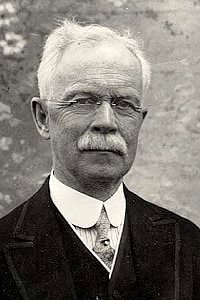
The Reverend Dr. William Ellsworth Witter (1854–1931) was a dedicated American Baptist clergyman, overseas missionary, educator, and author who spent his life serving the global church both on the domestic home front and in the remote regions of southern Asia. Born near La Grange, New York, on December 9, 1854, Witter pursued a thorough classical and theological education, graduating from the Geneseo State Normal School and the University of Rochester before entering the Rochester Baptist Theological Seminary.
Ordained into the Baptist ministry in 1884, his profound sense of evangelical calling eventually led him and his family to serve as pioneering missionaries in Assam, India, under the auspices of the American Baptist Foreign Mission Society. While his daylight years were defined by educational administration, linguistics, and cross-cultural ministry, his permanent place in global hymnody was established during his youth by a single, deeply personal invitation hymn that became an international standard of evangelical revivalism: "While Jesus Whispers to You."
Early Teaching Career and the Genesis of a Hymn
Before entering the formal ranks of the ordained ministry, William Ellsworth Witter worked as a dedicated schoolteacher in upstate New York. It was during this early chapter of his life, while carrying an intense spiritual concern for the young people placed under his daily care, that his landmark hymn was born.
In July 1878, while still a student, Witter experienced a period of profound spiritual anxiety regarding the personal faith of two of his favorite pupils. Unable to shake the burden, he sat down and penned a tender, highly urgent poem designed to gently break through the hesitation of young seekers. Originally titled The Divine Call, the verses bypassed heavy, institutional rhetoric in favor of a quiet, conversational intimacy, framing conversion as a direct, loving response to the quiet promptings of the Holy Spirit.
Convergence with the Gospel Song Movement
Witter's simple poem quickly caught the attention of the leading figures of the late nineteenth-century gospel song movement, who recognized its extraordinary utility as an invitation anthem.
Later in 1878, the prominent American musician and compiler Dr. Horatio Richmond Palmer discovered the text and set it to a beautifully tender, flowing melody. Palmer published the completed song in his widely circulated Book of Anthems (1878). From there, the piece gained rapid momentum, being incorporated into popular Sunday School collections like Good as Gold.
The hymn achieved permanent international stardom when the legendary singer and publisher Ira David Sankey adopted it for his massive Sacred Songs and Solos collection, issued in London in 1881. Used effectively as a soft invitation song at the conclusion of massive revival services led by Dwight L. Moody and other global evangelists, the hymn spread rapidly across the English-speaking world and was subsequently translated into numerous languages, including German, Spanish, Portuguese, Swedish, and Arabic.
                    ┌───────────────────────────────────────┐
                    │     THE EVOLUTION OF AN INVITATION    │
                    └───────────────────┬───────────────────┘
                                        │
         ┌──────────────────────────────┴──────────────────────────────┐
         ▼                                                             ▼
   A TEACHER'S PRIVATE CONCERN                                   A GLOBAL GOSPEL STANDARD
   Written in July 1878 out of deep pastoral                     Adopted by H.R. Palmer and Ira D. Sankey;
   anxiety for two of Witter's young pupils.                     translated into dozens of languages worldwide.
Anatomy of a Classic Revival Invitation
The enduring success of Witter's masterpiece lies in its exquisite economy of language and its gentle, yet persistent psychological focus on the fleeting nature of spiritual opportunity.
Unlike the thunderous "hellfire and brimstone" preaching often associated with nineteenth-century revivalism, Witter's text operates through a series of soft, rhythmic contrasts. The first stanza pairs the quiet whisper of Christ with the immediate invitation to come; the second stanza contrasts the bright morning of youth with the sudden shadows of old age; and the final stanza warns against the tragic danger of delaying a response until the heart becomes hardened to the divine voice.
Hymn Excerpt: The Fleeting Opportunity
While Jesus whispers to you,
Come, sinner, come!
While we are praying for you,
Come, sinner, come!
Now is the time to open,
Now is the time to pray;
Now is the time to enter,
Come, sinner, come!
While each pure hope is stealing,
Come, sinner, come!
While the soft light is fading,
Come, sinner, come!
While youth and health are fleeting,
Come, sinner, come!
While hearts and friends are meeting,
Come, sinner, come!
Missionary Horizon and Global Translation
Following his graduation from seminary in 1884, Witter largely stepped away from the domestic songwriting circuit to commit his energies to the foreign mission field. Stationed in Assam, India, he applied his pedagogical background to translating scripture and developing educational resources for indigenous populations.
Even as he labored on the other side of the globe, his early youth poem continued to travel independently, outliving its original regional context to become an indispensable tool for international evangelism. The text proved remarkably adaptable, appearing across hundreds of diverse denominational hymnals worldwide.
Summary of Core Hymnological Repertoire
While Witter wrote various scattered poems and occasional songs throughout his long ministry, his legacy remains anchored by his signature invitation hymn and its extensive global variants.
| Hymn Title / Global Variant | First Publication Context | Core Liturgical Theme | Historical Significance |
| While Jesus whispers to you | Palmer's Book of Anthems, 1878 | Evangelistic invitation, repentance, and urgency. | Maintained in over four hundred and sixty hymnals. |
| Jetzt, wo dich Jesus locket | German Evangelical Collections | Personal conversion and corporate renewal. | Extensively utilized in immigrant churches in America. |
|
Mientras Jesús te llama (Cristo está llamando, ven pecador) |
Spanish Mission Hymnals | Solemn invitation and immediate response. | Standardized in early Latin American Baptist hymnals. |
| Eis, Cristo te convida | Portuguese Devotional Books | Grace, reconciliation, and salvation. | Adopted by early South American missions. |
| Nu Jesus hviskar till dig | Scandinavian Gospel Collections | Devotional surrender and spiritual awakening. | Popularized via nineteenth-century migration networks. |
Death and Enduring Echoes
The Reverend Dr. William Ellsworth Witter passed away in 1931 at seventy-six years of age, leaving behind a legacy marked by cross-cultural sacrifice, academic excellence, and pastoral devotion.
While his specific missionary reports, linguistic translations, and localized parish records are preserved within Baptist historical societies, his true monument remains beautifully alive. Every time an evangelical congregation drops into a quiet hush at the close of a service, and a choir begins to softly sing his rhythmic, tender plea to come while the soft light is fading, the thoughtful schoolteacher from New York continues to point travelers home.