About William Hiley Bathurst
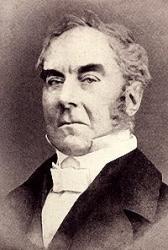
William Hiley Bathurst (1796–1877) was an English clergyman, translator, and poet whose deeply felt convictions left a lasting mark on nineteenth-century hymnody. Born at Clevedale, near Bristol, on August 28, 1796, he was the son of the Right Honorable Charles Bragge (who later took the surname Bathurst), a Member of Parliament for Bristol. Bathurst received a prestigious classical education, studying first at Winchester College before entering Christ Church, Oxford, where he graduated with his Bachelor of Arts in 1818.
In 1820, Bathurst was ordained into the Church of England and assumed the rectory of Barwick-in-Elmet, a parish near Leeds. He ministered faithfully to this community for over thirty years. However, by 1852, his theological positions had shifted. Finding himself conscientiously unable to reconcile his personal doctrinal views with certain requirements of the Book of Common Prayer, he took the difficult and costly step of resigning his rectory. He retired into private life, spending his remaining decades focusing on literary pursuits, including a translation of Virgil's Georgics. He passed away at Lydney Park, Gloucestershire, on November 25, 1877.
The 1831 Psalter and Liturgical Impact
Bathurst made his primary contribution to church music in 1831 with the publication of Psalms and Hymns for Public and Private Use. This ambitious volume contained 141 metrical versions of the Psalms and 206 hymns, almost all of which were entirely original compositions.
Hymnologists have historically categorized Bathurst's writing as direct, highly scriptural, and structurally simple. While early critics noted that his verses rarely sought grand, complex poetic heights, his straightforward approach made his lines incredibly accessible to ordinary congregations. His work found an especially enthusiastic audience in American hymnals. In many early American collections, his name was abbreviated simply to "Bath," leading some compilers to mistakenly assume the pieces originated from a collective "Bath Collection."
                    ┌───────────────────────────────────────┐
                    │      BATHURST'S LYRICAL STRUCTURE     │
                    └───────────────────┬───────────────────┘
                                        │
         ┌──────────────────────────────┴──────────────────────────────┐
         ▼                                                             ▼
   THEMATIC DIRECTNESS                                           POETIC ACCESSIBILITY
   • Unwavering focus on scriptural truth                        • Plain, uncomplicated language
   • Designed for immediate comprehension                        • Balanced meter ideal for group song
Masterpieces of Faith and Reflection
Out of the hundreds of hymns Bathurst penned, a few select works achieved massive international status, anchoring themselves in the standard repertoire of British, American, and global congregations.
1. "O for a Faith That Will Not Shrink"
This is universally recognized as Bathurst's absolute masterpiece. Written as a passionate prayer for spiritual endurance, the hymn petitions God for a resilient faith capable of withstandng the trials, temptations, and heartaches of earthly life. It became an immediate staple, appearing in more than five hundred major hymnals worldwide and receiving numerous international translations.
2. "Holy Spirit, from on High"
A beautifully quiet, prayerful invocation, this hymn asks for the direct illumination and guidance of the Holy Spirit. It was heavily favored for opening services, confirmation classes, and personal devotional hours, appearing in dozens of distinct collections.
3. "How Sweet the Hour of Closing Day"
Showcasing Bathurst’s ability to handle solemn themes with grace, this piece addresses the quiet peace of a believer's deathbed. Its gentle imagery made it a frequent choice for funeral liturgies and memorial services throughout the nineteenth and twentieth centuries.
Hymn Excerpt: The Prayer for Enduring Faith
O for a faith that will not shrink,
Tho' pressed by every foe;
That will not tremble on the brink
Of any earthly woe!
A faith that shines more bright and clear
When tempests rage without;
That when in danger knows no fear,
In darkness feels no doubt.
Summary of Core Hymnological Contributions
| Hymn Title / Common Incipit | Associated Theme | Initial Publication | Modern Global Status |
| O for a faith that will not shrink | Spiritual endurance, trust, and trial. | Psalms and Hymns, 1831 | Over 540 hymnals; translated into Spanish, Portuguese, and Tamil. |
| How sweet the hour of closing day | Christian peace in death and eternity. | Psalms and Hymns, 1831 | Preserved in 91 major collections. |
| O for that flame of living fire | Revitalization, prayer, and the Holy Spirit. | Psalms and Hymns, 1831 | Found across 68 historical songbooks; translated into Swedish. |
| Holy Spirit, from on high | Guidance, illumination, and humility. | Psalms and Hymns, 1831 | Actively used in 67 hymnals worldwide. |
| Jesus, Thy Church with longing eyes | Advent, expectancy, and the Second Coming. | Psalms and Hymns, 1831 | Maintained a steady presence in 65 major collections. |
A Legacy of Integrity
William Hiley Bathurst’s life was an example of the very principles he wrote about in his most famous verses. When faced with a conflict between institutional alignment and his personal understanding of scriptural truth, he chose a faith that would not shrink, sacrificing his comfortable position at Barwick-in-Elmet for the sake of his conscience.
While his pastoral voice was silenced within his local parish upon his retirement, his poetic voice achieved global reach. Centuries later, whenever a congregation gathers to sing his earnest plea for a clear, calm, and courageous faith, the rector from Bristol continues to provide the church with its vocabulary of spiritual resilience.