About William Hunter
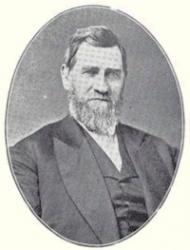
William Hunter (1811–1877) was an Irish-born American Methodist clergyman, professor, and exceptionally prolific hymn writer whose camp-meeting melodies and devotional lyrics played a defining role in nineteenth-century American frontier evangelism. Born near Ballymoney, County Antrim, Ireland, on May 26, 1811, he immigrated with his family to the United States in 1817. He received his higher education at Madison College in Pennsylvania, entering in 1830.
Hunter quickly proved to be a highly talented writer and communicator, editing prominent denominational periodicals such as the Conference Journal and the Christian Advocate. In 1855, his academic capability led to his appointment as Professor of Hebrew at Allegheny College in Meadville, Pennsylvania. He later returned to active pastoral ministry, serving the Methodist Episcopal Church at Alliance, Stark County, Ohio, until his death in 1877. Over his lifetime, Hunter composed well over 125 original hymns and compiled highly popular songbooks, including the Minstrel of Zion (1845), Select Melodies (1851), and Songs of Devotion (1859).
The Soundscape of the Camp-Meeting Movement
Hunter's ministry coincided with the height of the Second Great Awakening and the American camp-meeting phenomenon. These outdoor revival services required a fundamentally different type of music than traditional, dense European church liturgies. Front-line worshippers needed repetitive, emotionally vibrant lyrics and infectious melodies that could be quickly memorized without the use of printed hymnals.
                    ┌───────────────────────────────────────┐
                    │       HUNTER'S REVIVAL LYRIC CORES    │
                    └───────────────────┬───────────────────┘
                                        │
         ┌──────────────────────────────┼──────────────────────────────┐
         ▼                              ▼                              ▼
   CELESTIAL HOMELANDS            CHRIST THE PHYSICIAN           PILGRIMAGE & PROGRESSION
   Deep focus on heaven as a      Emotional, healing-centered    Active, rhythmic imagery of
   vibrant, pain-free reality.    depictions of redemption.      moving forward on a trail.
Hunter became a master of this format. Rather than focusing on cold, abstract dogma, his poetry utilized brilliant, active imagery—such as voyaging across stormy seas, marching in armies, or traveling home as a weary pilgrim. His tunes were so accessible and cross-cultural that early frontier missionaries translated dozens of his songs into various Native American languages, introducing his music to remote tribal communities.
Global Anthems of Hope and Healing
Out of Hunter's massive catalog of nearly two hundred texts, a select group of compositions achieved staggering international success, becoming structural fixtures in nineteenth- and twentieth-century evangelical life.
1. "The Great Physician Now is Near" (1859)
This remains Hunter's most globally widely distributed hymn, appearing in nearly nine hundred distinct collections. Originally published in Songs of Devotion, the piece frames Christ's redeeming work through the comforting, highly personal imagery of medical care and emotional restoration. It became an immediate international staple, widely adapted across Europe, Africa, and Asia:
The great Physician now is near,
The sympathizing Jesus;
He speaks the drooping heart to cheer,
Oh, hear the voice of Jesus.
2. "My Heavenly Home is Bright and Fair" (1845)
A quintessential camp-meeting anthem, this piece captures the vivid, hopeful focus on eternity that characterized nineteenth-century frontier faith. It achieved an extraordinary status in American and British hymnals, appearing in 670 major collections.
3. "Joyfully, Joyfully Onward I Move" (1843)
Written as an upbeat, forward-looking anthem of a believer pressing toward eternity, this song became immensely popular across Sunday Schools. It developed into two distinct historical variations: the original version, which focused generally on passed-on friends, and an altered educational format reading "Teachers and scholars have passed on before."
Notable Works and Cross-Cultural Legacy
| Hymn Title / Incipit | Associated Theme | Primary Compilation Context | Modern Global Footprint |
| The great Physician now is here | Healing, comfort, and redemption. | Songs of Devotion, 1859 | Featured in nearly 890 hymnals; widely translated into Chinese, Swahili, Hindi, and Malayalam. |
| My heavenly home is bright and fair | Eternity, peace, and reassurance. | Minstrel of Zion, 1845 | Appears in over 670 collections; translated into German and Spanish. |
| Joyfully, joyfully, onward I move | Perseverance, hope, and reunion. | Minstrel of Zion, 1845 | Found in 219 hymnals globally; translated into German and Arabic. |
| There is a spot to me more dear | Sanctification, memory, and local devotion. | Minstrel of Zion, 1845 | Preserved across 85 distinct historical songbooks. |
An Enduring Heritage of Song
William Hunter’s life perfectly bridged the rigors of formal classical academia with the raw, emotional passion of the American frontier. While his weeks were spent instructing students in the complexities of biblical Hebrew at Allegheny College, his heart remained tethered to the simple, encouraging songs of the local congregation.
His physical voice fell silent in 1877, but the comforting vocabulary he provided to the global church remains beautifully active. Whenever a congregation seeks a reminder of comfort in times of grief, or sings out the triumphant declaration that the Great Physician is near, the immigrant scholar from County Antrim continues to lead the chorus.