About William Ralph Featherston
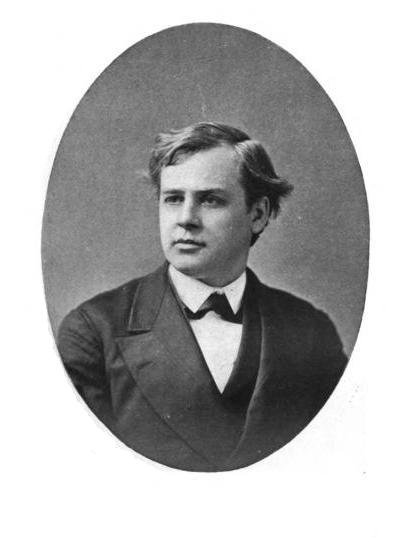
William Ralph Featherston (1846–1873) was a young Canadian layman whose brief life left an indelible mark on global Christian hymnody. Born in Montreal, Quebec, Featherston’s legacy is unique: unlike many prominent hymn writers who were ordained ministers or prolific authors, Featherston is known to the world through a single, extraordinarily personal poem written in his youth.
His short life was anchored by his involvement with the Wesleyan Methodist Church in Montreal. After experiencing a profound Christian conversion at the age of sixteen while in Toronto, he channeled his newfound faith into a deeply moving expression of devotional surrender. Tragically, Featherston passed away in Montreal at the young age of twenty-six, completely unaware that his private youthful meditation would soon become one of the most widely sung hymns of love and devotion in the global church.
The Origin of a Youthful Masterpiece
William R. Featherston wrote his landmark hymn, "My Jesus, I love Thee, I know Thou art mine," around 1862, shortly after his conversion experience. The poem was not originally intended for public worship or denominational hymnals. Instead, the sixteen-year-old penned the four stanzas as a private statement of faith and sent the manuscript to his aunt, Ms. E. Featherston Wilson, who lived in Toronto.
                       ┌────────────────────────────────────────┐
                       │     THE JOURNEY OF A PRIVATE POEM      │
                       └───────────────────┬────────────────────┘
                                           │
         ┌─────────────────────────────────┴─────────────────────────────────┐
         ▼                                                                   ▼
   MONTREAL TO TORONTO (1862)                                          LONDON TO BOSTON (1870s)
   Written by a 16-year-old convert; sent                             Published anonymously in London; discovered
   privately to his aunt, who sent it to a publisher.                  by A.J. Gordon, who composed the permanent tune.
Recognizing the rare spiritual depth and lyrical beauty of the verses, his aunt forwarded the poem to a publisher. It crossed the Atlantic and was published anonymously in a London hymnal in 1870. Though Featherston married Julie R. MacAlister in 1869 and welcomed a son named John in 1870, his health soon failed. When he died in 1873, the poem was only beginning its journey toward becoming a global standard.
Convergence with Adoniram Judson Gordon
The text might have remained an obscure British poem if it had not caught the attention of Dr. Adoniram Judson Gordon, a prominent American Baptist preacher, evangelist, and founder of the institutions that became Gordon College and Gordon-Conwell Theological Seminary.
In the early 1870s, Dr. Gordon discovered the anonymous text in a London hymnal. While he was deeply moved by the profound simplicity of Featherston's words, he found the existing British tune uninspiring and ill-suited for the emotional weight of the lyric. Driven to give the words a proper vehicle, Gordon composed a tender, soaring, and deeply reverent melody specifically for the text. This tune, appropriately named GORDON, was published alongside the words in 1876 and became the permanent, inseparable musical setting for Featherston's poem across the globe.
Anatomy of Surrender and Everlasting Love
The enduring power of Featherston’s hymn lies in its structural progression, tracking the believer's relationship with Christ across the entire arc of human existence from present earthly devotion, through the physical reality of death, and into eternal glory.
The hymn deliberately shifts away from corporate theological abstractness to focus on an intensely personal dialogue ("My Jesus," "I know Thou art mine"). The first stanza establishes a joyful renunciation of sin; the second states that the believer loves Christ because He loved them first on Calvary; the third introduces a highly comforting resolve to love Him through the physical valley of death; and the final stanza culminates in an eternal song of praise in the mansions of glory.
Hymn Excerpt: Devotion in Life and Death
My Jesus, I love Thee, I know Thou art mine;
For Thee all the follies of sin I resign;
My gracious Redeemer, my Savior art Thou;
If ever I loved Thee, my Jesus, 'tis now.
I’ll love Thee in life, I will love Thee in death,
And praise Thee as long as Thou lendest me breath;
And say when the death dew lies cold on my brow,
If ever I loved Thee, my Jesus, 'tis now.
Global Repertoire and Lingual Adaptations
Though Featherston wrote no other known hymns, his single masterpiece achieved massive international saturation. The text proved highly adaptable across vastly different cultures and languages, finding a home in nearly five hundred major English-language hymnals and maintaining a vital presence in global missionary literature.
| Hymn Title / Linguistic Variant | Core Devotional Target | Long-Term Global Status |
| My Jesus, I love Thee | Personal surrender and Christ's all-sufficiency. | Appears in nearly five hundred major English hymnals. |
| 主耶穌我愛祢,深知我屬祢 | Textual fidelity to the theme of assurance. | Widely standard in Chinese Protestant assemblies. |
| Oh, Cristo, yo te amo, que mío eres, sé | Devotional love and Calvary's grace. | Extensively utilized across Latin American songbooks. |
| Jesus, sempre te amo | Grace, reconciliation, and eternal hope. | Standardized in historical Portuguese hymnals. |
| എൻ യേശു എൻ പ്രിയൻ | Meditative focus on Christ as the Soul's Friend. | Actively preserved in Malayalam church traditions. |
An Unfading Legacy of Youthful Faith
William Ralph Featherston passed away at an age when most young men are just beginning their professional careers. He left behind no massive theological libraries, no large institutional properties, and no complex organizational files.
Yet, by simply laying his heart bare on a piece of paper at sixteen years of age, he gave the global church one of its most comforting and permanent vocabularies of faith. Every time an international congregation softy drops its volume to confess that they will love Christ as long as breath is lent, or a believer faces their final hours with the peaceful assurance of eternal glory, the young Methodist from Montreal continues to guide the song.