
Why Do Churches Use the Hymnal?
The use of hymnals in Christian churches is a practice rooted in centuries of church traditions. A hymnal is a collection of songs written for the purpose of praising God, teaching biblical doctrine, and edifying the body of Christ through congregational singing. The idea of gathering songs into one volume traces back to the earliest church practices.
The first recorded "hymnal" of God's people is the Book of Psalms in the Bible. This inspired collection of 150 sacred songs, also called the Psalter, was central to Jewish singing and became foundational to early Christian praise. Jesus and His disciples sang a hymn during the Last Supper (Matthew 26:30), which was likely one of the Psalms known as the Hallel (Psalms 113–118).
As Christianity spread beyond Jewish communities, Christians began composing and compiling additional hymns based on New Testament doctrine and the person of Christ. These hymns were sung in homes, gatherings, and early church assemblies, helping to unify believers and reinforce/aid biblical truth.
The First Church Hymnals and Their Purpose
By the 2nd and 3rd centuries, historical records show that early Christians were already using collections of songs in worship. A famous example is the "Phos Hilaron," or "Hail, Gladdening Light," which dates back to at least the 3rd century and was sung in evening services. Church fathers like Ambrose of Milan wrote hymns for teaching and defense of the faith. These early hymnals served as doctrinal tools, using music to help people memorize Scripture and Christian teachings.
In the Protestant Reformation, hymnals gained renewed importance. Reformers like Martin Luther and John Calvin promoted congregational singing in the local language, leading to the publication of hymnals such as Luther’s Geistliche Gesangbüchlein and the Genevan Psalter. These books empowered ordinary believers to participate in worship, rather than merely observe it.
Why Churches Still Use the Hymnal Today
Churches continue to use hymnals today for several practical and spiritual reasons:
-
Preservation of Sound Doctrine: Many hymns are rich in biblical theology. They declare the gospel, exalt Christ, and affirm essential truths of the faith. Singing such songs helps to guard against false teaching and keeps the focus of worship on God.
-
Unity in Congregational Singing: A hymnal provides a standard set of songs for everyone to sing together. When a congregation sings from the same book, it fosters unity and shared expression of faith. Colossians 3:16 says, “Let the word of Christ dwell in you richly... teaching and admonishing one another in psalms and hymns and spiritual songs.”
-
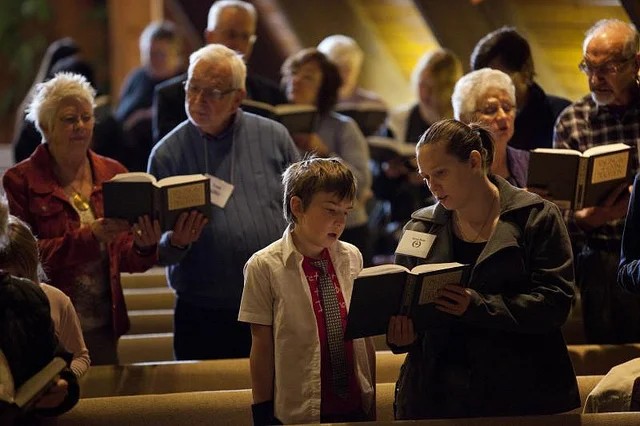
Accessibility and Simplicity: Unlike projected lyrics or digital systems, a physical hymnal is not dependent on technology. It can be used anywhere, anytime. Elderly members, children, and visitors can all follow along with ease. Hymnals also include musical notation for those who read music.
-
Preservation: Hymnals containing songs that have stood the test of time. Many contemporary worship songs may fade in popularity, but hymns like Amazing Grace, Holy, Holy, Holy, and It Is Well with My Soul continue to bless generations.
-
Meditation and Private Singing: A hymnal is not only useful during public singing. It can be used in personal devotion, family time, and during quiet times of reflection. Reading through a hymnal can stir the heart to praise and lead to deeper understanding of Scripture.
The Book of Psalms: God’s Original Hymnal
The Psalms were God’s own inspired hymnal for His people. They express every range of human emotion: joy, sorrow, thanksgiving, repentance, praise, and lament. David and other psalmists wrote songs that dealt honestly with life while pointing to the greatness of God. These songs were sung regularly in temple worship and were essential to Israel's spiritual life.
Even in the New Testament, the Psalms remain central. Jesus quoted from the Psalms frequently, and the apostles used them to explain Christ's mission. In Ephesians 5:19, Paul exhorted believers to sing “psalms and hymns and spiritual songs, singing and making melody in your heart to the Lord.” Many churches still include the Psalter in their hymnals, recognizing the timeless truth and beauty of these divine songs.
Why the Hymnal Still Matters
Churches use hymnals not out of tradition alone, but because they are effective tools for worship, teaching, and spiritual growth. They help preserve biblical truth in song, provide accessible means for unified praise, and offer a treasure of devotional literature for the believer.
A church that sings together, believes together. Hymnals anchor our worship in the truths of Scripture and connect us with the faithful who have sung these same songs for centuries. In a world full of fleeting trends, the hymnal remains a steady guide in the hands of God’s people.




No comments yet. Be the first to share your thoughts!