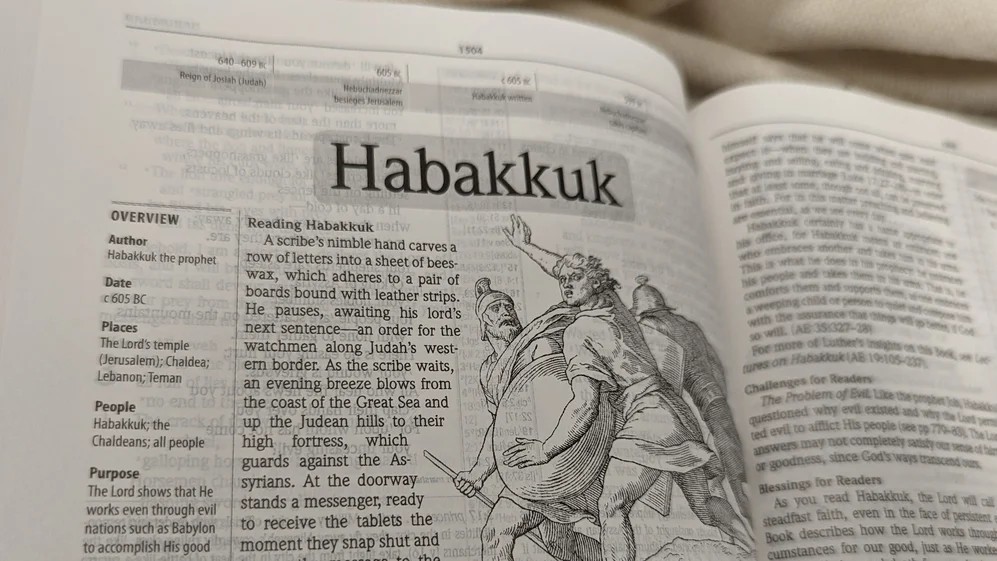
What Does the Book of Habakkuk Teach?
The Book of Habakkuk is one of the most unique books in the Bible because it records a conversation between a prophet and God. Unlike many prophets who delivered God's message to the people, Habakkuk brought the people's concerns before God. He looked at the violence, injustice, corruption, and wickedness around him and struggled to understand why God seemed silent. Through this dialogue, God revealed profound truths about faith, judgment, patience, and trust. Though written over 2,600 years ago, the lessons of Habakkuk remain deeply relevant today.
One of the first lessons Habakkuk teaches is that God welcomes honest questions from His people. Habakkuk did not pretend that everything was fine. He cried out, "O LORD, how long shall I cry, and thou wilt not hear!" (Habakkuk 1:2, KJV). He was troubled by the evil he saw and wanted to understand why God appeared inactive. The book reminds believers that faith does not require us to suppress our questions. God is not threatened by sincere inquiries. Throughout Scripture, faithful servants such as David, Job, Jeremiah, and the psalmists brought their struggles before God. Habakkuk teaches us that we can approach God honestly while still maintaining reverence and trust.
Another important lesson is that God's timing is different from ours. Habakkuk wanted immediate intervention, but God revealed that He was already at work. The Lord informed the prophet that He would use the Babylonians to judge Judah's wickedness. This answer shocked Habakkuk because Babylon was even more wicked than Judah. Yet God was demonstrating that His plans often exceed human understanding. Many believers struggle when prayers seem unanswered or when circumstances appear to worsen. Habakkuk teaches that God's silence does not mean God's absence. He is always working according to His perfect wisdom and timing.
The book also teaches that God is sovereign over nations and history. God raised up Babylon for His purposes, but He also declared judgment upon Babylon for its pride, cruelty, and idolatry. In chapter two, God pronounces a series of woes against the wicked. This demonstrates that no nation, ruler, or individual escapes God's authority. Human empires rise and fall, but God remains on His throne. Habakkuk learned that history is not random. Behind world events stands a sovereign God directing all things according to His purposes.
One of the most significant teachings in Habakkuk is found in the statement, "the just shall live by his faith" (Habakkuk 2:4, KJV). This verse became foundational in both the Old and New Testaments. It is quoted in Romans 1:17, Galatians 3:11, and Hebrews 10:38. The phrase teaches that God's people are called to trust Him even when circumstances seem confusing. Faith is not merely believing when everything makes sense. True faith continues to trust God's character when answers are not immediately visible. Habakkuk was called to walk by faith, and believers today receive the same calling.
Habakkuk also teaches that pride leads to destruction. Throughout chapter two, God condemns those who build their lives upon greed, violence, self-exaltation, and idolatry. Babylon believed its military strength and achievements made it invincible. Yet God declared that judgment was certain. The lesson is timeless. Whenever people trust in wealth, power, intelligence, or human accomplishments instead of God, they place themselves on a path toward ruin. God opposes pride but gives grace to the humble.
Another powerful lesson is that God deserves worship even during difficult circumstances. The book concludes with one of the most beautiful declarations of faith in Scripture. Habakkuk writes, "Although the fig tree shall not blossom, neither shall fruit be in the vines... yet I will rejoice in the LORD, I will joy in the God of my salvation" (Habakkuk 3:17-18, KJV). The prophet envisions complete economic and agricultural disaster. Crops fail. Livestock disappear. Material security vanishes. Yet Habakkuk chooses to rejoice in God. His confidence is no longer based on circumstances but on the unchanging character of the Lord.
This final chapter teaches that genuine faith produces joy even in adversity. Habakkuk began the book confused, troubled, and questioning. He ended it worshipping. His circumstances had not yet changed, but his perspective had. He learned that God Himself was enough. This transformation reveals one of the greatest truths of the Christian life: peace is not found in having all the answers but in knowing the One who does.
The Book of Habakkuk teaches believers how to live when they do not understand what God is doing. It encourages honest prayer, patient waiting, unwavering faith, humble dependence, and joyful worship. In a world filled with uncertainty, injustice, and suffering, comes this central message: God is still on His throne, His purposes will prevail, and the righteous are called to live by faith. When questions arise and answers seem delayed, the example of Habakkuk reminds us to trust God's wisdom, rest in His sovereignty, and rejoice in His salvation.


No comments yet. Be the first to share your thoughts!