About Paul Gerhardt
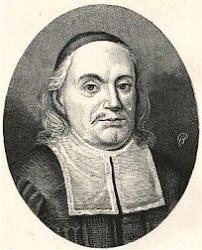
Paul Gerhardt (1607–1676) ranks next to Martin Luther as the most gifted, popular, and influential hymnwriter of the German Lutheran Church. Born in Gräfenheinichen, Saxony, as the son of a local burgomaster, Gerhardt matriculated at the University of Wittenberg in 1628 to study theology and hymnody. His early adult life was brutally destabilized by the horrors of the Thirty Years' War, preventing him from obtaining a settled pastoral charge until he was forty-four years old. After working for years as a private tutor in Berlin, he was ordained in 1651 as the chief pastor (Probst) at Mittenwalde. He returned to Berlin in 1657 as the third diaconus of the prominent St. Nicholas' Church, entering the sunniest and most universally esteemed period of his ministry, during which his profound musical collaborations with cantor Johann Crüger flourished.
Gerhardt’s pastoral tenure in Berlin was cut short by an intense theological and political crisis. Elector Friedrich Wilhelm, a devout Calvinist, issued an edict forbidding Protestant factions from public theological infighting. While Gerhardt deeply desired ecumenical peace, he refused to sign the declaration, believing it compromised the Lutheran Formula of Concord by silencing essential doctrinal defenses against Calvinist theology. Consequently, he was deposed from his Berlin office in 1666. Amidst this vocational exile, his personal life was marked by immense tragedy: his wife died after a prolonged illness, and four of his five children passed away during early childhood. In 1669, supported by loyal friends, he accepted a final post as archdeacon at Lübben on the Spree, spending his remaining years navigating a rough and unsympathetic parish as a widower with his one surviving son. His portrait at Lübben bears the apt description: Theologus in cribro Satanae versatus ("A theologian sifted in Satan's sieve").
In the history of Christian hymnody, Gerhardt stands as the vital transitional bridge between the objective, corporate confessionalism of the Reformation and the subjective, personal pietism of the late 17th century. While Luther’s hymns historically focused on the cosmic triumph of free grace over hell, Gerhardt’s texts centered on the intimate, paternal love of God, casting the Almighty not as a distant judge, but as a gentle, loving companion. He was the first major German hymnwriter to extensively introduce the individual "I" into corporate song, yet his sixteen "I" hymns avoided morbid sentimentality, acting instead as a representative voice for the collective experiences of the suffering congregation. His massive output of lengthy, multi-stanza German hymns—originally intended to be sung in sections interspersed throughout a liturgy—was primarily preserved in various editions of Crüger’s Praxis Pietatis Melica and J. G. Ebeling's historical ten-part compilation Das andere Dutzend geistliche Andachtslieder (1666–1667).
The universal spiritual power of Gerhardt's texts allowed them to transcend national borders, becoming deeply cherished within English-speaking Christendom through the historic translations of John Wesley and Catherine Winkworth. His monumental Passion hymn, "O Haupt voll Blut und Wunden" (translated as "O Sacred Head, Now Wounded"), based on a medieval Latin poem attributed to Bernard of Clairvaux, remains a global pinnacle of Holy Week reflection. His extensive catalog of enduring English translations includes pieces celebrating thanksgiving after great trial ("Cometh Sunshine After Rain"), peace following the devastation of the Thirty Years' War ("Thank God It Hath Resounded"), profound Christmas adoration ("I Stand Beside Thy Manger-Bed"), and fierce Easter assurance ("I Know That My Redeemer Lives"). Gerhardt’s legacy is that of a scarred, war-torn pastor who took the intense griefs of human existence and transformed them into bell-like, pure verses of unconstrained praise, providing the global church with its most comforting vocabulary of divine resignation and trust.