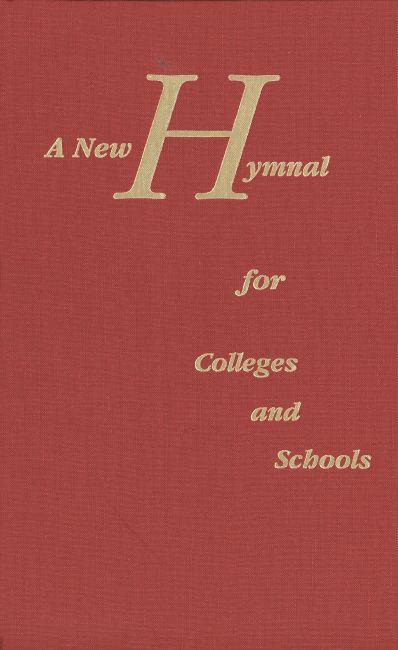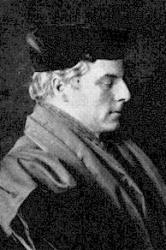
About Percy Dearmer
Percy Dearmer (1867–1936) was an exceptionally influential English Anglican priest, liturgist, and author whose towering editorial work permanently revolutionized the landscape of 20th-century British and international hymnody. Born in London as the son of Thomas Dearmer, he received a prestigious education at Westminster School before matriculating at Christ Church, Oxford, where he completed his Master of Arts in 1896. Ordained a priest in 1892, Dearmer quickly became an aggressive champion of Christian Socialism, serving as the Secretary of the London Branch of the Christian Social Union for several decades. In 1901, he was appointed Vicar of St. Mary the Virgin, Primrose Hill, a historic London parish that became a laboratory for his radical liturgical experiments. Convinced that the corporate worship of the Church of England should combine deep historical antiquity with the highest aesthetic standards of contemporary art and literature, he published his foundational text, The Parson's Handbook, in 1899 to promote a dignified, distinctly English style of ceremonial practice.
Dearmer’s monumental contribution to sacred music began when he joined forces with a brilliant committee of young churchmen and intellectuals, most notably the musical director Ralph Vaughan Williams, to challenge the dominance of the Victorian-era Hymns Ancient and Modern. Acting as the secretary and primary textual editor, Dearmer was a driving force behind the compilation of The English Hymnal (1906). He sought to purge church song of what he considered to be sentimental, low-quality tunes and textually weak dogmatic verses, replacing them with rugged, robust traditional folk melodies and linguistically brilliant poetry. For the 1906 collection, Dearmer contributed ten original translations of ancient Latin hymns and heavily edited numerous others. He followed this success two decades later by editing Songs of Praise (1925) and The Oxford Book of Carols (1928), expanding the church's repertoire to include robust expressions of social justice, creation-focused theology, and joyful folk carols.
As a lyricist and adapter, Dearmer possessed a distinct knack for providing congregations with fresh, poetic vocabulary suited for a rapidly changing, modern society. His original compositions frequently filled critical liturgical gaps that older collections ignored. His notable original contributions to The English Hymnal included "A Brighter Dawn is Breaking" (a triumphant Easter hymn loosely inspired by the ancient Aurora lucis), "Father, Who on Man Dost Shower" (a hymn advocating for social holiness and temperance), and "Jesu, Good Above All Other" (written specifically to provide children with a dignified, non-sentimental expression of devotion). He also penned focused texts for specific civic and pastoral occasions, including "God, We Thank Thee, Not in Vain" for burials, "Holy God, We Offer Here" for the Holy Communion, and "Lord, the Wind and Sea Obey Thee" for individuals traveling or working at sea.
In his later years, Dearmer’s vast theological and artistic expertise was widely recognized across academic and ecclesiastical spheres. He was appointed a canon of Westminster Abbey and served as a professor of ecclesiastical art at King's College London, continuing to lecture and write on the historical intersections of art, architecture, and liturgy until his death in 1936. Late in life, he embraced the growing ecumenical movement and aligned himself with progressive social causes, viewing the church's song as a vital weapon for building a more equitable society. Dearmer’s permanent legacy is that of a master aesthetic reformer who, alongside Vaughan Williams, broke the mold of Victorian religious music and provided the global English-speaking church with a rich, intellectually rigorous, and enduringly beautiful body of congregational song.