About Placide Cappeau
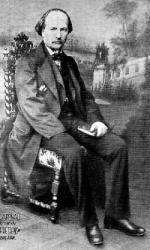
Placide Cappeau (1808–1877) occupies one of the most ironic and fascinating positions in Christian hymnology. An avowed atheist, freethinker, and fierce anti-clerical radical, he nonetheless penned the original French text for "O Holy Night" ("Minuit, chrétiens"), a song widely considered to be one of the most spiritually powerful and emotionally sublime Christmas carols ever composed.
Early Life, Trauma, and Education
Cappeau was born on October 25, 1808, in Roquemaure, France, the son of a prominent cooper (barrel maker). He was naturally expected to succeed his father in the family trade, but an event when he was eight years old altered his life. While playing, a young friend accidentally shot him in the hand, necessitating a surgical amputation.
Prevented from performing manual labor, Cappeau turned to academics. In a remarkable gesture of accountability, the father of the boy who shot him paid for half of Cappeau's education. Proving to be exceptionally bright, Cappeau attended the Collège Royal d'Avignon—where, despite his physical handicap, he won a first prize in drawing—before studying literature in Nîmes and law in Paris. He was licensed to practice law in 1831, but ultimately returned to Roquemaure to become a successful merchant of wines and spirits, allowing him to focus his true energies on his lifelong passion: literature and poetry.
The Genesis of a Masterpiece
In 1847, the local parish priest of Roquemaure, Father Petitjean, was celebrating the complete renovation of the church's pipe organ. Wanting a unique piece of poetry to mark the upcoming Christmas mass, he approached Cappeau, the town's resident literary talent. Though Cappeau made no secret of his total lack of faith and open hostility toward the institutional Church, he accepted the request as a purely literary challenge.
On a dusty coach ride to Paris, Cappeau opened the Gospel of Luke, using the scriptural narrative of Christ's birth to ground his prose. He penned the stirring lines of "Minuit, chrétiens" ("Midnight, Christians"), focusing heavily on themes of universal human brotherhood and the liberation of humanity from sin and oppression:
"Peuple à genoux, attends ta délivrance!"
("People, on your knees! Attend your deliverance!")
Upon arriving in Paris, Cappeau shared his fresh poem with Emily Laurey, a renowned opera singer. Swept away by the theatrical grandeur of the verse, Laurey brought the poem to her close friend, Adolphe Adam (1803–1856)—the legendary, Jewish composer of the famous ballet Giselle. Though Adam did not share Cappeau's subject matter, he was deeply inspired by the text's inherent rhythm. Within days, he married Cappeau's verses to a soaring, dramatic operatic score.
Emily Laurey performed the brand-new carol at the Roquemaure midnight mass just three weeks later. The congregation was spellbound, and the song spread like wildfire across France.
Scandal, Banishment, and Global Adoption
The initial church ecstasy quickly turned to scandal. When high-ranking Catholic bishops discovered the theological background of the song's creators—written by a vocal atheist and set to music by a Jewish composer—the French clergy formally banned the hymn from being sung in churches, labeling it "lackwit of musical taste and devoid of true religion."
However, the public refused to let the song die. Its popularity grew outside church walls, transforming it into an anthem of French social reform due to its explicitly abolitionist third verse:
"Truly He taught us to love one another;
His law is love and His gospel is peace.
Chains shall He break, for the slave is our brother,
And in His name all oppression shall cease."
In 1855, the prominent American unitarian minister and abolitionist John Sullivan Dwight (1813–1893) discovered the carol. Moved by its fierce anti-slavery sentiment, Dwight translated the French lyrics into English, creating "O Holy Night." The song became a massive cultural force in America, particularly during the Civil War, providing a beautiful, sweeping vocabulary of spiritual justice.
A Historic Milestone: The First Radio Broadcast
Decades after Cappeau’s death in 1871—having served as the secular mayor of Roquemaure—his Christmas carol made history. On Christmas Eve in 1906, Canadian-American inventor Reginald Fessenden, a former chief chemist for Thomas Edison, conducted the first-ever long-distance transmission of human voice and music over the airwaves from Brant Rock, Massachusetts.
Shocked wireless operators on navy ships and newspaper staff, used to hearing only the cold, mechanical clicks of Morse code, suddenly heard a warm human voice reading the Christmas narrative from the Gospel of Luke. When Fessenden finished reading, he picked up his violin and played "O Holy Night." Cappeau’s sweeping melody became the very first piece of music ever broadcast through radio waves in human history, echoing across the Atlantic Ocean.