About Ralph Carmichael
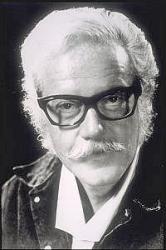
Ralph Carmichael (1927–2021), universally recognized as the "Father of Contemporary Christian Music" (CCM), was a towering, revolutionary figure who single-handedly reshaped the sonic landscape of the 20th-century church. A brilliant composer, conductor, and big-band arranger, he walked comfortably between two completely different worlds: orchestrating gold records for secular icons like Nat King Cole and Ella Fitzgerald while simultaneously fighting a fierce, stubborn battle to liberate sacred music from what he felt were outdated cultural shackles.
The Clash of Faith and Big Band Rhythm
Born on May 27, 1927, in Quincy, Illinois, Carmichael was the son and grandson of Pentecostal ministers. His father encouraged his early musical training, starting him on the violin before age four. However, unlike many strict pastors of the era, his father did not censor mainstream radio. As a result, young Ralph absorbed the sweeping brass arrangements and infectious rhythms of the Big Band swing era alongside traditional church hymns.
In the late 1940s, Carmichael enrolled at Southern California Bible College (now Vanguard University) to train for the ministry. Instead, his musical drive took over. He organized a campus big band that fused jazz chords, trumpets, and driving rhythms with gospel lyrics.
The radical concept caught the eye of Hollywood producers, leading to a weekly television program called The Campus Christian Hour. While the show won a local Emmy Award in 1950, the institutional church was heavily critical. Traditionalists were outraged by the inclusion of brass and drums in religious programming, with some pastors literally halting his band mid-performance or calling him a heretic for introducing "worldly" rhythms into the sanctuary.
Hollywood Success: Scoring for Pop Icons and Billy Graham
Undeterred by ecclesiastic pushback, Carmichael's immense arranging skills made him a hot commodity in secular Hollywood. In the late 1950s, Capitol Records hired him to arrange a sacred Christmas album for Nat King Cole. The collaboration blossomed into a deep professional partnership; Carmichael became Cole’s primary arranger, helping craft some of the singer's most lush, iconic ballad backings.
His secular resume grew to include arrangements and scoring for a stunning array of top-tier talent and entertainment properties:
-
Vocalists: Bing Crosby, Ella Fitzgerald, Peggy Lee, Rosemary Clooney, and Pat Boone.
-
Television: Composing and arranging music for I Love Lucy, Bonanza, and The Danny Kaye Show.
-
Film: Scoring the 1958 cult classic science fiction film The Blob.
Concurrently, his cinematic talent caught the attention of evangelist Billy Graham. Carmichael was hired as the primary composer for World Wide Pictures, the film production arm of the Billy Graham Evangelistic Association. He ended up scoring more than 20 films for the ministry, including the landmark urban soundtrack for the 1970 cinematic adaptation of The Cross and the Switchblade.
Redefining the Church Pew: Masterpiece Hymns
Carmichael always maintained that his work in Hollywood was simply the "education" God provided so he could apply world-class musical standards back to the gospel. In the 1960s, wanting to write songs that his teenage daughter and the emerging "Jesus People" youth counterculture could actually relate to, he began composing modern, folk-rock inflected hymns.
Four of his compositions crossed over from youth revivals into standard, formal church hymnals across multiple denominations:
1. "The Savior Is Waiting" (1958)
Written during his five-year tenure as a minister of music at an L.A. Baptist church, this gentle, deeply intimate ballad serves as a direct invitation to the individual soul. Abandoning the booming, complex theological prose of the 19th century, Carmichael used a conversational, vulnerable style paired with a soaring, emotional refrain:
"The Savior is waiting to enter your heart, Why don't you let Him come in? There's nothing in this world to keep you apart, What is your answer to Him?"
2. "A Quiet Place" (1967)
A beautiful, serene contemporary hymn that acts as a visual and auditory sanctuary. Written to contrast the chaotic, rapidly changing pace of the late 1960s, the lyrics describe a tranquil internal space where the noise of the world recedes to allow true divine communion.
3. "He's Everything to Me" (1964)
A bright, rhythmic testimony song that perfectly captured the casual, joyful intimacy of the 1960s youth revival movement. The song’s massive cultural footprint was cemented when it was recorded by mainstream artists, including Elvis Presley.
4. "Reach Out to Jesus" (1968)
Another landmark contemporary hymn dealing with isolation and societal anxiety, offering Christ as a tangible comfort. This track served as a major highlight on Elvis Presley's 1972 Grammy Award-winning sacred album, He Touched Me.
Institutionalizing Modern Christian Music: Light Records
In 1966, Carmichael took a proposal to Jarrell McCracken of Word Records, pitching a brand-new, independent joint venture. The result was the birth of Light Records and Lexicon Music Publishing.
Light Records was designed specifically to provide a commercial vehicle for music that mainstream labels deemed "too risky" or experimental—namely, Jesus People folk, Christian rock, and modern gospel. Through Light Records, Carmichael discovered, signed, and launched the historic careers of genre pioneers like Andraé Crouch & The Disciples, The Winans, and The Resurrection Band, effectively establishing the multi-billion dollar Contemporary Christian Music industry.
Carmichael passed away on October 18, 2021, at the age of 94. His enduring legacy is found every time an acoustic guitar, a drum kit, or a modern syncopated chord is used in corporate worship. He fought a lifelong, stubborn battle for artistic liberty, proving that God could be glorified through every musical genre.