About Richard Baxter
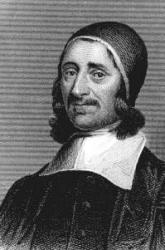
Richard Baxter (1615–1691) was one of the most towering, politically complex, and prolific figures of 17th-century English Puritanism. As a theologian, peacemaker, and pastor, Baxter straddled the volatile lines of the English Civil War, simultaneously serving as a chaplain in Oliver Cromwell’s parliamentary army and later as a personal chaplain to King Charles II.
In hymnody, Baxter is celebrated for bringing a rare, deeply raw vulnerability to early English verse, writing not for performance or poetic polish, but as a direct window into his intense physical suffering and spiritual trials.
The Kidderminster Ideal and Wartime Rupture
Born on November 12, 1615, in Rowton, Shropshire, Baxter was largely self-educated. Despite lacking a formal university degree, his staggering intellect allowed him to take Holy Orders in 1638. In 1640, he became the curate of Kidderminster, transforming a notoriously rough, uneducated weaving town into a model of deeply devout parish life.
When the English Civil War broke out, Baxter found himself in a complex ideological position:
-
The Battlefield: He supported the Parliamentary cause against the absolute rule of Charles I, spending years as a military chaplain to one of Cromwell’s regiments.
-
The Breakdown: The brutal realities of war, combined with severe chronic illness, broke his health. Forced into a period of total physical collapse, he sat down to write what would become a classic of Christian devotional literature: The Saints' Everlasting Rest (1650).
Standing Up to Kings and Bishops
When the monarchy was restored in 1660, Baxter was highly respected enough to be appointed chaplain to Charles II. The Crown even offered him the prestigious position of Bishop of Hereford in an effort to keep him within the Church of England hierarchy.
Baxter refused. He prized his theological conscience above institutional power.
When the Act of Uniformity passed in 1662—forcing all ministers to strictly use the Book of Common Prayer and submit to Episcopal ordination—Baxter, alongside some 2,000 other Puritan ministers, was ejected from his pulpit in what became known as the Great Ejection. For the next two decades, he faced intense persecution, massive fines, and multiple imprisonments for continuing to preach as a Nonconformist minister in London.
The Verse: Written "At the Door of Eternity"
Unlike the smooth, metered metrical psalms common in his day, Baxter’s poetry was intensely autobiographical. He published his main collection, Poetical Fragments, in 1681 during a season of extreme personal grief following the death of his beloved wife, Margaret, and amidst his own failing health. He famously signed the preface: "London, at the Door of Eternity."
His poetry was deliberately titled Heart Imployment with God and Itself: The Concordant Discord of a Broken-healed Heart. In it, Baxter explicitly noted he was writing for people who cared more for "serious Verse than smooth."
"Lord, It Belongs Not to My Care"
His most enduring hymn originally beginning with the stanza "My whole, though broken, heart, O Lord" was extracted from a larger 8-verse poem in Poetical Fragments. Written at a time when he could have been imprisoned or executed at any moment, the text is a masterclass in absolute surrender to the sovereignty of God over life and death:
"Lord, it belongs not to my care
Whether I die or live;
To love and serve Thee is my share,
And this Thy grace must give.
If life be long, I will be glad
That I may long obey;
If short, yet why should I be sad
To soar to endless day?"
The text is most commonly paired in modern hymnals with the tune ST. FRANCES or BELMONT, highlighting the serene, trusting calm Baxter maintained despite his tumultuous surroundings.
The Preacher's Epitaph
Baxter died on December 8, 1691, shortly after the Toleration Act finally brought peace to English Nonconformists. He left behind over 150 treatise-length prose works, but his entire approach to life, ministry, and writing is perfectly captured in his most famous, immortal couplet:
"I preach’d as never sure to preach again,
And as a dying man to dying men!"
Chronological Milestones
Birth in Shropshire
- 1615
Born to a modest yeoman family; grew up largely self-taught through massive reading.
The Kidderminster Curacy
- 1640
Begins his historic, deeply transformative pastoral work among the weavers of Worcestershire.
Civil War & Collapse
- 1642–1647
Serves as an Army Chaplain; suffers a total physical breakdown, inspiring The Saints' Everlasting Rest.
The Great Ejection
- 1662
Refuses the Bishopric of Hereford; stripped of his pulpit following the Act of Uniformity.
Poetical Fragments Published
- 1681
Writes his core hymn texts "at the door of eternity" following the death of his wife.
Death in London
- 1691
Passes away at age 76, revered as one of the theological giants of the Puritan age.