About Richard Hutchins
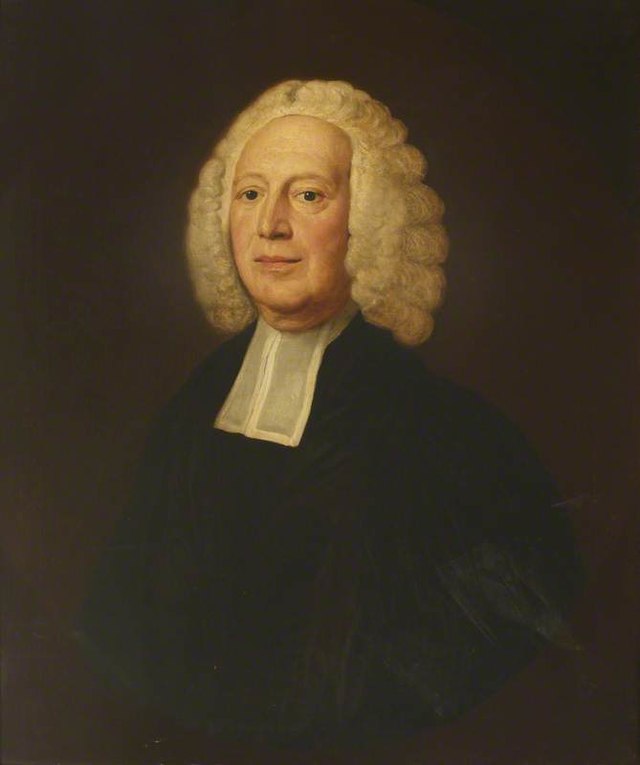
Rev. Richard Hutchins (c. 1700 – c. 1800) was an 18th-century English Calvinist Baptist minister. Historically, his pastoral footprint was modest, defined primarily by a brief, six-year tenure serving a small congregation in the village of Long Buckby, Northamptonshire, from roughly 1759 to 1765.
Yet, despite his quiet historical record, modern musicologists and hymn historians now identify Hutchins as the almost certainly definitive author of one of the most hauntingly beautiful, enduring poems in the English choral repertoire: "Jesus Christ the Apple Tree" (originally published as "The tree of life my soul hath seen").
Unmasking "R.H." and the Search for the Poet
For over two centuries, the authorship of this beloved poem was wrapped in total anonymity. The text first appeared in print in the September 1761 issue of London's The Spiritual Magazine, signed simply with the cryptic initials "R.H." Later that same year, it was gathered into a collection titled Divine, Moral, and Historical Miscellanies.
Because The Spiritual Magazine was a highly specific periodical catering to Calvinist Baptists, hymnologists began tracing other submissions signed by "R.H." in its archives. One such submission explicitly identified the writer as residing in Long Buckby. Parish records confirm that Richard Hutchins was the presiding Calvinist Baptist minister in that exact village during that exact window, effectively solving a centuries-old hymnological mystery.
The Journey Across the Atlantic
While the hymn was born in a quiet English village, its path to global fame took a fascinating geographical detour:
-
The American Crossing: In 1784, a New Hampshire Baptist lay preacher named Joshua Smith compiled a collection titled Divine Hymns, or Spiritual Songs. He included Hutchins’ poem, which immediately struck a chord with early American frontier congregations.
-
The New England Misconception: Because the hymn exploded in popularity across New England's early folk and Shape-Note singing traditions (often featured in Sacred Harp gatherings), British audiences completely forgot its origins. For generations, music historians mistakenly assumed it was written by an anonymous early American folk poet or by Joshua Smith himself.
Scriptural Allegory and Folk Traditions
Hutchins’ lyric is unique in Christian hymnody for choosing an ordinary orchard tree as its central metaphor for Jesus Christ. The text intertwines complex biblical imagery with local English landscape:
"The tree of life my soul hath seen,
Laden with fruit, and always green:
The trees of nature fruitless be,
Compared with Christ the apple tree.
His beauty doth all things excel:
By faith I know, but ne'er can tell
The glory which I now can see,
In Jesus Christ the apple tree."
The Multi-Layered Meaning
-
The Biblical Roots: The metaphor stems directly from the Old Testament poetic language of Song of Solomon 2:3 ("As the apple tree among the trees of the wood, so is my beloved among the sons"), as well as the recurring imagery of the "Tree of Life" spanning from Genesis to Revelation 22.
-
The Folk Tradition: Some cultural historians suggest Hutchins may have written the piece to consciously "Christianize" ancient winter solstice rural traditions. In 18th-century England, orchard workers practiced wassailing, singing to apple trees on Christmas Eve to pray for a good harvest. Turning the apple tree into a symbol for Christ seamlessly redirected a seasonal folk ritual into a declaration of faith.
Modern Musical Renaissance
Though written as a simple metrical hymn, the text underwent a massive global revival in the mid-20th century due to new musical settings. It was famously set to an exquisite, ethereal pastoral melody by British composer Elizabeth Poston in 1967.
Poston’s setting became an international phenomenon, largely popularized by the Choir of King's College, Cambridge, who routinely perform it during their world-broadcast Festival of Nine Lessons and Carols. Today, the text Hutchins penned in a quiet Northamptonshire study is celebrated worldwide as a stunning, contemplative Christmas and Advent carol.