About Richard Mant
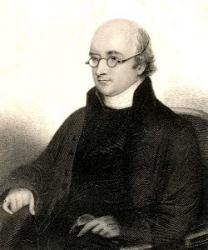
The Right Reverend Dr. Richard Mant (1776–1848) was an eminent English cleric, scholar, and high-ranking prelate of the Church of Ireland. Renowned in his era as an academic force at Oxford and a fiercely loyal defender of church ordinances, Mant’s historical memory is deeply rooted in his role as a pioneering translator.
Alongside his contemporaries John Chandler and Isaac Williams, Mant was among the very first English churchmen to systematically unlock the Latin liturgies of the historic Roman Breviary (the traditional book of daily liturgical prayers), translating them into English verse and permanently reshaping modern congregational worship.
A Stellar Academic Rise
Born on February 12, 1776, in Southampton, England, Mant was the son of a grammar school headmaster. He received an elite classical education at Winchester College before matriculating to Trinity College, Oxford. His university years were glittering with distinction: he swept the Chancellor's Prize for an English essay, earned his Master of Arts in 1799, and was elected a prestigious Fellow and College Tutor at Oriel College—then the intellectual epicenter of Oxford University.
Upon taking Holy Orders, Mant’s career climbed an impressive ladder of ecclesiastical hierarchy:
-
1811: Appointed the esteemed Bampton Lecturer at Oxford.
-
1813: Served as the Domestic Chaplain to the Archbishop of Canterbury, the highest administrative post for a priest in England.
-
1820: Appointed to the episcopate as the Bishop of Killaloe in Ireland.
-
1823–1842: Transferred to the influential See of Down and Connor, eventually absorbing Dromore into his care.
Unlocking the Latin Breviary
In the early 19th century, standard English hymnody was dominated by the metrical Psalms and the evangelical songs of Isaac Watts and Charles Wesley. Ancient and medieval Latin hymns had been largely ignored or buried since the Reformation.
In 1837, Mant published a landmark volume: Ancient Hymns from the Roman Breviary, for Domestick Use. Though he was not a specialist hymnologist—and occasionally altered the original medieval theology to align with his strict Anglican convictions, his book proved to be an unexpected catalyst. He demonstrated to a cautious Church of England that ancient, pre-Reformation Latin texts possessed incredible "good taste and devout feeling."
His translations were quickly adopted by parishes looking to restore a sense of historic, liturgical majesty to Sunday services.
Signature Hymns and Theological Architecture
While his prose commentaries were massively popular in his day, Mant's lasting gift to the global church rests on a handful of deeply poetic, rhythmically majestic original hymns and paraphrases:
"Bright the Vision That Delighted" (Round the Lord in Glory Seated)
Drawn from his 1837 collection, this text is an absolutely breathtaking, cinematic depiction of the heavenly throne room based on Isaiah 6. Capturing the antiphonal (responsive) singing of the seraphim, Mant’s text flows with a rhythmic majesty that has made it a favorite for Trinity Sunday and festival worship:
"Bright the vision that delighted Once the sight of Judah's seer; Sweet the countless tongues united To adore the Prophet's ear.
Round the Lord in glory seated Cherubim and Seraphim Filled His temple, and repeated Each to each the alternate hymn:"
"For All Thy Saints, O Lord"
An enduring, understated masterpiece written specifically for All Saints' Day and saint commemorations. It serves as a grateful thanksgiving for the lives of the Apostles and early evangelists, asking that modern believers might follow their path of sacrificial faith.
"God, My King, Thy Might Confessing" (Psalm 145)
Culled from his 1824 work, The Book of Psalms in an English Metrical Version, this robust, confident metrical paraphrase of Psalm 145 captures Mant’s deep theological reverence for the sovereign authority of God.
Death and Enduring Representation
Bishop Mant passed away on November 2, 1848, at the age of 72. While many of his heavy historical and biographical volumes eventually faded into obsolescence, hymnologist John Julian observed that Mant remains "strongly represented in modern hymnody." By taking ancient Latin templates and forging them into accessible English meters, Mant successfully helped build the bridge that allows modern believers to sing the exact same praises used by the early church.