About Robert Balgarnie Young Scott
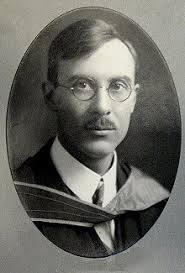
The Reverend Dr. Robert Balgarnie Young (R. B. Y.) Scott (1899–1987) was a towering 20th-century Canadian theologian, Old Testament scholar, and United Church of Canada minister. Internationally recognized for his groundbreaking work in biblical archaeology and his academic tenures at McGill and Princeton universities, Scott was also a passionate advocate for the "Social Gospel"—the movement to apply Christian ethics directly to societal issues like poverty, labor rights, and war.
While his scholarly commentaries on the biblical prophets influenced generations of academics, his enduring legacy in congregational worship rests on a suite of hymns written during his years in Montreal that seamlessly wed robust biblical theology with a cry for global justice and peace.
An Academic Force
Born on July 18, 1899, in Toronto, Ontario, Scott was highly educated at the University of Toronto, sweeping through his B.A., M.A., and Ph.D. (1928) with a focus on Classics and ancient languages. Ordained in the newly formed United Church of Canada in 1926, he quickly pivoted into higher education, teaching Old Testament Language and Literature across the continent:
-
Union College, Vancouver (1928–1931)
-
United Theological College & McGill University, Montreal (1931–1955): Where he additionally served as the influential Dean of Divinity.
-
Princeton University (1955–1968): Where he taught as a professor of religion and published extensively on the Dead Sea Scrolls and Old Testament prophecy.
The Hymnody of Social Justice
As a founder and president of the Fellowship for a Christian Social Order during the Great Depression, Scott firmly believed that worship should not be an escape from the world, but a catalyst to change it. Most of his 24 original hymns were written during his Montreal years to give voice to this exact vision.
"O Day of God, Draw Nigh" (1937)
Written during the tense, anxious prelude to World War II, this is Scott’s most famous and universally sung hymn. Rejecting passive escapism, the hymn pleads for God's justice and peace to match the terrifying realities of the modern age. It is written in a remarkably clean, sparse, and powerful Short Meter:
"O day of God, draw nigh
in beauty and in power;
come with thy timeless judgment now
to match our present hour.
Bring justice to our land,
that all may dwell secure,
and finely build for days to come
foundations that endure.
Bring to our world of strife
thy sovereign word of peace,
that war may haunt the earth no more,
and desolation cease."
By pairing an Old Testament prophetic longing for the "Day of the Lord" with a modern plea for disarmament, the hymn became an ecumenical classic, appearing in Presbyterian, Anglican, Methodist, and Episcopal hymnals worldwide (frequently set to the sturdy tune ST. MICHAEL).
"O World of God, So Vast and Strange" (1971)
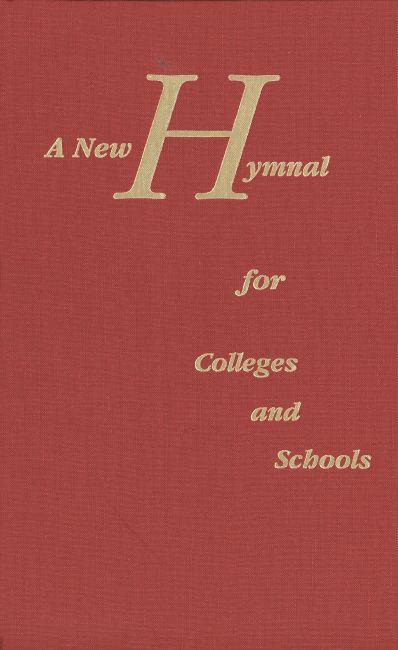
Later in life, the hymnal committee compiling Canada's 1971 Hymn Book approached Dr. Scott with a highly unique dilemma: they desperately wanted to use Sir Charles H.H. Parry’s magnificent, sweeping tune JERUSALEM, but felt that William Blake’s original nationalistic lyrics ("And did those feet in ancient time") were a mismatch for regular Sunday worship.
Scott took up the challenge and penned an expansive, globally minded text that acknowledges both the beautiful design of the universe and the real, broken suffering of humanity:
"O world of man where life is lived,
so strangely mingling joy and pain,
so full of evil and of good,
so needful that the good shall reign!
It is this world that God has loved..."
Theological Balance: Praise and Creation
While social justice was his main driver, Scott was also highly adept at traditional praise. In 1938, he wrote "Eternal, Unchanging, We Sing to Your Praise" (frequently sung to the traditional Welsh melody ST. DENIO / Immortal, Invisible), a triumphant celebration of God as Creator.
He also penned the expansive, multi-generational Trinitarian hymn "Sing Ye Praises to the Father," which stands as a joyful thank-you note for the rhythm of the seasons—celebrating "the light of summer, autumn glories, winter snows, and the coming of the springtime."
Death and Intellectual Legacy
Dr. R.B.Y. Scott passed away in Toronto on November 1, 1987, at the age of 88. His academic texts, such as The Relevance of the Prophets (1945), remain standard reference points for biblical students trying to understand the social critique of ancient Israel. Yet every Sunday when congregations lift their voices to sing for global peace and structural justice, they are continuing to carry out the lived theology of this brilliant Canadian professor.