About Robert Grant
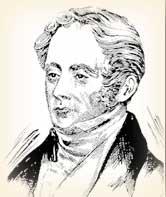
Sir Robert Grant (1779–1838) was a distinguished British lawyer, Member of Parliament, and colonial administrator who served as the Governor of Bombay during the 1830s. Possessing a deeply religious conviction alongside a brilliant legal mind, Grant split his lifetime energy between advocating for civil rights on the floor of the British Parliament and writing some of the most majestically descriptive praise hymns in the English language.
A Legacy of Public Justice
Of Scottish descent, Robert Grant was born in Bengal, India, where his father, Charles Grant, was a highly influential director of the East India Company. Returning to England for his education, Robert graduated from Magdalen College, Cambridge, in 1806 and was called to the English bar the following year.
His public career was defined by a commitment to human rights and administrative reform:
-
Civil Rights Advocate: As a Member of Parliament representing Inverness (and later other districts), Grant championed a groundbreaking bill to lift the severe historic civil restrictions placed upon Jewish citizens in Great Britain.
-
Colonial Governance: Knighted in 1834 for his extensive public service, Sir Robert was appointed Governor of Bombay, traveling back to India to administer the expanding territory. He was passionate about public infrastructure, medical education, and regional welfare until his sudden death from a fever at Dapoorie, India, on July 9, 1838.
Masterpiece: "O Worship the King" (1833)
While Grant was fully immersed in high-stakes politics, he spent his private hours writing poetry. His ultimate contribution to global hymnody came when he read William Kethe’s 1561 Old Testament paraphrase of Psalm 104 in the historic Anglo-Genevan Psalter.
Inspired by Kethe's underlying themes but desiring a smoother, more poetic vocabulary, Grant completely reworked the text. It was first published in Edward Bickersteth’s Christian Psalmody (1833) and finalized in Henry Elliott’s Psalms and Hymns (1835).
Usually paired with Johann Michael Haydn’s majestic tune LYONS (or the English tune HANOVER), the hymn uses incredibly vivid, cosmic imagery to contrast God's celestial power with human fragility:
"O worship the King, all glorious above,
O gratefully sing His power and His love;
Our Shield and Defender, the Ancient of Days,
Pavilioned in splendor, and girded with praise.
Thy bountiful care what tongue can recite?
It breathes in the air, it shines in the light;
It streams from the hills, it descends to the plain,
And sweetly distills in the dew and the rain.
Frail children of dust, and feeble as frail,
In Thee do we trust, nor find Thee to fail;
Thy mercies how tender, how firm to the end,
Our Maker, Defender, Redeemer, and Friend!"
Liturgical and Lenten Works
Grant's poetry was not limited to grand, sweeping praises. He possessed a deep capacity for tender, introspective, and penitential verse. Two of his other texts became staple entries across global denominations:
-
"Saviour, When in Dust to Thee" (1815): A deeply moving, litany-style Lenten hymn that walks through the narrative of Christ’s life, passion, and resurrection, pleading for mercy at each turn.
-
"When Gathering Clouds Around I View" (1806): Written during a time of personal reflection, this hymn provides comfort to those experiencing grief and temptation by focusing on the humanity and empathy of Jesus as a compassionate friend who wept at the grave of Lazarus.
Posthumous Publication
Grant rarely published under his own name during his lifetime, choosing to sign his early pieces in the Christian Observer magazine using the cryptic pseudonym "E—y, D. R."
Following his untimely death in India, his grieving brother, Charles Grant (Lord Glenelg), gathered 12 of Robert’s scattered manuscripts and published them in London as Sacred Poems (1839). This slim volume preserved the legal scholar's graceful versification, keeping his poetic voice alive in church sanctuaries for centuries to come.