About Robert Murray McCheyne
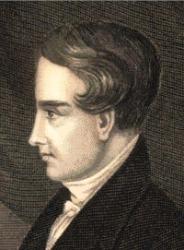
Robert Murray M'Cheyne (1813–1843) was one of the most spiritually influential and deeply revered ministers in the history of the Church of Scotland. Though his life was cut tragically short at the age of 29, his profound piety, compelling preaching, and heartfelt poetry left an indelible mark on evangelical Christianity. He is remembered not only for his passionate pastoral work in the industrial city of Dundee but also for his historic expedition to the Holy Land and his enduring contribution to Christian hymnology.
A Brilliant and Devout Youth
Born in Edinburgh on May 21, 1813, M'Cheyne was the son of Adam M'Cheyne, a writer to the signet (a senior legal professional). He entered Edinburgh University at the age of 14, excelling in classical literature and poetry. The sudden death of his devout older brother, David, deeply affected young Robert, serving as the catalyst for his own profound spiritual conversion and decision to enter the ministry. He studied theology at the university's Divinity Hall under the legendary theologian Dr. Thomas Chalmers, absorbing a deep love for the scriptures and a passion for evangelism.
Pastor of St. Peter's, Dundee
After serving briefly as an assistant minister at Larbert, M'Cheyne was ordained in 1836 as the first minister of the newly established St. Peter's Church in Dundee. The city was a bustling, crowded industrial hub, and M'Cheyne threw himself into pastoral work with exhausting intensity.
His preaching was characterized by a rare combination of tender compassion and searching urgency. He was known for his striking, saintly demeanor; it was frequently remarked that his quiet presence in the pulpit alone could bring a congregation to tears before he even spoke a word.
The Mission of Inquiry to the Jews (1839)
In late 1838, M'Cheyne's health collapsed from overwork. To aid his recovery, the Church of Scotland selected him to lead a historic four-man "Mission of Inquiry" to Palestine and Europe to investigate the condition and spiritual needs of Jewish communities.
Traveling through Egypt, the Sinai Peninsula, and across the landscape of the Holy Land, this journey deeply enriched M'Cheyne’s poetic imagination. He composed several of his most vivid hymns directly in the field, dating them from locations like the foot of Mount Carmel and the rocky slopes of Mount Moriah. Upon his return to Scotland, the mission's published report catalyzed a massive surge in international missionary focus within the Scottish church.
The Songs of Zion
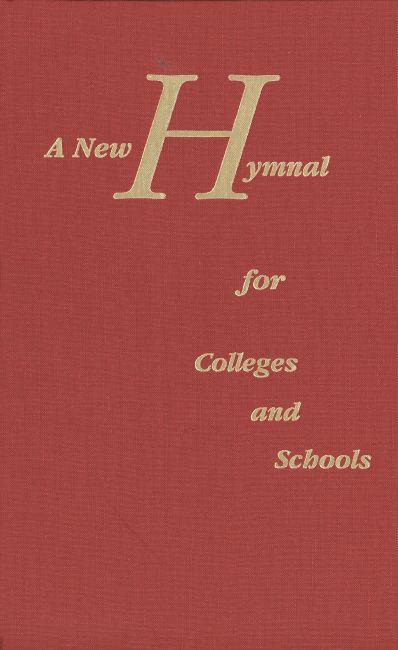
M'Cheyne wrote poetry as a natural expression of his personal devotional life. Just before his death in 1843, his collection Songs of Zion to Cheer and Guide Pilgrims on Their Way to the New Jerusalem was published. After his passing, his close friend Dr. Andrew Bonar included these 14 pieces in the legendary volume Memoir and Remains of Robert Murray M'Cheyne (1844)—a book that became a devotional classic across the English-speaking world.
His most famous enduring hymns include:
1. "Jehovah Tsidkenu" ("I once was a stranger to grace and to God")
Written in 1834, this hymn tells the story of a soul's awakening to the beauty of Christ. The title utilizes the Hebrew name for God meaning "The Lord Our Righteousness" (Jeremiah 23:6). It tracks the transition from a cold, intellectual religious life to a vibrant, personal relationship with God.
2. "The Glory of the Grace of God" ("When this passing world is done")
A deeply moving reflection on eternity, this text contemplates how a believer will fully comprehend the vastness of divine grace only after stepping into the next life. It contains the famous recurring refrain:
"When I stand before the throne, dressed in beauty not my own, When I see Thee as Thou art, love Thee with unsinning heart, Then, Lord, shall I fully know—not till then—how much I owe."
3. "To Yonder Side" ("Behind Moriah's rocky side")
Composed in June 1839 at the foot of Mount Carmel, this descriptive hymn uses the geographical realities of the Holy Land and the stormy Sea of Galilee to illustrate the peace Christ brings to believers amid the turbulent trials of life.
A Sudden Sunset
In March 1843, a severe epidemic of typhus swept through the poor quarters of Dundee. While visiting his sick and dying parishioners, M'Cheyne contracted the disease. After a brief illness marked by periods of fervent prayer for his congregation, he passed away on March 25, 1843, two months shy of his 30th birthday.
His sudden death sent a shockwave of grief through Scotland. He left behind a legacy of absolute devotion, a widely used Bible reading plan that bears his name to this day, and a small but brilliant collection of sacred songs that continue to guide church congregations worldwide.