About Robert Seymour Bridges
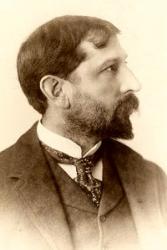
Robert Seymour Bridges (1844–1930) occupied a rare, distinguished position at the intersection of British literature, medicine, and sacred music. Celebrated as England’s Poet Laureate during the early 20th century, he approached hymnology not merely as a pious pastime, but as a rigorous artistic discipline. Dismayed by what he viewed as the sentimental poetry and poor musical standards of Victorian church music, Bridges single-handedly championed a return to the dignified, robust texts and melodies of the Reformation.
The Physician’s Literary Pivot
Born into an affluent family in Walmer, Kent, on October 23, 1844, Bridges received an elite education at Eton and Corpus Christi College, Oxford. He chose to pursue a practical calling first, studying medicine at St. Bartholomew’s Hospital in London. He practiced successfully as a casualty physician until a severe bout of lung disease in 1881 forced his retirement from medicine.
Turning to literature full-time, Bridges relocated to the quiet, picturesque village of Yattendon in Berkshire. This rural retreat marked the true beginning of his most prolific creative era. His mastery of poetic meter, structural balance, and classical forms caught the attention of the nation, culminating in his appointment as Poet Laureate of the United Kingdom in 1913—a post he held with quiet dignity until his death in 1930.
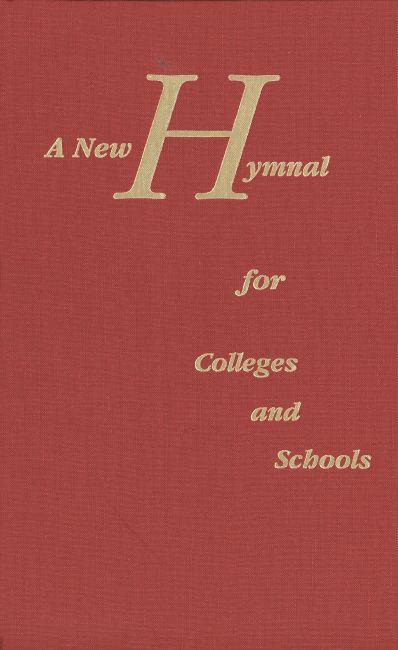
The Yattendon Hymnal (1899)
Upon settling in Yattendon, Bridges took on the voluntary role of precentor (choir director) at the local village parish church. He found the popular hymnals of the era sorely lacking in both historical depth and literary merit.
In collaboration with musicologist H. Ellis Wooldridge, Bridges set out to curate an uncompromisingly high-quality collection designed specifically for unaccompanied, four-part choral singing.
Issued in four separate parts between 1895 and 1899, the completed Yattendon Hymnal contained exactly 100 meticulously selected hymns. Bridges himself contributed 44 of the texts—offering either pristine original poems or fresh, brilliant translations of historic Latin, Greek, and German office hymns. He set these texts primarily to historic tunes drawn from the 16th-century Genevan Psalter and early English composers like Thomas Tallis and Orlando Gibbons.
Masterful Translations and Texts
Bridges possessed an uncanny ability to translate ancient Christian texts into English without losing their theological muscle or emotional grandeur. Several of his Yattendon contributions have become permanent fixtures of global hymnody:
1. "All My Hope on God Is Founded"
Based on a 17th-century German text by Joachim Neander ("Meine Hoffnung stehet feste"), Bridges departed from a literal word-for-word translation to create a majestic, rhythmically driving anthem of absolute trust in divine sovereignty amid the shifting sands of human history:
"All my hope on God is founded; He doth still my trust renew.
Me through change and chance He guideth, only good and only true.
God unknown, He alone calls my heart to be His own."
2. "Ah, Holy Jesus, How Hast Thou Offended"
A heartbreakingly tender translation of Johann Heermann’s Lenten chorale ("Herzliebster Jesu"). Bridges captured the profound, introspective weight of the original German text, laying the blame for the Crucifixion directly on human frailty rather than abstract historical forces:
"Ah, holy Jesus, how hast Thou offended,
That man to judge Thee hath in hate pretended?
By foes derided, by Thine own rejected, O most afflicted."
3. "O Gladsome Light"
A brilliant translation of the ancient Greek evening hymn Phos Hilaron ($\Phi\tilde{\omega}\varsigma\text{ \textit{I}}\lambda\alpha\rho\text{ó}\nu$), which dates back to the 2nd or 3rd century. Bridges preserved the quiet, liturgical beauty of the twilight prayer as the church watches the setting sun and welcomes the evening lamps.
A Reformer of Church Praise
Bridges didn't stop at compiling music; he wrote extensively on the philosophy of corporate worship. In his essays A Practical Discourse on Some Principles of Hymn-Singing (1899) and About Hymns (1911), he argued that congregational singing should never sink to cheap emotionalism. He believed that offering anything less than the highest standard of poetry and music to God was a form of spiritual negligence.
Though The Yattendon Hymnal itself was too elite and expensive to achieve widespread commercial success in ordinary parishes, it served as the critical aesthetic blueprint for the monumental English Hymnal (1906), heavily influencing editors like Percy Dearmer and Ralph Vaughan Williams. Through them, Bridges’ high standards permanently elevated the landscape of modern church praise.