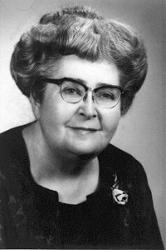
About Ruth Caye Jones
Ruth Caye Jones (1902–1972) was a devoted American evangelist, songwriter, and radio pioneer whose music provided a steady anchor of hope during one of the most turbulent eras of modern history. Without any formal training in music theory, her raw, self-taught talent at the piano and organ allowed her to compose simple, deeply emotional gospel songs. Her music directly comforted a global audience grappling with the anxieties of World War II and the subsequent dawn of the Cold War.
A Shared Life in Evangelism
Born in the industrial town of Wilmerding, Pennsylvania, in 1902, Ruth Caye grew up with a deep, natural gift for music. She taught herself to play both the piano and the organ by ear.
She found a true partner in both life and faith when she married Bert Jones. Together, the couple stepped out into full-time evangelistic ministry. Rather than taking a traditional pastoral route, they operated as traveling evangelists, utilizing music, preaching, and dynamic storytelling to reach communities across Pennsylvania and the broader Rust Belt region.
In 1948, the Joneses settled in Erie, Pennsylvania, and became media pioneers. Anticipating the massive impact of home radio, they launched a weekly devotional program broadcast directly from their living room titled "A Visit with the Jones." For decades, this intimate broadcast brought comforting Scripture readings, friendly chat, and Ruth's live musical numbers directly into the kitchens and living rooms of thousands of families every week.
The Story Behind "In Times Like These"
Ruth wrote several gospel songs, but her legacy is inextricably tied to a single, timeless hymn born out of intense historical crisis: "In Times Like These."
In 1944, World War II was reaching its bloody, exhausting climax. Like millions of other mothers and wives, Ruth was deeply burdened by the relentless headlines of loss, food rationing, and global upheaval. One afternoon, while sitting in her kitchen surrounded by newspapers detailing the horrors of the war, she felt an overwhelming, sudden wave of anxiety.
Reaching for her Bible, she turned to the promises of God's unshakeable sovereignty. The words of the text and the melody began to flood her mind simultaneously. She dropped what she was doing, rushed to the piano, and transcribed the notes and words exactly as they came to her.
The song bypassed denominational walls to become an immediate global sensation. It was famously adopted by a young Billy Graham during his early crusades, and it served as a signature solo piece for the legendary gospel vocalist George Beverly Shea.
Its simple, conversational warning and reassuring answer resonated deeply with generations facing everything from international warfare to personal grief:
"In times like these you need a Savior, In times like these you need an anchor; Be very sure, be very sure, Your anchor holds and grips the Solid Rock!"
An Anchor to the End
Ruth continued her home radio broadcasts and musical writing alongside her husband until her health began to fail. She passed away in Erie, Pennsylvania, on August 18, 1972, at the age of 70.
Though she never considered herself a professional composer, her instinctive grasp of gospel harmony and her ability to articulate universal human vulnerability ensured that her kitchen-table hymn would remain a permanent comfort to a world in constant transition.