About Samuel Davies
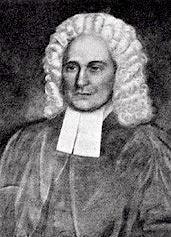
Samuel Davies (1723–1761) was a highly influential American Presbyterian clergyman, orator, and educator who played a key role in the Great Awakening revival and the defense of religious liberty in colonial Virginia. Born near Summit Ridge, Newcastle, Delaware, on November 3, 1723, he received his education under the Reverend Samuel Blair in Chester County, Pennsylvania, funded by the generosity of a local minister. Licensed as a preacher in 1745, Davies was sent into the religious and political challenges of colonial Virginia in 1747, where he became a champion for non-Anglican dissenters. In 1753, he traveled to England to successfully raise funds for the New Jersey Presbyterian College (now Princeton University). His exceptional leadership led to his appointment as the college's fourth president in 1759, succeeding the renowned Jonathan Edwards. Tragically, Davies' brilliant career was cut short when he succumbed to pneumonia on February 4, 1761, at the early age of 37.
Following his untimely death, Davies' extensive manuscripts were entrusted to his close friend, Dr. Thomas Gibbons, who published five popular volumes of his fiery sermons. In 1769, Dr. Gibbons also published Davies' complete poetic catalog—consisting of ten distinct hymns, in the collection Hymns Adapted to Divine Worship. Stylistically, Davies heavily modeled his verse after the metrics of Isaac Watts. While early hymnologists characterized his writing as solid but occasionally dry and heavy, several of his compositions captured the fervent piety of the transatlantic revival movement and earned a permanent place in standard Protestant hymnals across Great Britain and America.
Among his most enduring musical legacies is the majestic hymn of adoration, "Great God of Wonders, All Thy Ways." Celebrating the vastness of divine forgiveness, the text became immensely popular on both sides of the Atlantic, appearing in more than one hundred hymnals in England alone and featuring prominently in Charles Spurgeon’s Our Own Hymn Book. Other widely utilized pieces from his catalog include his prayer for spiritual guidance, "Eternal Spirit, Source of Light," and his solemn self-examination hymn, "What Strange Perplexities Arise." In America, his communion text "Lord, I am Thine, entirely Thine" became a staple of devotional life, cementing Davies' legacy as both a fiery pulpit orator and a foundational voice in early American hymnody.