About Samuel Francis Smith
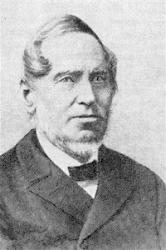
Samuel Francis Smith (1808–1895) was an American Baptist minister, journalist, professor, and poet whose literary contributions left a defining mark on both American religious life and civic patriotism. Born in Boston, Massachusetts, on October 21, 1808, he received a premier classical education, graduating in arts from Harvard University before completing his theological studies at Andover Theological Seminary. He entered the Baptist ministry in 1832, simultaneously launching a diverse career in religious media as the editor of the Baptist Missionary Magazine and contributing to the Encyclopaedia Americana. Between 1834 and 1842, Dr. Smith balanced pastoral work in Waterville, Maine, with academics, serving as a Professor of Modern Languages at Waterville College (now Colby College). He later transitioned to Newton, Massachusetts, where he pastored until 1854 before taking on editorial leadership for the publications of the Baptist Missionary Union.
Dr. Smith was a central pillar in nineteenth-century American Baptist hymnology, shaping the denomination's musical identity for generations. In 1843, alongside Baron Stow, he compiled and edited The Psalmist, which became widely regarded as the most influential and authoritative American Baptist hymnal collection of its time. Smith contributed numerous original hymns to this volume, covering a broad theological landscape. He excelled in writing liturgical pieces for holy baptism, including "Down to the sacred wave," "Meekly in Jordan's Holy Stream," and "How calmly wakes the hallowed morn," alongside church fellowship anthems like "Planted in Christ, the living Vine" and serene evening texts such as "Softly fades the twilight ray."
Beyond local church liturgies, Smith's verse carried a powerful global missionary focus and an enduring national presence. Written in 1832, his vibrant missionary hymn "The morning light is breaking" achieved international acclaim and was translated into multiple European and Asian languages, frequently sung at large-scale global mission assemblies. However, Dr. Smith's most universally recognized and immortalized contribution to history is the American patriotic hymn "My Country, 'Tis of Thee" (originally titled "America"). Written in 1832 while he was still a student at Andover, the song was first performed publicly at a children's Fourth of July celebration at the Park Street Church in Boston. Serving for decades as one of America's de facto national anthems, the piece cemented Smith's status as a foundational voice in the country's cultural heritage before his death in 1895.