About Samuel Prideaux Tregelles
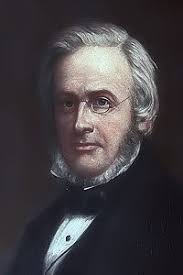
Samuel Prideaux Tregelles (1813–1875) was a world-renowned English biblical scholar, textual critic, and theologian who, despite severe lifelong health struggles, produced some of the nineteenth century's most critical advancements in Greek New Testament scholarship. Born to a Quaker family at Wodehouse Place, Falmouth, Cornwall, on January 20, 1813, Tregelles received his initial classical training at the Falmouth Grammar School. Due to financial circumstances, he spent his young adult years working at the Neath Abbey Iron Works from 1835 to 1844 before establishing himself as a private tutor. During this time, he developed a singular, monumental passion: to reconstruct and publish the most accurate possible text of the Greek New Testament based strictly on the oldest available ancient manuscripts.
Tregelles dedicated his entire life to this grueling paleographical work, traveling extensively across Europe to decipher and collate ancient codices. He began publishing early specimens of his labor in 1838, with the first major installment for public use appearing in 1844. His definitive masterpiece, The Greek New Testament, Edited from Ancient Authorities, was painstakingly issued in successive parts over several decades. Tragically, his frantic work schedule took a physical toll; he suffered debilitating strokes in 1861 and 1870 that left him partially paralyzed. Though his immense scholarly achievements earned him a Civil List Pension from the British crown and a seat on the prestigious English New Testament Revision Committee, his health prevented him from actively participating in the final revision meetings. He passed away in Plymouth on April 24, 1875, leaving his monumental Greek text to be posthumously completed with a prolegomena by scholars Fenton John Anthony Hort and A.W. Streane in 1879.
Parallel to his early academic pursuits, Tregelles’ spiritual journey led him into close fellowship with the early Plymouth Brethren movement in the late 1830s. It was within this devout, non-denominational circle that his hymnwriting blossomed. His earliest sacred verses were contributed anonymously or via manuscript to foundational Brethren collections, including Hymns for the Poor of the Flock (1838), Psalms, Hymns, and Spiritual Songs (1842), and A Few Hymns and some Spiritual Songs (1856). He also supplied several pieces to Anglican musicologist Dr. Peter Maurice for the Church of England Choral Hymn-Book in 1861.
While early hymnologists observed that his verses were primarily cherished within Brethren assemblies rather than achieving universal mainstream popularity, his catalog contains fifteen documented texts marked by a deep, Christocentric focus and a strong anticipation of the Second Advent. His most notable and widely utilized hymns include:
-
"The gloomy night will soon be past" – A comforting, eschatological text expressing a joyful anticipation of heaven, first published in 1842.
-
"Father, we Thy children bless Thee" – A robust hymn of thanksgiving celebrating divine mercy and the return of Christ.
-
"Holy Saviour, we adore Thee" – A solemn anthem of adoration centered on the hope of the Second Coming.
-
"Thou, Lord of all, on earth hast dwelt" – A deeply reflective Passiontide hymn detailing Christ's earthly suffering.
Through these heartfelt verses, Tregelles beautifully balanced the rigorous, objective discipline of textual criticism with the warm, intimate piety of a nineteenth-century revivalist.