About Scottish Psalter
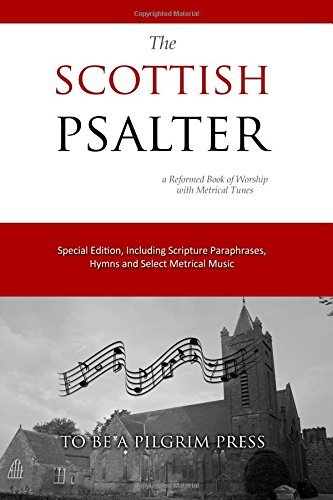
The Scottish Psalter is one of the most significant and enduring monuments in the history of Christian worship. Serving as the primary manual of praise for the Church of Scotland and Presbyterian bodies worldwide for centuries, it enshrines the theological conviction of the Protestant Reformation that the church should sing the inspired text of the biblical Psalms directly from Scripture.
Historical Development
The evolution of the Scottish Psalter occurred in two major, distinct historical eras, reflecting Scotland's political and religious shifts.
1. The Old Psalter (1564)
Following the Scottish Reformation led by John Knox, the General Assembly of the Church of Scotland officially adopted its first complete metrical psalter in 1564. Heavily influenced by Knox’s time with John Calvin in Geneva, this volume drew heavily from the Anglo-Genevan Psalter. It featured a wide variety of intricate poetic meters and was explicitly designed to be sung with complex, proper musical tunes accompanying each psalm.
2. The Definitive Psalter (1650)
During the mid-seventeenth century, English and Scottish Puritans sought a unified standard for worship across Great Britain. The Westminster Assembly commissioned a new translation. While the English Parliament ultimately moved away from the project, the Church of Scotland meticulously revised a draft by English scholar Francis Rous, comparing it line-by-line with the original Hebrew texts to ensure absolute biblical fidelity.
Adopted on May 1, 1650, under the title The Psalms of David in Meeter, this collection completely replaced the 1564 edition. To ensure maximum accessibility for everyday congregations, the committee cast the vast majority of the 150 psalms into a single poetic structure: Common Meter (a repeating pattern of 8, 6, 8, 6 syllables per stanza).
Unique Characteristics
The 1650 Scottish Psalter is defined by a rigorous set of liturgical principles that distinguished it from other hymnological traditions:
-
Literal Accuracy Over Poetic License: The translators intentionally subordinated poetic elegance to scriptural fidelity. They refused to paraphrase or expand on ideas, preferring rugged, literal renderings of the Hebrew text so the congregation could confidently know they were singing the exact Word of God.
-
Exclusive Psalmody: For centuries, Presbyterian worship strictly prohibited humanly composed hymns. The Psalter was not a supplement to a hymnal; it was the hymnal.
-
The Practice of "Lining Out": Because literacy rates were low and books were expensive in the seventeenth and eighteenth centuries, the church instituted the practice of "lining out." A designated precentor would stand before the congregation, sing a single line of the text alone, and the assembly would then sing that line back in unison. This created a distinctive, slow, and deeply communal style of worship.
Enduring Treasures in Modern Hymnody
While the practice of singing the entire psalter straight through has become a hallmark primarily of Reformed Presbyterian bodies, several specific selections from the 1650 translation were so masterfully constructed that they entered mainstream global hymnody, surviving across denominations today:
| Psalm Selection | Famous First Line | Traditional Tune Alignment |
| Psalm 23 | "The Lord's my shepherd, I'll not want" | CRIMOND / EVAN |
| Psalm 100 | "All people that on earth do dwell" | OLD 100TH |
| Psalm 121 | "I to the hills will lift mine eyes" | FRENCH |
| Psalm 24 | "Ye gates, lift up your heads on high" | ST. GEORGE'S, EDINBURGH |