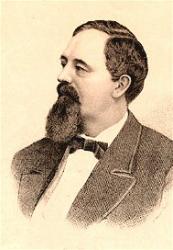
About Septimus Winner
Septimus Winner (1827–1902) was a remarkably prolific and versatile American composer, lyricist, multi-instrumentalist, and music publisher whose secular ballads and instrumental instructional guides left an indelible imprint on nineteenth-century American popular culture. Born in Philadelphia, Pennsylvania, on May 11, 1827, Winner was a largely self-taught musician who possessed an extraordinary innate aptitude for melody. He made Philadelphia his lifelong home and artistic base, operating a highly successful music shop, performing as a violinist in the Cecilian Musical Society and the Philadelphia Brass Band, and providing popular lessons on an array of stringed and brass instruments. Over his extensive career, he edited or wrote more than 200 instructional volumes of music for over twenty different instruments and produced upwards of 2,000 distinct arrangements for violin and piano. He passed away in his native city on November 22, 1902.
To navigate the competitive sheet music market of the Victorian era, Winner famously utilized several pseudonyms, including Percy Guyer, Mark Mason, and Paul Stenton. His most celebrated pen name, however, was Alice Hawthorne—a clever arrangement of his mother's maiden name, under which he published a string of highly sentimental, emotionally evocative parlor songs that came to be known across the nation as the "Hawthorne Ballads."
While Winner's contributions directly to traditional church hymnals were sparse, his secular and parlor melodies frequently carried deep, quasi-religious moral sentiments, and several of his tunes were later adapted into the broader folk and gospel hymn traditions. His career is famously marked by monumental commercial success, though he often saw very little of the financial profit himself.
His most culturally significant and enduring compositions include:
-
"Listen to the Mocking Bird" – Published in 1855 under his Alice Hawthorne pseudonym, this became one of the most commercially successful songs of the nineteenth century. Inspired by a local street musician, Winner wrote the song and famously sold the complete copyright for a mere five dollars; the piece went on to sell an astonishing 20 million copies worldwide and became a favorite tune of President Abraham Lincoln.
-
"Where, Oh Where, Has My Little Dog Gone?" – Originally written by Winner in 1864 as a humorous ballad titled "Der Deitcher's Dog" (set to a traditional German folk melody), this piece eventually shed its verse variations to become one of the most ubiquitous and immortal children's nursery songs in the English language.
-
"Whispering Hope" – Composed in 1868, this tender vocal duet stands as his most direct contribution to sacred and devotional music. Celebrating the virtues of Christian hope and comfort through life’s dark seasons, the song crossed over completely from parlor rooms into church pews, becoming a standard gospel hymn recorded by generations of prominent religious and country artists.
Through his unique blend of accessible instrumental instruction and an uncanny gift for writing unforgettable, simple melodies, Septimus Winner helped democratize music-making for the everyday American household, securing a permanent place in the foundations of American roots music.