About Stuart Hamblen
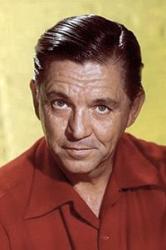
Stuart Hamblen (1908–1989), born Carl Stuart Hamblen, was a towering figure in American media who seamlessly pivoted from being radio’s very first "singing cowboy" to becoming one of the nation's most successful and influential gospel songwriters. Known for his deep, booming baritone and masterful storytelling, Hamblen authored massive crossover classics like "It Is No Secret (What God Can Do)" and "This Ole House," leaving an indelible stamp on country, pop, and gospel music alike.
The Era of the Singing Cowboy
Born on October 20, 1908, in Kellyville, Texas, Hamblen was the son of Dr. J.H. Hamblen, a traveling Methodist circuit rider who later founded the Evangelical Methodist Church. Despite his deep religious roots, young Stuart was drawn to the secular entertainment world. In 1926, he began broadcasting on Texas radio stations WBAP and WFAA, pioneering the musical archetype of the radio cowboy.
In 1929, after winning a $100 talent prize in Abilene, Hamblen traveled to New Jersey to record for the Victor Talking Machine Company. Soon after, he headed west to Hollywood, hitting the airwaves as "Cowboy Joe" and joining the original Beverly Hill Billies—radio's first phenomenally popular Western singing group.
For the next two decades, Hamblen was an absolute king of West Coast media. He headlined massive programs like Stuart Hamblen and His Lucky Stars and established himself as a Hollywood character actor, appearing alongside legendary icons in silver-screen Westerns:
-
Gene Autry in In Old Monterey
-
Roy Rogers in The Arizona Kid and King of the Cowboys
-
John Wayne in Flame of the Barbary Coast
During this secular era, Hamblen lived hard, gaining notoriety for heavy drinking, gambling, and a passion for racing horses—famously becoming the first man to transport a racehorse by airplane in 1945 when his horse, El Lobo, flew to Bay Meadows and won the Burlingame Handicap.
The Billy Graham Crusade and Rebirth
The definitive turning point of Hamblen’s life occurred in late 1949. His wife, Suzy, coaxed him into attending a prayer group meeting in Hollywood hosted by Christian educator Henrietta Mears. Speaking that night was a virtually unknown, 30-year-old evangelist named Billy Graham.
Hamblen and Graham formed an instant personal bond. Stuart invited Graham onto his radio show to promote an upcoming tent revival in Los Angeles. On air, Hamblen boisterously told his audience, "Make sure you all come, 'cause I'll be there too!" Suzy held him to his word, seating him front row center night after night.
As the Holy Spirit and heavy conviction chipped away at him, Hamblen tried to flee on a hunting trip, but eventually surrendered. He returned to the tent, walked the aisle, and publicly converted to Christianity. Hamblen’s high-profile conversion electrified the city, prompting Billy Graham’s team to contact media mogul William Randolph Hearst with the famous tip, "Hearst: Los Angeles Crusade running... Stuart Hamblen converted." Hearst ordered his editors to "Puff Graham," catapulting Billy Graham into international fame and extending the historic Los Angeles Crusade for eight weeks.
Standing Ground and Running for President
Hamblen walked away from alcohol and gambling immediately, a decision that soon tested his resolve. In the early 1950s, his radio program was syndicated nationwide. When his sponsors demanded that he personally read on-air commercials for alcoholic beverages, Hamblen flatly refused, stating his faith barred him from promoting alcohol. The network pulled the plug, canceling his highly lucrative show.
Recognizing his unyielding principles, the Prohibition Party approached Hamblen in 1952, asking him to run as their candidate for President of the United States. Embracing the campaign as an adventure, Hamblen ran an energetic race, ultimately placing fourth nationwide behind the winner, Dwight D. Eisenhower.
Hymnology and Crossover Gospel Classics
Following his conversion, Hamblen channeled his formidable songwriting talents exclusively into gospel music. He pioneered the "ballad style" gospel song, writing simple, emotionally bare, and conversational lyrics that completely broke down the barriers between religious and secular airplay.
                  ┌─────────────────────────────────────┐
                  │      STUART HAMBLEN'S CLASSICS      │
                  └──────────────────┬──────────────────┘
                                     │
           ┌─────────────────────────┼─────────────────────────┐
           ▼                         ▼                         ▼
   "IT IS NO SECRET"          "THIS OLE HOUSE"         "TEACH ME, LORD..."
Written after a chat with   1954 Song of the Year.    A foundational prayer
John Wayne. #1 crossover    Crossover hit charting    hymn of patient faith
hit in 50+ languages.       in 7 countries at once.   in modern hymnals.
1. It Is No Secret (What God Can Do) (1950)
Shortly after his conversion, Hamblen was caught in a conversation with his friend, Hollywood star John Wayne, who asked him about the rumors of his changed life. Hamblen replied, "It’s no secret what God can do." Wayne told him it sounded like a song title. Hamblen went home, sat down at the piano, and penned the masterpiece. It became the very first song in music history to hit #1 across Gospel, Country, and Pop charts simultaneously, recorded by everyone from Elvis Presley to Mahalia Jackson. The original manuscript is buried in the cornerstone of a Library of Congress copyright building.
2. This Ole House (1954)
While on a hunting trip in the sub-alpine wilderness with actor Peter Bowman, Hamblen discovered an abandoned, dilapidated mountain shack. Inside, they tragically found the body of an old hermit who had died alone. Inspired by the scene, Hamblen wrote "This Ole House" on a discarded cracker box, allegorically viewing the broken-down house as an aging physical body ready to be vacated when the soul departs for heaven. It became the 1954 Song of the Year, hitting number one in seven countries concurrently.
3. Until Then and Teach Me, Lord, To Wait
These pieces solidified his position in standard church hymnology. "Teach Me, Lord, To Wait" became a structural anthem regarding patience under trial, widely sung across evangelical denominations.
It Is No Secret (What God Can Do) — Chorus
It is no secret what God can do, What He's done for others, He'll do for you. With arms wide open, He'll pardon you, It is no secret what God can do.
Later Years and Recognition
Hamblen spent his remaining decades with his beloved wife of 55 years, Suzy, operating a horse ranch in Santa Clarita, California, where they successfully bred Peruvian Paso horses. He continued to reach millions through his syndicated weekly program, the Cowboy Church of the Air.
Hamblen passed away on March 8, 1989. For his immense contributions to American music, he was inducted into the Gospel Music Hall of Fame (1994) and the Nashville Songwriters Hall of Fame (1970), leaving a legacy of a man who traded the glamorous, rough-and-tumble life of a Hollywood cowboy for a pen that gave the global church some of its most comforting melodies.