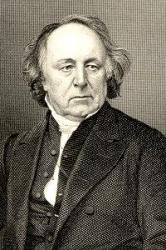
About Thomas Binney
Thomas Binney (1798–1874) was a powerful 19th-century English Nonconformist divine, author, and social reformer who earned the unofficial title of "The Archbishop of Nonconformity." As a towering figure in the Congregational ministry, his dynamic, intellectually rigorous preaching at London’s historic King's Weigh House Chapel shaped the moral and religious conscience of Victorian society. Though he penned more than fifty books and pamphlets on theology, history, and economics, his enduring global legacy rests upon a singular, sublime hymn that perfectly captures the tension between divine holiness and human frailty.
Early Life and the King's Weigh House Ministry
Thomas Binney was born in Newcastle-on-Tyne in 1798. He came from a humble background and was initially apprenticed to a bookseller, a period during which he read ravenously and taught himself Latin and Greek. Recognizing his deep spiritual conviction and intellectual promise, patrons sent him to be educated for the ministry at Wymondley College in Hertfordshire.
After graduation, Binney served successful pastorates in Bedford and Newport on the Isle of Wight. However, his life's true work began in 1829 when he accepted the call to the King's Weigh House Chapel in London.
Under his leadership, the chapel became a massive center of intellectual and spiritual life in the metropolis. Binney was a mesmerizing preacher who eschewed cold, formal rhetoric in favor of a direct, manly, and intellectually robust style that appealed particularly to the young clerks, merchants, and thinkers of London's growing middle class. He received an honorary Doctor of Laws (LL.D.) from the University of Aberdeen and a Doctor of Divinity (D.D.) from the United States in recognition of his wide-ranging cultural influence.
Prolific Author and Social Thinker
Binney was a vocal champion of religious freedom and social responsibility. He firmly believed that Christian principles should actively transform a person's everyday business and financial life. Over his career, he published more than fifty titles, including:
-
Life of the Rev. Stephen Morell (1826): An early, deeply felt biographical reflection on a fellow minister.
-
St. Paul, His Life and Ministry (1866): A sweeping biblical study analyzing the administrative and spiritual strategy of the Apostle to the Gentiles.
-
Money (1864): A practical, theological critique of industrial Victorian capitalism, urging the wealthy to view their finances through the lens of stewardship, philanthropy, and justice.
                      ┌───────────────────────────────────────┐
                      │      THOMAS BINNEY'S REFORM FOCUS     │
                      └───────────────────┬───────────────────┘
                                          │
         ┌────────────────────────────────┼────────────────────────────────┐
         ▼                                ▼                                ▼
 INTELLECTUAL PREACHING          PRACTICAL STEWARDSHIP              LITURGICAL BEAUTY
Rejected stiff, formal prose;     Wrote tracts like 'Money' to    Argued that Nonconformists
preached directly to London's     guide the business ethics of    should adopt rich, beautiful
rising commercial class.         the Victorian middle class.      hymnody and choral music.
The Masterpiece: "Eternal Light! Eternal Light!"
While Binney was not a prolific hymn writer, he permanently enriched global hymnology with a masterpiece of high theological art: "Eternal Light! Eternal Light!"
Written in 1826 while he was ministering in Newport, the hymn was born out of a moment of quiet contemplation on a clear, starlit evening. Binney looked up at the night sky and found himself overwhelmed by the profound purity of God's character as described in 1 John 1:5 ("God is light, and in him is no darkness at all").
The hymn is celebrated for its intricate, rolling 8.6.8.8.6 meter and its brilliant, honest handling of a terrifying theological paradox: How can a flawed, earthly creature survive in the presence of a perfectly pure, blindingly holy God?
Theological Structure of the Hymn
| Stanza | Metaphor | The Core Paradox |
| Stanza 1 | The Blinding Veil | God is described as a light so pure that even the celestial spirits (the Seraphim) must veil their faces with their wings to look upon Him. |
| Stanza 2 | The Human Crisis | The poet acknowledges human brokenness, noting that an unredeemed soul would be instantly consumed by the raw perfection of divine holiness. |
| Stanza 3 | The Bridge of Grace | The tension is resolved through the Incarnation. God provides a mediator, allowing humans to step into the light without fear. |
Hymn Excerpt: The Vision of Purity
Eternal Light! Eternal Light!
How pure the soul must be,
When, placed within Thy searching sight,
It shrinks not, but with calm delight
Can live, and look on Thee!
"Holy Father, Whom We Praise"
Binney also composed the beautiful, quiet evening hymn "Holy Father, Whom We Praise." Characteristically used across English congregations as a "Close of Service" benediction, this text focuses on the peace of a worshiping community scattering back out into the secular world, carrying the divine presence into their daily labor.
Thomas Binney passed away on February 23, 1874, at seventy-five years of age. His funeral drew massive crowds of cross-denominational mourners, led by the Archbishop of Canterbury, a testament to a man who spent his life pulling down institutional walls, arming the common working person with practical faith, and dressing the eternal majesty of God in unforgettable song.