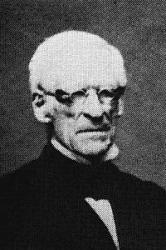
About Thomas Hastings
Thomas Hastings (1784–1872) was a pioneering American musicologist, hymn writer, and choir conductor who stands as one of the most prolific figures in the history of sacred music in the United States. Born in Washington, Connecticut, as the son of Dr. Seth Hastings, he relocated with his family to the rugged frontier of Clinton, New York, in 1786. Despite having very limited opportunities for formal education in his youth, Hastings developed an intense passion for music. He began teaching it systematically in 1806, eventually moving to larger arenas in Troy, Albany, and Utica to advocate for his specialized, progressive views on church music through a religious journal he conducted. In 1832, his growing reputation earned him a prestigious call to New York City to oversee multiple church choirs, where he spent his final forty years achieving immense usefulness, culminating in an honorary Doctor of Music degree.
Driven by a lifelong mission to elevate the quality of Christian worship for the greater glory of God, Hastings spent his career training choirs, editing tune books, and composing sacred music. He viewed hymn writing as a necessary corollary to his primary work of musical composition; he frequently wrote or remolded hymn texts specifically to fit certain musical arrangements, believing that the music and the message must seamlessly necessitate one another. Though contemporary literary critics noted that his work was not characterized by elite poetic genius or the highest literary merit, his texts possessed an unparalleled practical utility and immediate congregational appeal. Aggregate analyses of American hymnals published across the mid-to-late 19th century reveal that more original hymns by Hastings were in common use than by any other native American writer.
Throughout his active career, Hastings published an impressive library of highly successful hymnals and devotional collections, frequently collaborating with other prominent figures of the American church. In 1831, he partnered with the legendary Lowell Mason to publish Spiritual Songs for Social Worship, a collection tailored explicitly for family circles, missionary meetings, and seasons of frontier revival. He followed this with The Mother’s Hymn-book (1834), designed to nurture domestic family devotions, and The Christian Psalmist (1836), compiled alongside William Patton. Later in life, he collaborated with his son, the Reverend T. S. Hastings, to release Church Melodies (1858), and gathered many of his standalone lyrical pieces into Devotional Hymns and Religious Poems (1850).
Because many of his early publishing ventures omitted formal signatures or utilized vague pseudonyms like "Anon." or "M. S.," identifying the precise scope of Hastings's authorship required extensive archival research. Through his surviving manuscripts, hymnologists successfully verified his authorship of over fifty classic hymns that became permanent staples of global church repertoire. Among his most celebrated pieces from the 1831 Spiritual Songs are the vibrant missionary anthem "Hail to the brightness of Zion's glad morning," the triumphant Easter text "How calm and beautiful the morn," and the deeply evocative, dramatic pastoral song "O tell me, Thou Life and delight of my soul."
Hastings was also uniquely adept at capturing the intense emotional atmosphere of the American revival movement, translating fiery pulpit rhetoric into tender musical invitations. His famous hymn "Return, O wanderer, to thy home" was composed directly after he attended a massive union meeting, where he heard a Presbyterian minister give a stirring sermon on the Prodigal Son that resulted in two hundred converts; the preacher's closing exclamation, "Sinner, come home!" provided the direct inspiration for Hastings's poetic refrain. He also famously collaborated with the Rev. S. F. Smith to polish and arrange the widely sung Lenten plea, "To-day the Saviour calls." His later collections yielded several more enduring masterpieces, such as the comforting, widely utilized funeral text "Jesus, while our hearts are bleeding" from his Mother's Hymn Book, and the tenderly devotional "Jesus, Merciful and Mild" from Church Melodies. Furthermore, Hastings left a permanent stamp on church music through his skilled alterations of older texts, introducing definitive readings and stanzas into classic hymns that continue to be sung by modern congregations. At the time of his death in May 1872, his hymns occupied a massive footprint across diverse denominational lines, heavily representing the standard hymnals of the Reformed Dutch, Presbyterian, and Baptist churches, and cementing his legacy as a true father of congregational song in America.