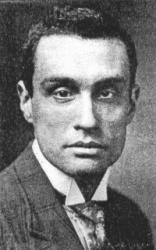
About Thoro Harris
Thoro Harris (1874–1955) was a highly prolific African American gospel songwriter, editor, music arranger, and itinerant publisher who played a vital, trailblazing role in the early 20th-century American holiness and pentecostal music movements. Born in the nation's capital and educated in Michigan, Harris became a prominent fixture in the competitive gospel publishing hubs of Boston and Chicago.
Despite operating in a highly segregated publishing era, he collaborated with some of the most famous white gospel composers of his generation. In his later years, he became a beloved, eccentric figure in the Ozarks, carrying the gospel to rural communities out of a canvas bag.
From Washington to the Chicago Publishing Hubs
Thoro Harris was born on March 31, 1874, in Washington, D.C. Gifted with a sharp intellect and a deep natural aptitude for musical composition, he traveled north to attend college in Battle Creek, Michigan—a city known at the time as a major cultural and educational center for the Seventh-day Adventist Church and various restorationist movements.
By 1902, Harris had relocated to Boston, Massachusetts, where he successfully compiled and produced his very first independent hymnal. His early editorial acumen caught the attention of Peter Bilhorn, a massive figure in the midwestern evangelical landscape famous for inventing the portable "telescope" organ used by street preachers. At Bilhorn's urgent invitation, Harris moved to Chicago, Illinois, which was rapidly becoming the undisputed capital of the global gospel sheet music industry.
                    ┌──────────────────────────────────────┐
                    │      HARRIS'S SEEDED GEOGRAPHY       │
                    └──────────────────┬──────────────────┘
                                       │
         ┌─────────────────────────────┼─────────────────────────────┐
         ▼                             ▼                             ▼
  1902: THE BOSTON DEBUT        1904-1931: THE CHICAGO ERA    1932-1955: THE OZARK COURIER
Compiled his first hymnal;     Partnered with Bilhorn and     Moved to Arkansas; sold sheet
established raw editing skills. Kirkpatrick in major firms.  music directly out of a canvas bag.
In Chicago, Harris flourished as a "writer for hire," a composer, and a master music typographer. Because he possessed an elite command of music theory, time signatures, and harmony, larger publishing houses frequently hired him to systematically arrange, clean up, and harmonize raw melodies brought in by musically illiterate revival preachers.
Landmark Collaborations and the Pentacostal Explosion
During his three decades in Chicago, Harris's name appeared on the title pages of several historic, multi-author hymnals. He was a master of collaborative editing, working alongside legendary figures to shape the song repertoire of the emerging global Pentecostal, Nazarene, and Free Methodist denominations:
-
Light and Life Songs (1904): Edited alongside the legendary William J. Kirkpatrick (composer of "Tis So Sweet to Trust in Jesus") and William Olmstead. This book became the definitive, foundational hymnal for the Free Methodist Church for generations.
-
Little Branches (1906): A highly successful youth and Sunday school collection compiled alongside George J. Meyer and Howard E. Smith.
-
Best Temperance Songs (1913): Released through the prominent Glad Tidings Publishing Company, where Harris served as the primary music editor, providing anthems for the American Prohibition movement.
The Theological Identity of His Verse
Harris’s original lyrics were deeply anchored in the classic themes of the late 19th-century Holiness movement: the absolute necessity of personal sanctification, the immediate infilling of the Holy Spirit, and a bright, joyful expectation of the Second Coming of Christ.
His most enduringly popular original song, "All That I Need is Jesus," perfectly captured this Christocentric, survival-oriented spirituality. It became an absolute staple across both Black and white Pentecostal congregations throughout the United States.
Hymn Excerpt: The Absolute Sufficiency
All that I need is Jesus,
Only a drop of His grace;
All that I need is Jesus,
Just to behold His face.
The Canvas Bag of Eureka Springs
In 1932, as the Great Depression severely crippled the urban printing industries of Chicago, Harris made the sudden decision to relocate to the scenic, isolated mountain town of Eureka Springs, Arkansas, nestled deep in the Ozarks.
Rather than retiring, Harris transformed his ministry into a highly localized, itinerant colportage work. He became an iconic, deeply respected local figure, instantly recognized by townspeople as he walked miles along the rugged mountain roads wearing a distinctive overcoat and carrying a heavy canvas bag packed to the brim with songbooks and sheet music leaflets he had printed himself, including his circa 1922 solo volume Hymns of Hope. He sold these books for pennies to rural churches, traveling choirs, and poor families, ensuring that remote mountain chapels had access to high-quality music notation.
Summary of Major Editorial Works
| Hymnal / Collection Title | Primary Co-Editors | Target Movement / Denomination |
| Light and Life Songs (1904) | W. J. Kirkpatrick & W. Olmstead | Free Methodist / Holiness Societies |
| Little Branches (1906) | G. J. Meyer & H. E. Smith | Sunday Schools & Youth Anniversaries |
| Best Temperance Songs (1913) | Glad Tidings Publishing Co. | The Prohibition & Temperance Movement |
| Hymns of Hope (c. 1922) | Thoro Harris (Sole Publisher) | Independent Pentecostal Missions |
Thoro Harris passed away on March 27, 1955, in Eureka Springs, just four days shy of his eighty-first birthday. He was laid to rest in the International Order of Odd Fellows Cemetery in his adopted Arkansas home.
Operating at a time when racial barriers often kept minority composers entirely in the shadows, Harris’s technical brilliance as an editor, combined with his humble, boots-on-the-ground passion for distribution, allowed his songs to cross cultural divides, leaving a legacy that kept the early American holiness movement singing in harmony.