About W. McDonald
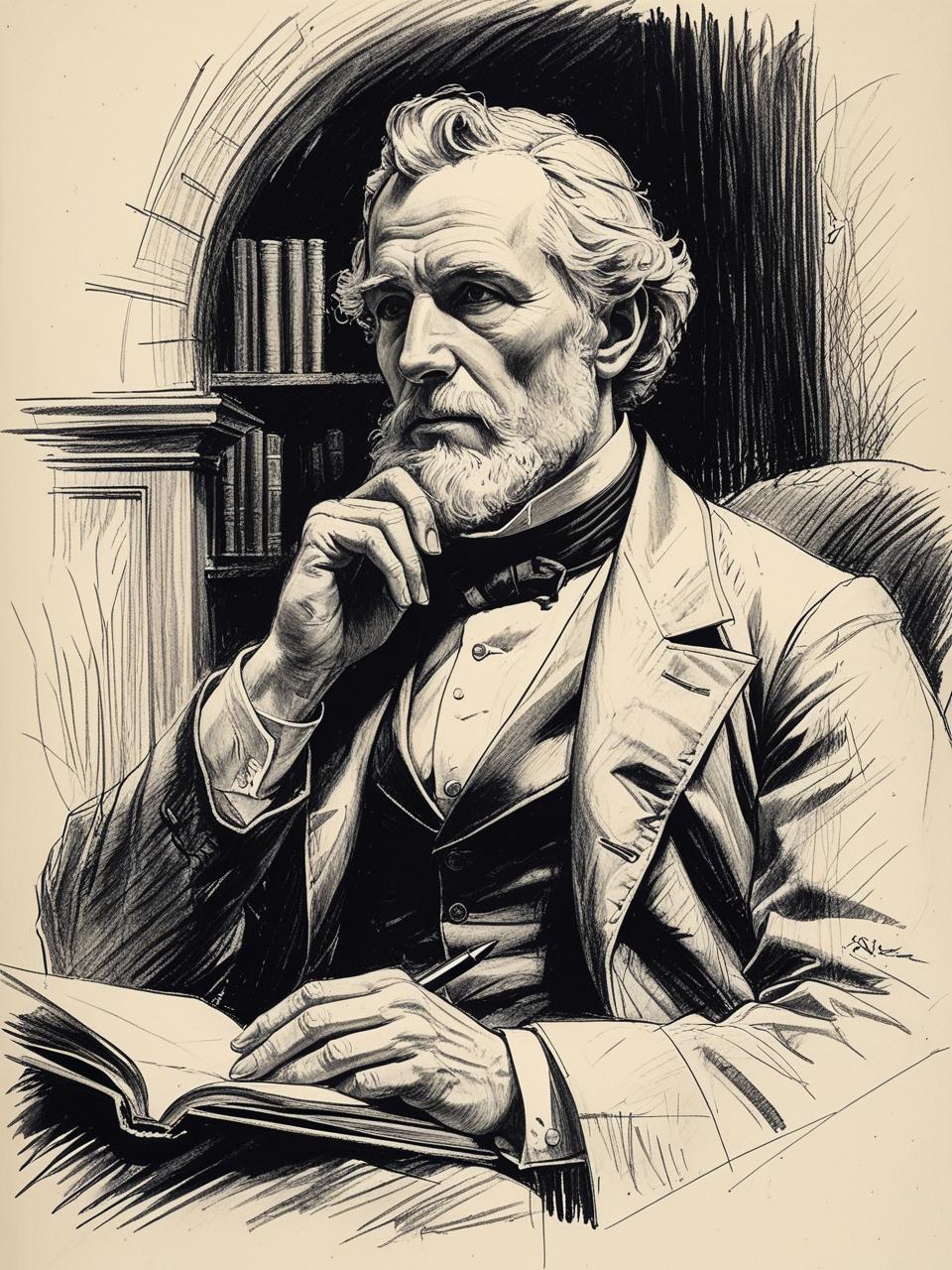
The Reverend William McDonald (1820–1901) was a highly influential 19th-century American Methodist Episcopal minister, pioneering author, hymnologist, and traveling evangelist who served as a chief architect of the post-Civil War American Holiness Movement. Known for his sharp editorial skills and fervent preaching, McDonald dedicated his decades-long career to promoting the theological doctrine of Christian perfection or entire sanctification.
Through his widespread work as the chief editor of the Advocate of Christian Holiness and his compilation of landmark gospel songbooks, McDonald provided millions of believers with a vibrant, intensely personal musical vocabulary, authoring one of the most widely translated and sung invitation hymns in global church history: "I Am Coming to the Cross."
From Circuit Rider to Leadership of the Holiness Movement
William McDonald was born in Belmont, Maine, on March 1, 1820. Feeling a powerful, early call to the Christian ministry, he began serving as a local preacher in the Methodist Episcopal Church in 1839 at nineteen years of age. He was formally admitted to the Maine Conference in 1843, beginning a pastoral journey that would see him ride circuits and lead dynamic urban congregations across multiple states.
As the mid-19th century progressed, McDonald’s exceptional leadership and administrative skills led to important regional assignments. He transferred to the Wisconsin Conference in 1855, and later to the New England Conference in 1859.
                    ┌──────────────────────────────────────┐
                    │     MCDONALD'S COMPREHENSIVE LIFE    │
                    └──────────────────┬──────────────────┘
                                       │
         ┌─────────────────────────────┼─────────────────────────────┐
         ▼                             ▼                             ▼
  1839–1869: THE REGIONAL       1870–1890: THE NATIONAL EDITS   1890–1901: RETIREMENT
  PASTORATE                    Directed national holiness      Retired to California; saw
  Served Methodist charges in   journals and drove major        his hymns translated into
  Maine, Wisconsin, & Boston.  songbook publishing projects.   dozens of global languages.
In 1867, a monumental shift swept through American Methodism with the formation of the National Camp Meeting Association for the Promotion of Christian Holiness. McDonald aligned his life fully with this movement, which sought to revitalize early Wesleyan teachings on holiness and inner transformation.
For a number of years, he served as the premier editor of the Advocate of Christian Holiness, a highly influential national periodical that coordinated camp meetings and shaped holiness theology across the United States.
The Master Hymn Compiler
McDonald recognized that a religious movement could not survive on sermons alone; it needed to sing its theology. He possessed a sharp, natural instinct for the burgeoning "gospel song" genre—music characterized by bright, highly memorable melodies, simple harmonic structures, and intensely personal, experiential lyrics.
Throughout his active ministry, McDonald compiled or assisted in editing a massive catalog of highly popular songbooks, bridging the gap between frontier camp meeting choruses and institutional church hymnals:
-
Western Minstrel (1840) and Wesleyan Minstrel (1853): Early collections designed to support frontier revivals and family devotions.
-
Beulah Songs (1870): A highly popular holiness collection filled with themes of spiritual rest and victory.
-
Tribute of Praise (1874): Compiled alongside L.F. Snow and subsequently re-edited by the legendary music educator Eben Tourjée (founder of the New England Conservatory of Music). This collection achieved massive structural success, being officially adopted in 1882 as the official hymnal of the Methodist Protestant Church.
Landmark Masterpiece: "I Am Coming to the Cross"
While McDonald compiled thousands of hymns by other writers, his permanent, global legacy was secured in 1870 by a simple, five-stanza devotional poem he authored himself.
The Liturgical Architecture of Absolute Surrender
Written in 1870 while he was completely immersed in heavy national evangelistic work, "I Am Coming to the Cross" was designed to serve a highly practical, liturgical function. It was engineered as a personal, step-by-step musical guide for a seeker kneeling at a traditional church altar or a camp meeting mourner's bench.
The text completely captures the classic Wesleyan trajectory of salvation: acknowledging human limitation and brokenness, looking directly to the cleansing blood of Christ, and entering into an immediate, reassuring experience of spiritual rest.
When paired with a deeply emotional, sweeping musical tune composed by William G. Fischer, the song became an absolute phenomenon. It didn't just top American gospel charts; it became the definitive, cross-denominational standard for altar calls and evangelistic invitations worldwide:
Hymn Excerpt: The Altar of Surrender
I am coming to the cross; I am poor, and weak, and blind; I am counting all but dross; I shall full salvation find.Refrain: I am trusting, Lord, in Thee, Blessed Lamb of Calvary; Humbly at Thy cross I bow, Save me, Jesus, save me now.
An International and Cross-Cultural Legacy
The true genius of McDonald’s landmark hymn was its immediate adaptability across global cultural barriers. Because the vocabulary was completely clear and the structural lines were perfectly balanced, it became one of the most widely translated American gospel songs of the 19th and 20th centuries.
Foreign missionaries quickly realized that the song provided an immediate, deeply moving script for conversion experiences across the globe. Hymnary records document its integration into dozens of international standard hymnals, cutting across language families worldwide:
-
European Tongues: Herr, ich komm’ zum Kreuze hin (German).
-
Romance Languages: Débil, pobre, ciego soy (Spanish) and Chego à Tua Cruz (Portuguese).
-
Asian and African Dialects: 我今來依傍十架 (Chinese), Iti cruzmot' asitgac (Tagalog), Naendea msalaba (Swahili), and ഞാന് വരുന്നു ക്രൂശിങ്കല് സാധു ക്ഷീണന് കുരുടന് (Malayalam).
Summary of Core Hymnological Contributions
| Hymn Title / First Line | Primary Role | Core Metrical Structure | Primary Theological Theme |
|---|---|---|---|
| I Am Coming to the Cross | Author | 7.7.7.7 with Refrain | Absolute surrender, humility, instant justification, and trust in the atonement. |
| I Am Coming to Jesus for Rest | Author | Irregular Gospel | Entering into the deep spiritual rest associated with Christian holiness. |
| The Cross, the Cross, the Bloodstained Cross | Author | Camp Meeting Style | Corporate celebration of the centrality of Calvary in human redemption. |
|
I Hear the Savior Say (By Elvina Hall) |
Arranger / Publisher | 6.5.6.5 with Refrain | McDonald helped shape and popularize this classic anthem of Christ paying the ultimate debt. |
| Sinner, Go, Will You Go | Arranger / Editor | Revival Chorus | An urgent, upbeat evangelistic warning to seek the "high lands of heaven." |
Following a long, fruit-filled life dedicated to traveling evangelism, William McDonald retired to the warm climate of Southern California. He passed away on September 11, 1901, in Monrovia, California, at eighty-one years of age.
While his dynamic magazines, theological essays, and biographies have largely faded into the specialized archives of American religious history, his voice remains incredibly vital. Every time a seeker steps out of a church aisle or a global congregation hums those comforting lines of absolute trust, McDonald's simple, beautifully structured prayer continues to guide weary hearts straight to the foot of the cross.