About William Walsham How
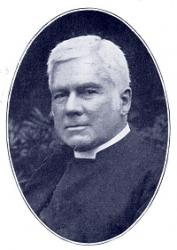
Bishop William Walsham How (1823–1897) was an influential divine, social reformer, and hymn writer of the Church of England. Born in Shrewsbury, Shropshire, on December 13, 1823, he received his education at Shrewsbury School before moving on to Wadham College, Oxford, where he completed his B.A. in 1845, followed by further studies at Durham University. Ordained as a priest in 1847, How spent the early years of his ministry serving curacies in Kidderminster and Shrewsbury.
In 1851, he accepted the rectory of Whittington in Shropshire, a pastoral charge he maintained for nearly three decades. It was during this lengthy rural ministry that his literary and hymnological output truly flourished. In 1879, his career shifted dramatically to urban ministry when he was appointed Rector of St. Andrew Undershaft in London and consecrated as the Suffragan Bishop for East London under the title of Bishop of Bedford. His untiring devotion to the impoverished factory workers and destitute communities of the London slums earned him the affectionate titles of the "poor man's bishop" and "the children's bishop." In 1888, he was named the first Bishop of Wakefield in West Yorkshire, where he continued his vigorous advocacy for social justice and public welfare. He passed away on August 10, 1897, while visiting Leenane, County Mayo, Ireland.
Theological Stance and Intellectual Engagement
Beyond his active pastoral care, Bishop How was a deeply thoughtful scholar who sought to navigate the complex theological and scientific crosscurrents of the Victorian era. He regularly engaged with the major controversies surrounding the Oxford Movement, writing numerous tracts, commentaries, and devotional works that aimed to provide practical, middle-of-the-road guidance for ordinary Christians.
Remarkably forward-thinking for his time, How was among the Anglican leaders who actively sought to reconcile traditional biblical accounts of creation with the emerging scientific consensus surrounding Charles Darwin’s theory of evolution. He argued that scientific discovery did not diminish divine majesty but rather revealed the intricate methods through which God interacted with the material world.
                    ┌───────────────────────────────────────┐
                    │     BISHOP HOW'S EDITORIAL COMPASS    │
                    └───────────────────┬───────────────────┘
                                        │
         ┌──────────────────────────────┴──────────────────────────────┐
         ▼                                                             ▼
     EDITORIAL METHODOLOGY                                        LYRICAL FOCUS
     • Joint Editor: Psalms and Hymns (1854)                      • Avoided flashy, dramatic vocabulary
     • Joint Editor: Church Hymns (1871)                          • Emphasized clear, unadorned phrases
     • Balanced classic liturgy with fresh verse                  • Focused heavily on practical discipleship
"For all the Saints" — A Towering Monument of Christian Liturgy
Though Bishop How published a vast library of sermons and biblical commentaries, his historical immortality was achieved through his poetry. Lacking the dramatic romanticism of his contemporaries, his writing instead offered an earnest, practical, and highly rhythmic approach to congregational praise. Three of his hymns achieved absolute top-tier status across global Christianity.
The Standard of Remembrance: "For all the Saints, who from their labor rest"
Composed for All Saints' Day, this epic hymn stands as a masterpiece of liturgical art. It connects the church on earth with the heavenly host, building a grand historical arc that moves from historical struggles to final victory. When later paired with Ralph Vaughan Williams' majestic tune "SINE NOMINE" in 1906, it became an irreplaceable global anthem for funerals, memorial services, and festival days across nearly every Christian denomination.
   THE CHURCH TRIUMPHANT: "FOR ALL THE SAINTS"
   ┌──────────────────────────────────────────────────────────────────┐
   │ Stanza: For all the saints who from their labors rest,           │
   │         Who Thee by faith before the world confessed,            │
   │         Thy name, O Jesus, be forever blest.                     │
   │         Alleluia! Alleluia!                                      │
   └──────────────────────────────────────────────────────────────────┘
Summary of Core Hymnological Contributions
| Hymn Title / Common Incipit | Primary Liturgical and Seasonal Focus | Editorial Source / Year | Historical and Global Impact |
| For all the Saints, who from their labor rest | All Saints' Day; remembrance, eternal rest, and spiritual victory. | S.P.C.K. Church Hymns, 1871 | Appears in over 560 major hymnals globally; considered a defining masterpiece of Anglican hymnody. |
| O Jesus, Thou art standing | Penitence, divine patience, and the human response to God's call. | Supplement to Psalms & Hymns, 1867 | Found in over 620 hymnals; widely translated into German, Portuguese, Tagalog, and Arabic. |
| We give Thee but Thine own | Almsgiving, Christian charity, stewardship, and social responsibility. | Psalms & Hymns (Enlarged), 1864 | Printed in more than 470 hymnals; universally used as a standard offering anthem. |
| O Word of God Incarnate | The authority, beauty, and guiding light of Holy Scripture. | Supplement to Psalms & Hymns, 1867 | Published in over 470 collections; celebrated for its clear, Christocentric view of the Bible. |
| Jesus! Name of wondrous love! | The Circumcision of Christ; the saving power of the Name of Jesus. | Psalms & Hymns, 1854 | Maintained across 125 hymnals; a classic example of his simple, rhythmic style for children. |
A Gift for Children and the Living Seasons
In addition to his grand anthems, Bishop How was a pioneer in creating quality liturgical materials specifically designed for children. Moving away from the heavy, fear-driven moralizing common in Victorian children's literature, works like "It is a thing most wonderful" and "Behold a little Child" introduced young minds to a gentle, loving Savior.
He was also highly attentive to the changing natural world, writing seasonal gems such as "Summer suns are glowing" and "The year is swiftly waning" to ensure that the beauty of creation was regularly integrated into the weekly rhythm of parish worship. Through this vast, multi-layered catalog of over sixty hymns in common usage, the "poor man's bishop" provided the global church with a sturdy, beautiful, and enduring musical language that continues to outlive all his other earthly accomplishments.