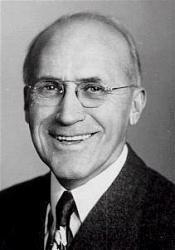
About Haldor Lillenas
Haldor Lillenas (1885–1959) was a towering figure in the music of the Church of the Nazarene and one of the most prolific gospel songwriters of the 20th century. Born near Bergen, Norway, he emigrated to the United States as a child, living in a sod house in South Dakota before moving to Oregon. His life took a definitive turn at a rescue mission in Astoria, where the song "Tell Mother I’ll Be There" prompted a deep spiritual commitment. This experience led him to the Peniel Mission and eventually into the ministry of the Church of the Nazarene. He pursued extensive musical and theological training at Pacific Bible College and the Lyric School of Music in Los Angeles, balancing his studies with work as a farm laborer and a chemical factory employee.
Throughout his career, Lillenas served as both an evangelist and a pastor in California and Indiana. In 1924, he founded the Lillenas Music Company in Indianapolis, which became a primary source for church and Sunday school music. Even after selling the company to the Nazarene Publishing House in 1930, he remained the manager and editor, overseeing the publication of over 700,000 hymnals. His creative output was staggering; he is credited with writing approximately 4,000 hymn lyrics and composing thousands of tunes. His most famous works, such as "Wonderful Grace of Jesus," "It Is Glory Just to Walk with Him," and "The Peace that My Savior Has Given," became foundational anthems for the holiness movement.
In his later years, Lillenas retired to an estate in the Ozarks named "Melody Lane" and continued to contribute to sacred music as an advisor and author. His personal life was marked by a shared ministry with his first wife, Bertha Mae Wilson, who was herself an ordained minister and songwriter. Following her death, he remarried and traveled extensively, including several trips back to his native Norway. Lillenas was also known for his humanitarian spirit; notably, he sponsored a Palestinian family's immigration to the United States in the 1950s. By the time of his death in 1959, he had compiled over 50 songbooks and received an honorary doctorate for his immense influence on the devotional life of millions of Christians.