About Henry Hart Milman
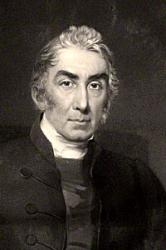
Henry Hart Milman (1791–1868) was a towering figure of the Victorian era, embodying the rare combination of a high-ranking churchman, a pioneering historian, and a gifted dramatist. As the Dean of St. Paul’s Cathedral, he was at the heart of London’s religious and intellectual life, though his path was often marked by controversy. Educated at Oxford, where he won nearly every prestigious poetry prize available, Milman’s early reputation was built on his skill as a poet and playwright. His tragedy Fazio was a success on the London stage, and his epic poems, such as The Fall of Jerusalem, demonstrated a "lurid force" and dramatic intensity that he would later bring to his hymn writing.
His transition from poetry to history signaled a major shift in English theology. With the publication of his History of the Jews in 1829, Milman became a pioneer of the "liberal" school of theology, applying a critical, historical eye to the Bible. He treated biblical figures not as distant icons, but as historical actors in a real-world context—an approach that provoked a "storm of obloquy" from more conservative clergy. Despite the backlash, he continued his scholarly pursuits, eventually producing the massive History of Latin Christianity, a work still praised for its immense learning and impartial analysis. This intellectual rigor earned him the respect of contemporaries like Thomas Macaulay and Dean Stanley, cementing his status as one of the great thinkers of his age.
In the realm of hymnody, Milman’s output was small—only thirteen hymns—but of exceptional quality. These were primarily written at the request of his friend Reginald Heber for a collection published posthumously in 1827. Milman’s hymns are noted for their "lyric grace" and literary sophistication, often utilizing powerful refrains and vivid imagery. His most famous contribution, "Ride on, ride on in majesty!", remains the quintessential Palm Sunday hymn. It masterfully contrasts the outward triumph of the entry into Jerusalem with the internal reality of the sacrifice to follow, using the paradox of "lowly pomp" to describe the Savior’s journey to the cross.
Milman’s ability to articulate deep human emotion is perhaps best seen in his hymn for the suffering, "When our heads are bowed with woe." It is regarded as one of the finest presentations of Christ’s human sympathy in English hymnody, focusing on the "Son of Mary" who shared in earthly grief. During his tenure as Dean of St. Paul’s, Milman worked to make the cathedral a center for the people, initiating the great services under the dome that modernized the church’s public role. He died in 1868, leaving a legacy of a faith that was intellectually honest, historically grounded, and poetically profound.